
When you first dive into the world of gluten-free or grain-free baking, making the perfect weekend pancake stack can feel like a science experiment. The biggest hurdle? Choosing the right flour.
If you are trying to ditch traditional wheat flour, you have likely come across two heavyweights in the health food aisle: cassava flour and almond flour. But when it comes to flipping the perfect, fluffy flapjack, which one truly reigns supreme?
In this guide, we are breaking down everything you need to know about cassava flour vs. almond flour for pancakes, from texture and taste to dietary benefits. Let’s get cooking!
What is Cassava Flour?
Cassava flour is made from the whole yuca root (a starchy tuber native to South America) that has been peeled, dried, and ground down.
In the context of pancakes, cassava is often considered the “holy grail” of grain-free baking because its powdery consistency closely mimics traditional all-purpose wheat flour. It is naturally gluten-free, grain-free, nut-free, and perfectly suited for Paleo and Autoimmune Protocol (AIP) diets.
What is Almond Flour?
Almond flour is exactly what it sounds like: finely ground, blanched almonds (almonds with their skins removed).
For pancake lovers, almond flour is the ultimate Keto-friendly and low-carb option. Because it is made entirely of nuts, it is packed with healthy fats and protein. However, the lack of gluten and starches means it behaves very differently in a frying pan compared to traditional flours.
The Main Differences in Pancakes (Texture & Taste)
If you use these flours side-by-side, you will notice massive differences in your breakfast stack. Here is how they compare in the pan:
Texture & Fluffiness
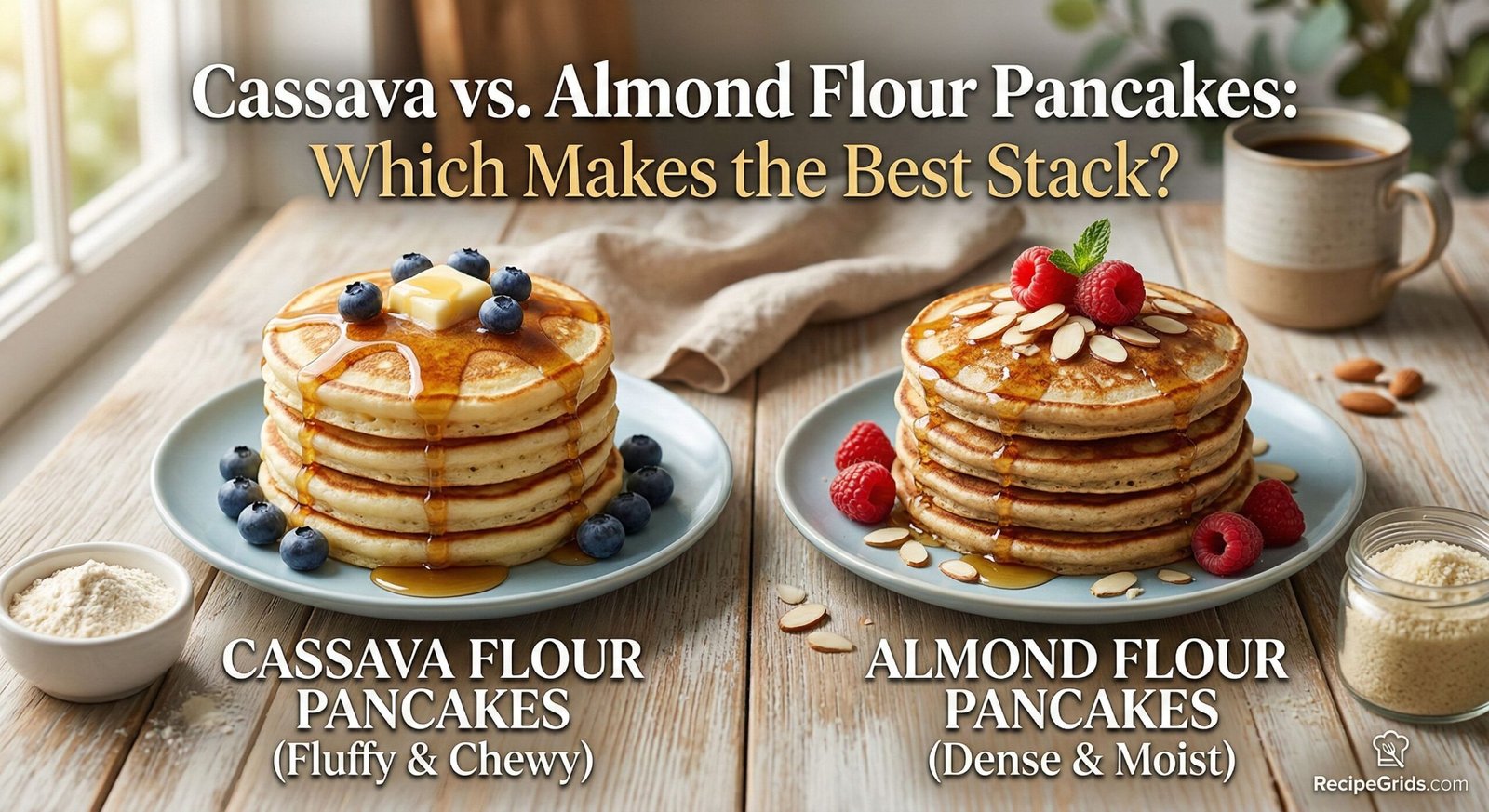
- Cassava Flour: Because of its natural starches, cassava flour provides an excellent stretch and bind. It creates light, fluffy, and slightly chewy pancakes that hold together beautifully when flipped.
- Almond Flour: Almond flour lacks natural binding agents (like gluten or starch). This means almond flour pancakes tend to be denser, moister, and slightly crumbly. They are heavier and will usually require extra eggs to keep them from falling apart in the skillet.
Taste Profile
- Cassava Flour: It has a very neutral, mild flavor. This makes it an amazing canvas for your favorite toppings, letting the taste of vanilla extract, butter, and maple syrup shine through.
- Almond Flour: It boasts a rich, nutty, and slightly sweet flavor. Even without syrup, almond flour pancakes have a distinct and delicious marzipan-like undertone.
Liquid Absorption
- Cassava Flour: It is highly absorbent. It acts almost like a sponge, soaking up milk and eggs quickly. You often need more liquid when baking with cassava.
- Almond Flour: It does not absorb much liquid at all. If you add too much milk to an almond flour batter, you will end up with a runny mess that won’t cook through.
The Ultimate Pancake Flour Grid
At RecipeGrids, we love a good visual breakdown. Here is a quick comparison grid to help you choose the best flour for your dietary needs and taste preferences:
| Feature | Cassava Flour Pancakes | Almond Flour Pancakes |
|---|---|---|
| Best For Diet | Paleo, Nut-Free, AIP, Grain-Free | Keto, Low-Carb, Diabetic-friendly |
| Pancake Texture | Fluffy, light, slightly chewy | Dense, moist, hearty, slightly crumbly |
| Flavor Profile | Neutral (tastes like traditional) | Rich, nutty, naturally sweet |
| Carbohydrates | High (~28g per 1/4 cup / 30g) | Low (~6g per 1/4 cup / 28g) |
| Binding Ability | Excellent (works well with vegan flax eggs) | Poor (requires real eggs or extra binders) |
Can You Substitute Cassava Flour for Almond Flour in Pancakes?
The short answer is: No, not at a 1:1 ratio.
If you find a recipe specifically designed for almond flour and try to swap in cassava flour using the exact same measurements, your batter will become incredibly thick and doughy. As mentioned earlier, cassava flour absorbs significantly more liquid than almond flour.
If you absolutely must substitute, a general rule of thumb is that you will need much less cassava flour than almond flour. However, for the best pancake results, it is highly recommended to use a recipe specifically developed for the flour you have in your pantry.
The Final Verdict: Which One Should You Choose?
Both flours make delicious, healthy breakfasts, but the “best” choice depends entirely on your lifestyle and what you want out of your pancakes.
- Choose Cassava Flour if: You want the closest replica to traditional, fluffy diner pancakes. It is also the necessary choice if you have nut allergies, are baking for children, or follow a strict Paleo or AIP diet.
- Choose Almond Flour if: You are strictly monitoring your carbohydrate intake, following a Keto diet, or if you prefer a rich, nutty, and highly satiating breakfast that will keep you full until lunch.
Frequently Asked Questions (FAQs)
Are cassava flour pancakes healthier than almond flour pancakes? Neither is inherently “healthier”—it depends on your dietary goals. Almond flour is better for blood sugar control and Keto diets due to its low carb content. Cassava flour is better for those avoiding nuts, seeking lower-calorie/lower-fat options, or needing digestive-friendly starches.
Why do my almond flour pancakes keep falling apart? Almond flour has no gluten to hold the batter together. Make sure your recipe includes enough eggs (which act as a binder), keep your pancakes small (about 3-4 inches wide) so they are easier to flip, and cook them low and slow.
Is cassava flour keto-friendly? No. Cassava is a starchy root vegetable, making its flour very high in carbohydrates. If you are strictly Keto, you should stick to almond flour or coconut flour.