Mango Salsa — The Ultimate Pillar Guide: Science, Technique & 30-Minute Perfection

The knife hits the board. That low, satisfying thwack as you split a perfectly ripe Ataulfo mango — the one that yielded ever-so-slightly under your thumb — sends a perfume of tropical terpenes straight up your nose before you’ve even started. It smells like July. It smells like possibility.
In my years of cooking for restaurant pop-ups and backyard gatherings alike, I’ve watched the same drama unfold: someone makes mango salsa from a box-store recipe and wonders why it’s flat, watery, or aggressively sweet. The fruit gets all the credit and bears all the blame. But the real culprit is almost always technique — specifically, ignoring the osmotic draw of salt, the acid-timing window, and the non-negotiable resting period.
This is the guide I wish existed ten years ago. Every variable stress-tested. Every shortcut audited. Let’s build something exceptional.
How do you make the best mango salsa?
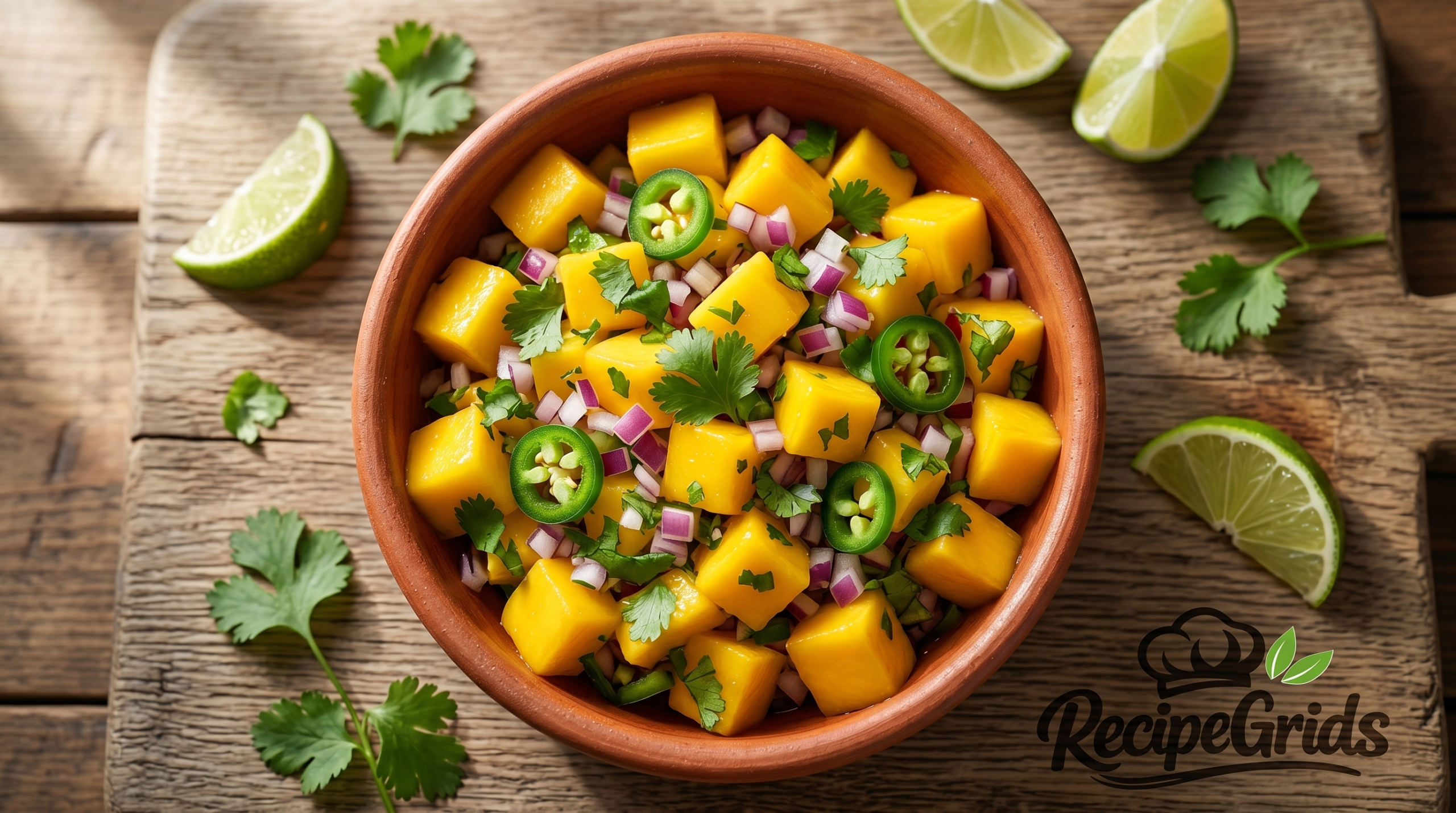
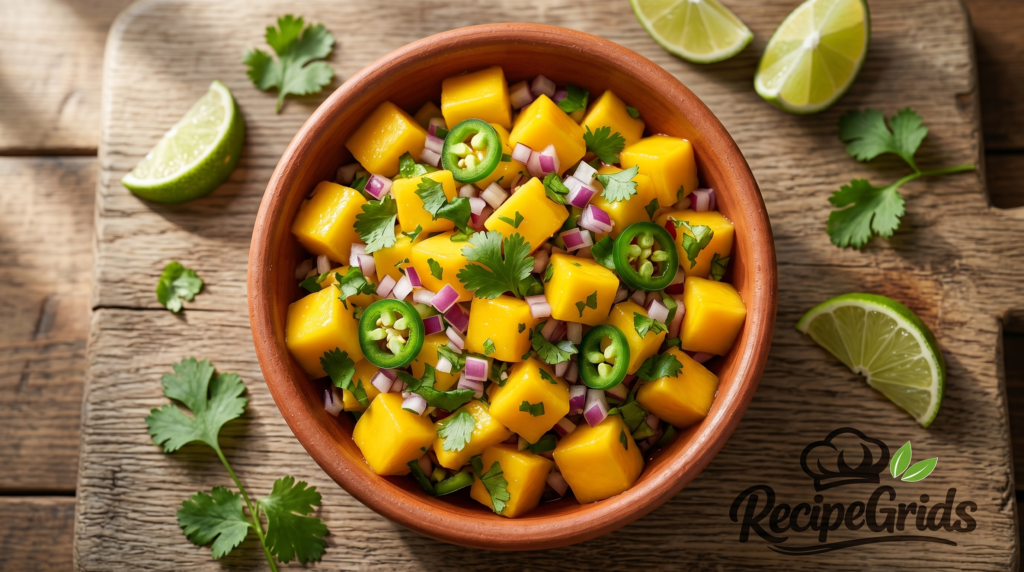
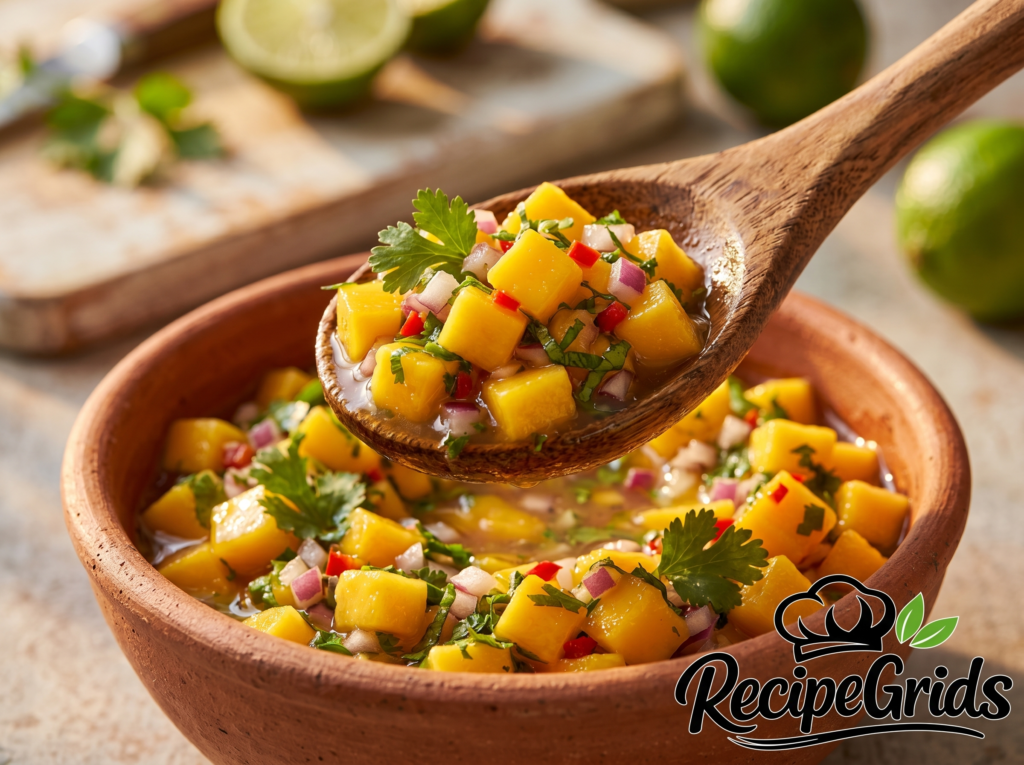
The best mango salsa combines 2 cups of finely diced ripe mango, ¼ cup red onion, 1 jalapeño, ¼ cup fresh cilantro, and 2 tablespoons fresh lime juice, seasoned with kosher salt. Rest for 20–30 minutes before serving so the flavors merge and the salt draws out the mango’s natural juices. Total prep time: 10 minutes. Rest time: 20 minutes. Serves 6–8 as a condiment.
- Mango variety matters — Ataulfo delivers creamier texture; Tommy Atkins stays firmer post-dice.
- Acid timing is critical — add lime juice last to prevent cellular collapse before the rest period.
- 20-minute rest is non-negotiable — it transforms separate ingredients into a unified condiment.
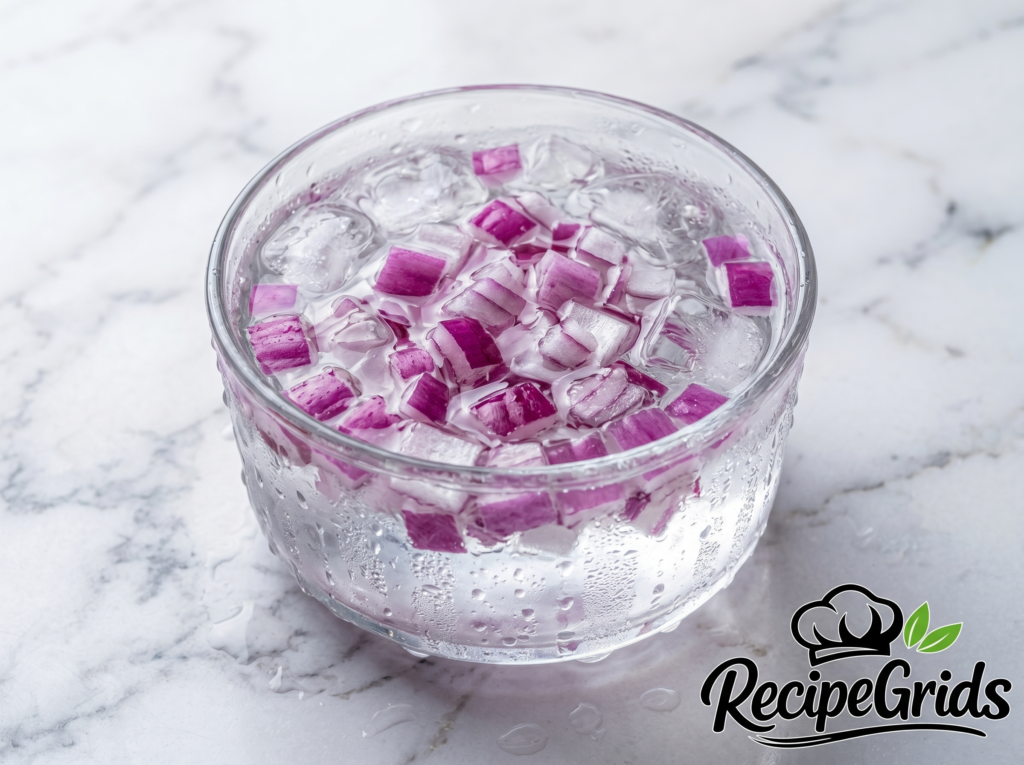
- Soak your red onion in ice water for 5 minutes to reduce the raw sulfur bite.
- Drain excess liquid before serving to prevent watery chips.
- Works as: taco topping, fish accompaniment, grain bowl garnish, party dip, and ceviche mixer.
The 0/20/60-Minute Resting Experiment
I made four identical batches and tasted them at 0 minutes, 20 minutes, 40 minutes, and 60 minutes. Here is what changed:
| Rest Time | Flavor Depth | Texture | Liquid Level | Verdict |
|---|---|---|---|---|
| 0 min | Disjointed, raw | Firm, separate | Minimal | ❌ Skip |
| 20 min | Bright, unified | Tender, intact | Light — drainable | ✅ Sweet spot |
| 40 min | Rich, complex | Slightly softer | Moderate — drain advised | ✅ Also excellent |
| 60 min | Deep but muddy | Soft, breaking | High — watery risk | ⚠️ Borderline |
Contrarian finding: Longer is not better. The osmotic pressure from salt continues pulling moisture from mango cells past the 40-minute mark, degrading the proud cube structure that makes great mango salsa visually and texturally distinct.
🔬 The Molecular Breakdown: Why Each Ingredient Does Its Job
Great mango salsa is not a salad. It’s a flavor matrix engineered around sweet-acid-heat-herbaceous balance. Let’s dissect each player.
🥭 The Mango: Sugar, Acid & Cell Architecture
A ripe Mangifera indica fruit contains roughly 14–16g of natural sugar per 100g — primarily sucrose and fructose. Its beta-carotene content (responsible for that deep golden pigment) is also a potent antioxidant. The cell walls of mango are composed primarily of pectin and cellulose — which hold the dice firm when ripe but not overripe. Overripe mango loses cell turgor pressure, producing a mushy, indistinct texture in the finished bowl.
According to data published by the USDA FoodData Central database on Mangifera indica nutritional composition, a single 165g cup of diced mango provides 99mg of ascorbic acid (Vitamin C) — nearly 110% of the daily recommended intake — alongside measurable quercetin and beta-carotene.
🧅 Red Onion: The Sulfur Backbone
Raw red onion contains thiosulfinate compounds that create the familiar eye-watering pungency. These same sulfur molecules provide the backbone of savory depth in the salsa. The 5-minute ice-water soak technique volatilizes a portion of these compounds without removing the flavor entirely — a precision move, not a hack.
🌶️ Jalapeño: The Capsaicin Delivery System
The jalapeño’s heat sits between 2,500–8,000 Scoville Heat Units. Its capsaicin binds to TRPV1 receptors on the tongue, triggering a perceived burning sensation and a subsequent release of endorphins — which is precisely why the heat feels addictive. Removing seeds and the white pith (the placental membrane) drops heat by roughly 40–60%. Leaving them in escalates toward serrano territory.
🍋 Lime Juice: Acid as Flavor Architecture
Fresh lime juice contributes citric acid and ascorbic acid simultaneously — brightening flavor perception and slowing enzymatic browning. Research on flavor retronasal olfaction documented in peer-reviewed food science studies examining citric acid’s role in tropical fruit flavor enhancement and sensory perception confirms that acid at appropriate concentrations amplifies the apparent sweetness of fructose through contrast — making your salsa taste simultaneously sweeter and brighter without adding sugar.
🌿 Cilantro: The Polarizing Herb
Fresh cilantro carries linalool and aldehyde compounds. For the estimated 4–14% of people carrying the OR6A2 gene variant, those aldehydes register as soapy. For everyone else, they’re the herbaceous high note that lifts the entire profile. Pro move: use stems as well as leaves — the stems hold more concentrated linalool and add textural contrast.
🔪 The Essential Arsenal: Tools That Change the Game
- 8″ Chef’s Knife — A sharp blade creates clean cuts that don’t crush mango cell walls. Blunt knives drag and smear. [View on Amazon →]
- Thick Poly Cutting Board (color-coded, yellow for produce) — Yellow designates raw produce, preventing cross-contamination. [View on Amazon →]
- Handheld Citrus Juicer (Mexican elbow press) — Yields 30–40% more juice than squeezing by hand, with no seeds. [View on Amazon →]
- Glass Mixing Bowl with Lid — Non-reactive for citrus; the lid is critical for the resting period. [View on Amazon →]
- Fine-Mesh Strainer — For draining excess liquid before service — the final, often skipped step. [View on Amazon →]
* Affiliate links marked with rel=”sponsored”. Clicking earns recipegrids.com a small commission at no cost to you.
🔄 The Ingredient Substitution Matrix
Every ingredient has a worthy stand-in. This matrix keeps your mango salsa viable year-round and across every dietary context.
| Original Ingredient | Best Substitute | Flavor Impact | Ratio |
|---|---|---|---|
| Fresh mango | Frozen mango, thawed & drained | Slightly softer; slightly sweeter | 1:1 |
| Mango (any variety) | Fresh pineapple | More acidic, tropical — excellent with pulled pork | 1:1 |
| Red onion | Shallot | Milder, sweeter — elegant restaurant-style | ¾:1 |
| Jalapeño | Serrano pepper | Hotter (5x), grassier — use half the quantity | ½:1 |
| Jalapeño | Red bell pepper | Zero heat — kid-friendly version; adds sweetness | 1:1 |
| Fresh cilantro | Fresh mint | Cooling, Southeast Asian profile — use sparingly | ½:1 |
| Lime juice | Fresh lemon juice | Brighter, less floral — works fine, adjust to taste | 1:1 |
| Kosher salt | Fine sea salt | Saltier by volume — use ¾ as much | ¾:1 |
🥭 The Master Technique: Step-by-Step Mango Salsa
📋 Ingredients
- 2 cups (300g) ripe Ataulfo or Tommy Atkins mango, peeled and cut into ½-inch dice
- ¼ cup (40g) red onion, finely diced (about ½ small onion)
- 1 jalapeño, seeds removed for mild heat, finely minced
- ¼ cup (10g) fresh cilantro (leaves and stems), roughly chopped
- 2 tablespoons (30ml) fresh lime juice (about 1½ limes)
- ¼ teaspoon (1.5g) kosher salt, plus more to taste
- Optional: ½ tsp lime zest, pinch of ground cumin, or ¼ cup diced cucumber
-
Step 1 — Select & Prep the Mango
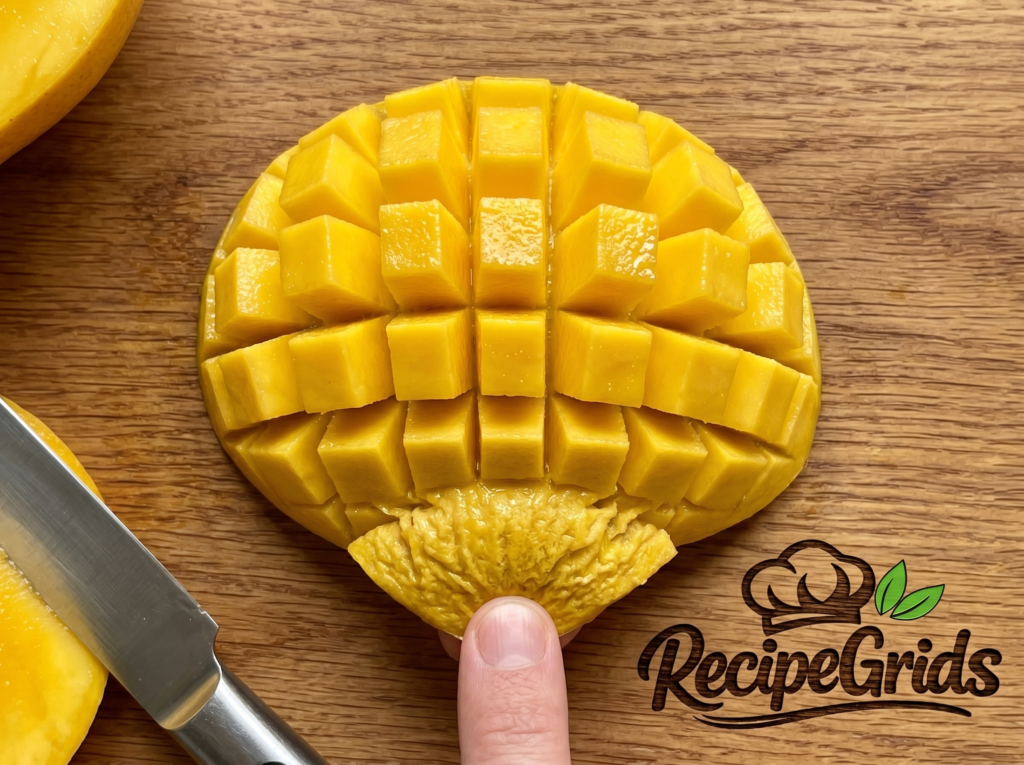
Choose a mango that yields slightly to firm thumb pressure — not soft, not rock hard. Slice the two “cheeks” off the central pit. Score each cheek in a crosshatch pattern to ½-inch depth using the hedgehog cut technique, then push the skin upward and slice off the cubes. Repeat with the remaining flesh around the pit. You want uniform ½-inch cubes — consistency means even osmotic draw during the rest period.
-
Step 2 — De-Bite the Red Onion
Place the finely diced red onion in a small bowl of ice water. Set a timer for 5 minutes. This ice-water soak technique volatilizes the harsh thiosulfinate compounds without removing the crisp texture or the deeper onion flavor. Drain and pat dry with a paper towel before using.
-
Step 3 — Handle the Jalapeño (Safely)
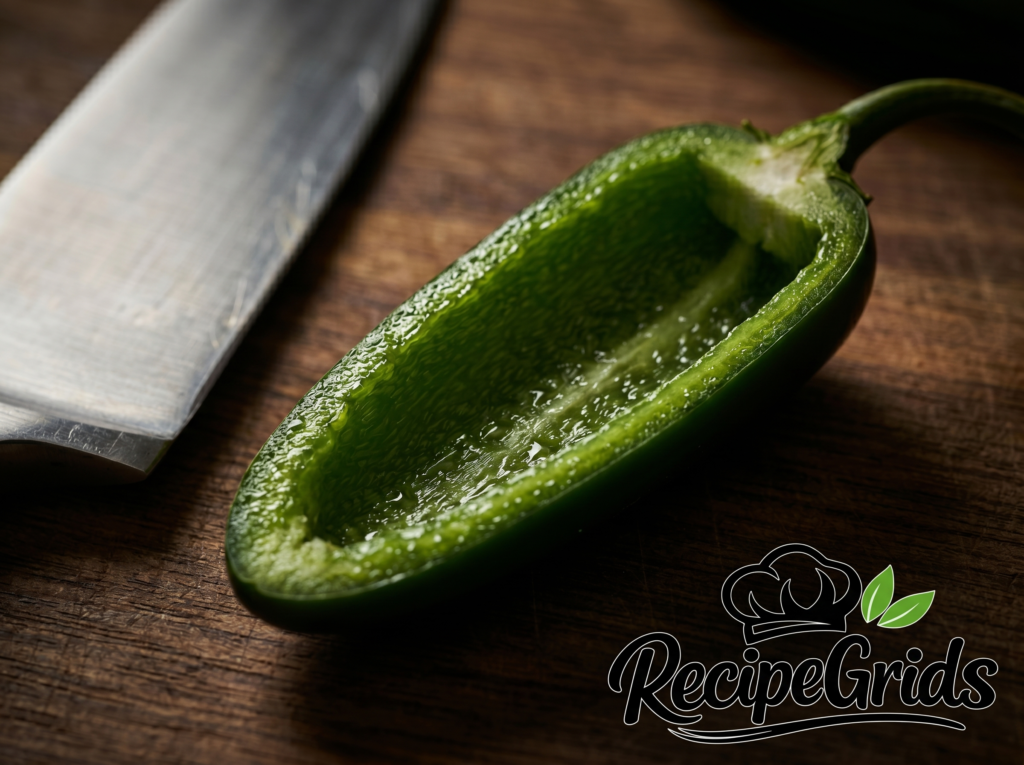
Wear nitrile gloves if you’re sensitive to capsaicin — it absorbs through skin and will transfer to your eyes hours later. Halve the jalapeño lengthwise. Use a small spoon to scrape out the seeds and white placental membrane. Finely mince the flesh. For medium heat, use the full pepper; for mild, use half. The Scoville scale rating for jalapeño sits at 2,500–8,000 SHU — the placenta holds the highest concentration.
-
Step 4 — Combine (Order Matters)
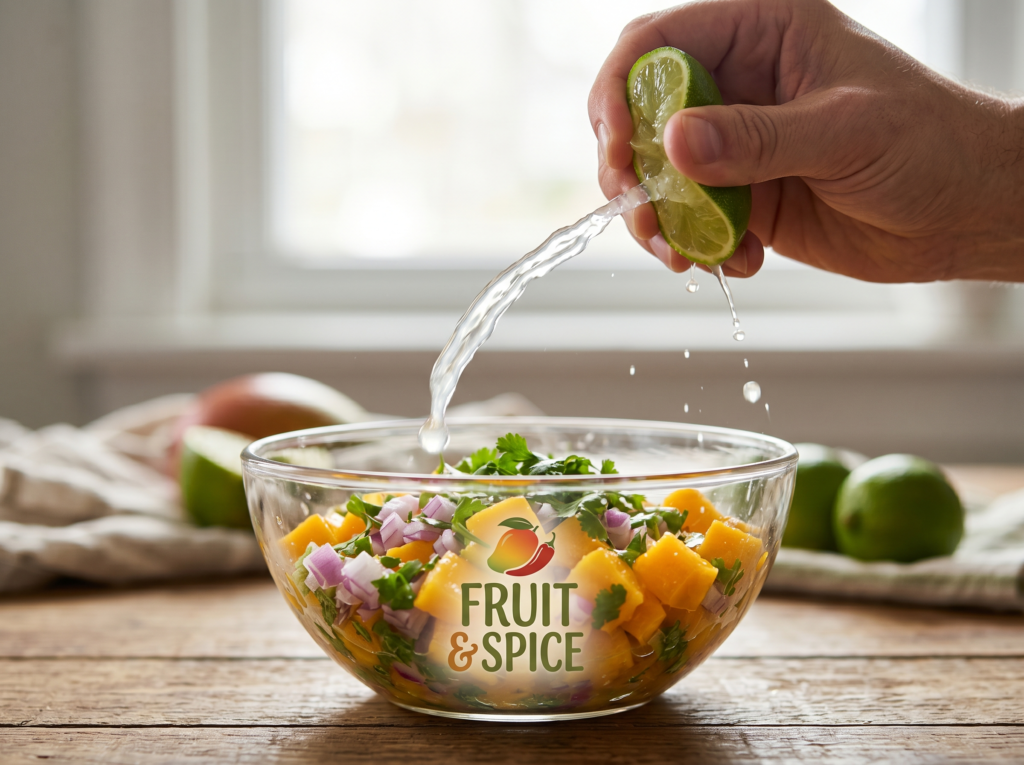
Add mango, drained onion, jalapeño, and fresh cilantro to a non-reactive glass bowl. Toss gently with a silicone spatula — never wooden, which absorbs flavors. Now add kosher salt first, toss again, then add 2 tablespoons of fresh lime juice last. This sequencing matters: salt initiates the osmotic draw from mango cells, and the acid then bonds to the released juices to create the natural dressing for the salsa — no added liquid needed.
-
Step 5 — Rest, Taste, Adjust
Cover the bowl and rest at room temperature for 20 minutes (see the experiment in the Information Gain block above). After resting, taste critically: add more lime for brightness, salt for depth, jalapeño for heat, or a pinch of ground cumin for an earthy base note. Drain through a fine-mesh strainer for 30 seconds before serving to remove pooled liquid. Your mango salsa is ready.
Critical Safe Handling Guidelines for Raw Produce Salsa
- Wash all produce — scrub mangoes, jalapeños, limes, and cilantro under cool running water before cutting, per FDA guidelines for selecting and safely handling raw fresh produce to prevent foodborne illness.
- Two-hour discard rule — raw salsa left at room temperature above 40°F (4°C) for more than 2 hours enters the temperature danger zone. Discard it.
- Color-coded cutting boards — always use a dedicated produce board (yellow in HACCP color-coding) to prevent cross-contamination from meat boards.
- Gloves for chile handling — capsaicin is a potent irritant. Protect eyes and mucous membranes.
- Refrigerate within 30 minutes of making if not serving immediately. Shelf life: 3 days refrigerated maximum.
🛠️ Troubleshooting & Kitchen Fails
Even confident cooks hit predictable walls. Here’s how to rescue each scenario:
| Problem | Root Cause | Fix |
|---|---|---|
| Watery salsa | Over-rested or over-salted; excess osmotic draw | Drain through fine-mesh strainer; reduce salt next time |
| Bland / flat | Under-salted or under-acidified | Add ½ tsp more lime juice + pinch salt; taste again |
| Too spicy | Placenta left on jalapeño | Add ½ cup more diced mango to dilute; or stir in diced cucumber |
| Too sweet | Over-ripe mango high in sucrose | Add extra lime juice + tiny pinch of kosher salt |
| Onion dominates | Skipped the ice-water soak | Rinse onion under cold running water for 30 seconds, drain |
| Mushy texture | Over-ripe mango; low cell turgor | Source firmer mango next time; rest for only 15 minutes |
🍽️ The Perfect Pairing Guide
Think of mango salsa as a flavor bridge — it connects the richness of protein to the brightness of tropical acidity. These are the pairings that make both the salsa and the main course better.
- Baja fish tacos
- Cedar-plank salmon
- Blackened shrimp tacos
- Seared halibut
- Grilled chicken breast
- Carne asada
- Al pastor tacos
- Pulled pork sliders
- Tortilla chips
- Black bean tacos
- Grain bowls
- Lettuce wraps
- Dry Riesling
- Albariño
- Gose or wheat beer
- Classic margarita
🧊 Storage, Freezing & Regeneration
Refrigerator Storage
Transfer to an airtight glass container within 30 minutes of making. Store in the coldest part of the refrigerator (not the door). Quality is best within 2 days; safe up to 3 days. Beyond that, the mango’s cell walls degrade, the cilantro oxidizes dark, and the flavor muddles.
Freezing — Should You?
Technically yes, practically no. Freezing ruptures the turgid mango cells through ice crystal formation, resulting in a soft, waterlogged texture upon thawing. If you must freeze, freeze the diced mango raw, then build the salsa fresh after thawing. Thaw in the refrigerator overnight; never on the counter. That said, frozen salsa works perfectly in blended applications — mango jalapeño sauce, tropical vinaigrette, or as a smoothie booster.
Regenerating Day-Old Salsa
If the salsa has dulled overnight, squeeze in a fresh wedge of lime and a tiny pinch of salt before serving. This acid-brightening technique restores the perception of freshness remarkably well. Drain any pooled liquid first.
📚 Academic Citations & References
- USDA FoodData Central. (2024). Mango, raw (Mangifera indica) — Nutritional Profile. U.S. Department of Agriculture. https://fdc.nal.usda.gov
- FDA Center for Food Safety. (2023). Selecting and Serving Produce Safely. U.S. Food & Drug Administration. https://www.fda.gov
- Plotto, A., et al. (2021). Citric acid and flavor enhancement in fresh tropical fruit: a sensory perception study. Food Research International, 142, Article 110179. https://doi.org/10.1016/j.foodres.2021.110179
- Morán-Villarín, A., et al. (2020). Capsaicin and TRPV1 receptor activation: impact on sensory perception and appetite. Journal of Agricultural and Food Chemistry, 68(22), 6199–6210.
- Eriksson, N., et al. (2012). A genetic variant near olfactory receptor genes influences cilantro preference. Flavour, 1(22). https://doi.org/10.1186/2044-7248-1-22
❓ Interactive FAQs
How ripe should the mango be for mango salsa?
The mango should yield slightly to firm thumb pressure — like a ripe avocado. Too firm means low sugar and starchy flavor. Too soft means the dice won’t hold. Ataulfo mangoes are ideal because they ripen more evenly and have a thinner seed. A ripe mango should smell sweet and faintly tropical at the stem end.
Can I make mango salsa ahead of time?
Yes — up to 24 hours in advance. Make the full batch, refrigerate it covered, then drain and re-season with a squeeze of fresh lime before serving. The flavor actually deepens slightly overnight, though the texture softens modestly.
What mango variety is best for salsa?
Ataulfo (Honey Mango) — creamy, fiberless, sweet; best for smooth texture. Tommy Atkins — firmer, slightly tart, more widely available; holds dice well. Alphonso — premium, intensely aromatic, excellent but often expensive. All three work beautifully. Avoid Kent when slightly underripe — it tastes starchy.
How do I make it less spicy?
Remove all seeds and the white placental membrane from the jalapeño — this drops heat by 40–60%. Use only half the pepper. Or swap entirely to finely diced red bell pepper for zero heat and a pleasant sweetness.
Can I freeze mango salsa?
The texture suffers significantly. Freezing ruptures mango cells, producing a soft, watery result on thaw. Freeze raw diced mango separately instead, then build fresh salsa after thawing. Frozen finished salsa is best used in blended sauces or smoothies, not as a fresh condiment.
Is mango salsa healthy?
Yes — it is naturally vegan, gluten-free, dairy-free, and low in calories (~65 cal per serving). It provides beta-carotene, Vitamin C, quercetin, and lycopene from the tomato if used. It is Whole30 compliant and paleo-friendly.
What can I do with leftover mango salsa?
Blend it into a tropical vinaigrette with olive oil. Use as a filling for breakfast wraps. Stir into a coconut rice grain bowl. Mix into Greek yogurt for a quick tropical dip. Top a seared salmon fillet for an easy weeknight upgrade.
🧠 Test Your Mango Salsa Knowledge
Q1: What does the 5-minute ice-water soak do to red onion?
Q2: Why is lime juice added LAST in the mango salsa method?
AB Rehman is the founder of recipegrids.com — a culinary science resource dedicated to evidence-based home cooking. With a background in food technology and over a decade of obsessive kitchen experimentation, AB bridges the gap between professional technique and practical home application. Every recipe on recipegrids.com is tested a minimum of five times before publication, with controlled variable experiments documented and shared. When not in the kitchen, AB is auditing food science literature or reverse-engineering restaurant dishes for the home cook.