The Ultimate Mentaiko Pasta Recipe & Complete Ingredient Guide
From the cold seas of Alaska to the neon-lit izakayas of Fukuoka — everything you need to know about Japan's most addictive ingredient.

Key Takeaways
Mentaiko is cured Alaska pollock roe, seasoned with chili and salt — a staple of Hakata (Fukuoka) cuisine since the 1950s.
It differs from Tarako by the addition of chili pepper — both use the same roe but produce dramatically different flavor profiles.
Rich in Omega-3 fatty acids, Vitamin B12, and complete protein — one of the most nutrient-dense seafood ingredients you can eat.
Goes far beyond pasta — try it on rice balls, in cream sauces, as pizza topping, in Japanese omelets, or blended into butter.
Look for deep pink-orange color and tight membrane at Japanese grocery stores. Refrigerate up to 5 days or freeze for 3 months.
Hakata Mentaiko from Fukuoka Prefecture is the gold standard — protect with a registered geographical indication since 2020.
Section 01
What Exactly Is Mentaiko? The Texture & Flavor Profile
Let me take you back to a chilly November evening in Fukuoka. I was sitting at a low wooden counter in a tiny izakaya — the kind where the chef is close enough to hand you a skewer directly — when a small plate slid toward me. On it rested two glistening sacs the color of sunset coral, gently blistered on the outside and trembling with barely restrained intensity. My host, a retired sushi master named Tanaka-san, simply said: “Mentaiko. Eat.”
I did. And nothing was the same after that.
The membrane gave way with the faintest resistance, releasing a cascade of tiny, pearled spheres that burst against the palate in a wave of oceanic brine, followed immediately by a warmth that climbed slowly up the back of the throat. It was umami in its most unapologetic form — salty, oceanic, faintly sweet, and lit from within by a slow-building chili fire. That was my first encounter with Mentaiko (明太子), and it changed the way I think about ingredient complexity forever.
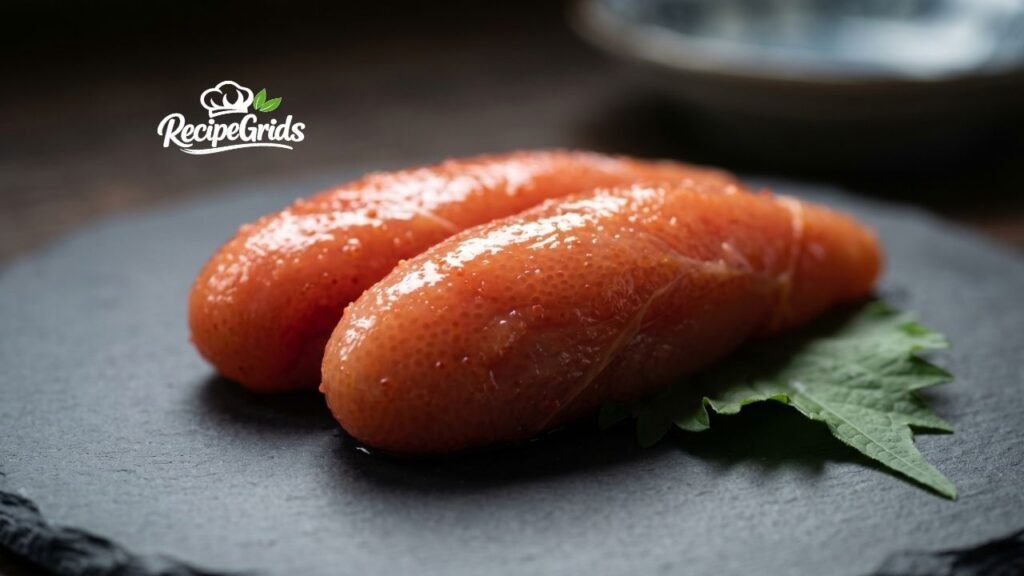
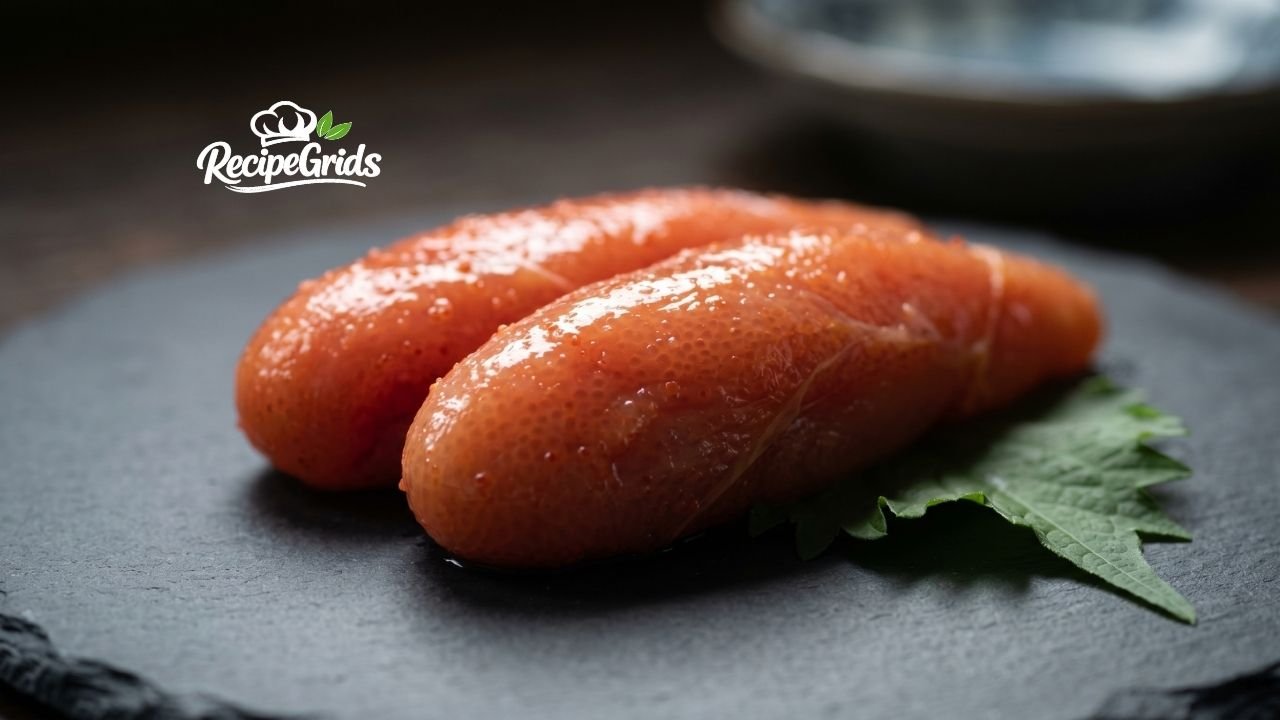
So what is Mentaiko, technically? Mentaiko is the cured and spiced roe (egg sac) of the Alaska pollock (Gadus chalcogrammus), a white fish native to the cold, deep waters of the northern Pacific Ocean. The word itself is a compound: Mentai (明太) — a Korean-derived term for pollock — and ko (子), meaning “child” or “offspring.” The Korean counterpart, Myeongnan-jeot, is the original that Japanese merchants encountered in occupied Korea during the early 20th century and brought home to perfect.
The Texture Experience
Raw Mentaiko is encased in a thin, semi-translucent caul membrane that holds hundreds of thousands of tiny roe pearls — each between 0.5 and 0.8mm in diameter. When bitten, these spheres pop with a sensation food scientists describe as “ikura-like but finer.” The texture is somewhere between soft caviar and cream cheese, depending on how long the curing process runs. A shorter cure yields a firmer, more individual-bead texture. A longer cure produces a creamy paste, which is a fantastic ingredient to experiment with using a smart recipe creator.
The Flavor Layers — A Technical Breakdown
Mentaiko operates on at least four distinct flavor dimensions simultaneously:
- Salinity (First Wave): The dominant opening note — the 2–3% salt brine penetrates the membrane over days, seasoning each individual egg. This is a clean, oceanic salt, not the harsh chloride punch of over-salted food.
- Umami (Sustained Middle): The roe is naturally loaded with glutamate and inosinate — the two primary umami compounds. Curing concentrates and deepens them. This is what makes Mentaiko taste “more like itself” than almost anything.
- Sweetness (Subtle Underpinning): Many artisan producers add mirin, sake, or konbu dashi to the brine, which introduces a restrained sweetness that tempers the aggression of the chili.
- Capsaicin Heat (Slow Finish): Unlike fresh chili, the capsaicin in Mentaiko has been partly polymerized by the curing process, giving it a slower, more diffuse heat that builds and then dissipates cleanly.
“Mentaiko doesn’t just taste like something — it tastes like a philosophy. The Japanese pursuit of balance between restraint and intensity, all contained in a single, trembling sac of roe.”
Section 02
A History Marinated in Centuries
The story of Mentaiko is a story of migration, colonialism, and culinary transformation — a dish that crossed the Korea Strait and, in the process, became something entirely new.
Korean Origins: Myeongnan-jeot
The ancestor of Mentaiko is myeongnan-jeot (명란젓), a heavily fermented and spiced pollock roe that has been eaten in Korea for centuries, particularly in the northern Hamgyong Province regions. Korean preservation tradition relied on aggressive salting and fermentation; the result was pungent, deeply complex, and served in small quantities as banchan (side dishes).
During the Japanese colonial period in Korea (1910–1945), Japanese merchants and residents developed a taste for the product. When they repatriated after World War II, many settled in Fukuoka — the closest major Japanese city to the Korean peninsula — and brought their food memories with them.
Fukuoka’s Revolutionary Moment: 1949
The pivotal figure in Mentaiko’s Japanese identity is Toshio Kawahara, founder of Fukuya, a delicatessen in Hakata (the commercial district of Fukuoka). In 1949, Kawahara — who had lived in Busan, Korea — began experimenting with recreating the Korean roe he had loved, adapting it to Japanese palates. He refined the spice blend, reduced the salt levels, introduced locally sourced ingredients like sake and mirin, and refined the curing time. His product quickly became a sensation. Fukuya is still operating today and is considered the origin point of modern commercial Mentaiko.
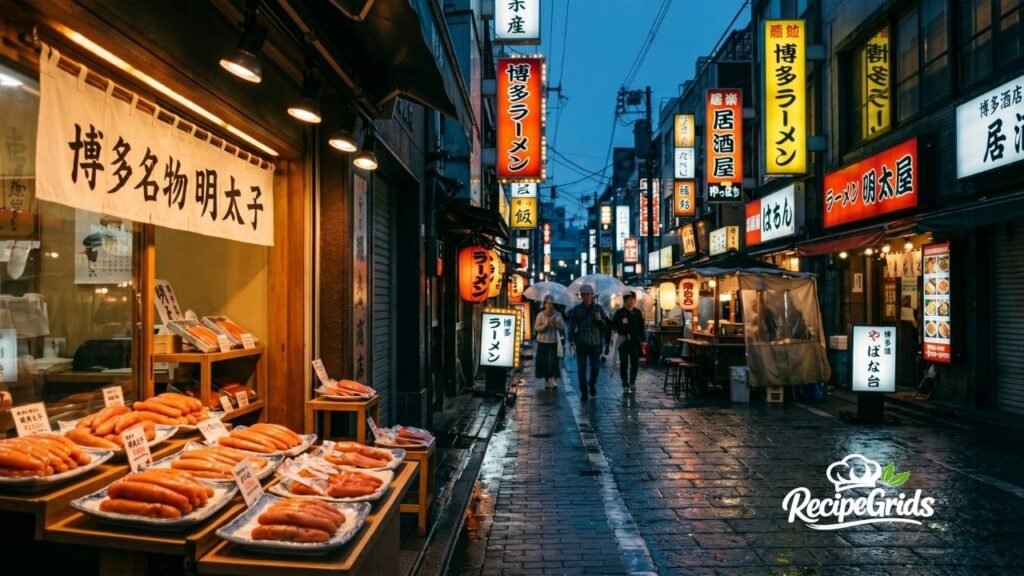
The Rise to National Icon
Through the 1960s and 1970s, Fukuoka’s Mentaiko culture exploded. Dozens of competing producers emerged, each with proprietary spice blends kept as closely guarded family secrets. By the 1980s, Mentaiko had spread to department stores and supermarkets nationwide. By the 1990s, it was a fixture in school lunches, convenience store onigiri, and home cooking across Japan. Today, the global Mentaiko market — including exports to the US, Canada, Australia, and across Southeast Asia — is valued at over ¥30 billion annually.
Section 03
Mentaiko vs. Tarako: The Spice Difference
This is perhaps the most common source of confusion for those newly introduced to Japanese roe products. Both Mentaiko and Tarako use the exact same raw ingredient — the roe of Alaska pollock. The difference lies entirely in what happens to that roe after it’s harvested.
| Attribute | 🌶️ Mentaiko (明太子) | 🩷 Tarako (たらこ) |
|---|---|---|
| Base Ingredient | Alaska Pollock Roe | Alaska Pollock Roe |
| Flavor Profile | Salty, spicy, umami-rich, complex, with lingering chili heat | Mild, clean, gently salty, lightly sweet — more delicate |
| Color | Deep orange-red to coral; darker due to chili | Pale pink to light orange; naturally lighter |
| Spice Level | Moderate to high (producer varies); always includes chili pepper | None — zero chili; suitable for children and spice-sensitive eaters |
| Curing Time | Typically 2–5 days in spiced brine | Typically 1–3 days in plain salt brine |
| Key Seasonings | Salt, sake, mirin, chili flakes (togarashi), konbu, MSG (sometimes) | Salt, sake, sometimes mirin — minimal |
| Best Uses | Pasta, rice balls, butter, pizza, ramen — bold pairings | Pasta (cream-based), sushi, rice — neutral pairings |
| Regional Origin | Fukuoka (Hakata), Kyushu | Nationwide; Hokkaido historically prominent |
| Price (Approx.) | ¥600–¥2,500 per pair of sacs (quality-dependent) | ¥300–¥1,200 per pair; generally less expensive |
| Shelf Life (Refrigerated) | 3–5 days after opening; 3 months frozen | 3–5 days after opening; 3 months frozen |
In practical kitchen terms: if you want depth, complexity, and heat — choose Mentaiko. If you’re serving someone who doesn’t enjoy spice or are cooking for children, Tarako is the appropriate substitute and behaves identically in recipes, simply without the fire.
Section 04
The Art of the Cure: How Mentaiko Is Made
Understanding the curing process is what separates a casual Mentaiko enthusiast from someone who truly appreciates what they’re eating. This isn’t a quick pickle — it’s a slow, careful transformation that requires precise temperature control, quality raw material, and patience.
Step 1: Sourcing the Roe
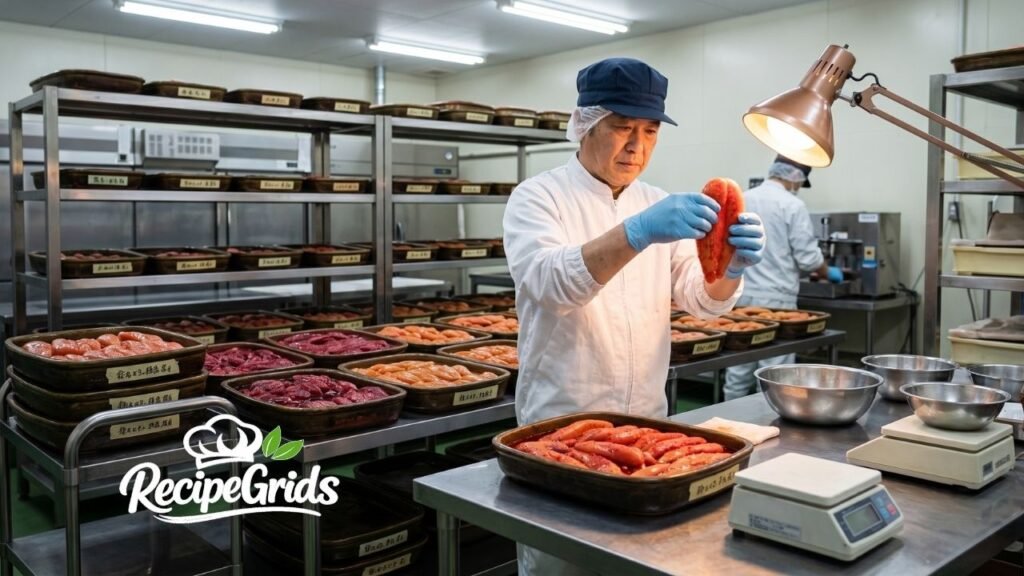
Premium Mentaiko begins with mature, intact roe sacs harvested from wild-caught Alaska pollock during the winter spawning season (October–February). The sacs must be removed carefully to preserve the membrane — any rupture means disqualification. The roe is sorted by size, color, and integrity before processing.
Step 2: Primary Salt Brine (Shio-zuke)
The intact sacs are submerged in a preliminary salt brine — typically 3–5% concentration — for 12–24 hours at 0–2°C. This initial cure firms the membrane, draws out excess moisture, and begins building the salt structure that will define the final product.
Step 3: The Spice Marinade (Tare)
Here is where each producer’s identity is established. The tare (marinade) typically contains some combination of: sake, mirin, soy sauce, dried konbu, katsuobushi dashi, Japanese chili pepper (togarashi), Korean gochugaru, sometimes yuzu zest, and occasionally MSG or natural glutamate enhancers. The sacs are transferred into this marinade and held at refrigerator temperature (below 4°C) for 2–5 days, turning periodically.
Step 4: Finishing and Inspection
After curing, the sacs are inspected individually. The best Mentaiko is graded by transparency — you should be able to see the individual eggs clearly through a taut, unbroken membrane. They are then vacuum-packed and shipped, often within hours of completion.
Section 05
Regional Varieties: Not All Mentaiko Is the Same
Japan’s Mentaiko landscape is as regionally varied as its sake or ramen. Here are the most important expressions to know:
Hakata Mentaiko — The Gold Standard
The original and still the best. Hakata-style Mentaiko is characterized by a moderate spice level, a complex tare with sake and mirin sweetness, and exceptional membrane integrity. Since 2020, “Hakata Mentaiko” carries a geographical indication certification (similar to European PDO). Over 60 licensed producers operate in Fukuoka Prefecture alone. The most prestigious — Fukuya, Yamaya, and Kawataro — are household names in Japan.
Kyoto Karashi Mentaiko — Refined Elegance
Kyoto chefs adapted Mentaiko to their regional aesthetic — subtlety above everything. Kyoto-style uses wasabi and Japanese mustard (karashi) in place of or alongside chili, producing a sharp, horseradish-adjacent heat rather than a chili burn. The color is slightly more muted. Perfect with tofu and mild preparations.
Hokkaido Mentaiko — Oceanic Freshness
Given Hokkaido’s proximity to Alaska pollock fishing grounds, some producers work with ultra-fresh roe cured for shorter periods. The result is a lighter, more delicate Mentaiko where the natural sweetness of the roe is more prominent. Often paired with Hokkaido dairy — cream cheese, butter, crème fraîche — to extraordinary effect.
Karashi Mentaiko — The Fiery Variant
Karashi Mentaiko refers to a subcategory that prioritizes heat above all else. Using a higher ratio of Korean gochugaru and Japanese togarashi, these products have a vivid red-orange color and an assertive, front-loaded spice that heat-seekers adore. Often sold in tubes for easy dispensing.
Section 06
The Ultimate Mentaiko Pasta Recipe
Mentaiko pasta — mentaiko supagetti — is a quintessential yoshoku (Western-influenced Japanese) dish that emerged in the 1970s and now appears on virtually every kissaten (Japanese café) menu. It is the single best introduction to Mentaiko for a newcomer: quick to make, deeply satisfying, and essentially foolproof.
Featured Recipe
Classic Mentaiko Spaghetti (明太子スパゲッティ)
A cold-tossed pasta technique that preserves the Mentaiko’s raw delicacy. No heat. No compromise.
Ingredients
- 200g spaghetti (No.1.6, thin)
- 2 pairs Mentaiko sacs (~100g)
- 2 tbsp unsalted butter, room temp
- 1 tbsp soy sauce
- 1 tbsp heavy cream (optional)
- 2 tsp fresh lemon juice
- 2 sheets nori, cut into strips
- 4 shiso (perilla) leaves, chiffonade
- 1 tsp toasted sesame seeds
- Salt for pasta water
Method
-
1
Prepare the Mentaiko Sauce Using a small knife, slit the membrane of each Mentaiko sac lengthwise. Use the back of the blade to scrape out all the roe into a large mixing bowl. Add softened butter, soy sauce, and lemon juice. Mix gently but thoroughly with chopsticks or a fork. Do not whisk — you want texture, not a smooth emulsion.
-
2
Cook the Pasta Bring a large pot of water to a rolling boil. Salt generously — it should taste like the sea. Cook spaghetti for 1 minute less than package instructions (it will finish in the bowl). Reserve 3 tbsp of pasta water before draining.
-
3
The Critical Step: Rest, Then Toss Drain the pasta and let it cool for exactly 60 seconds on a plate. This is non-negotiable — hot pasta will cook the Mentaiko and destroy its silky texture. Transfer warm (not hot) pasta to the Mentaiko bowl. Add 1–2 tbsp pasta water. Toss firmly but quickly with chopsticks until every strand is coated.
-
4
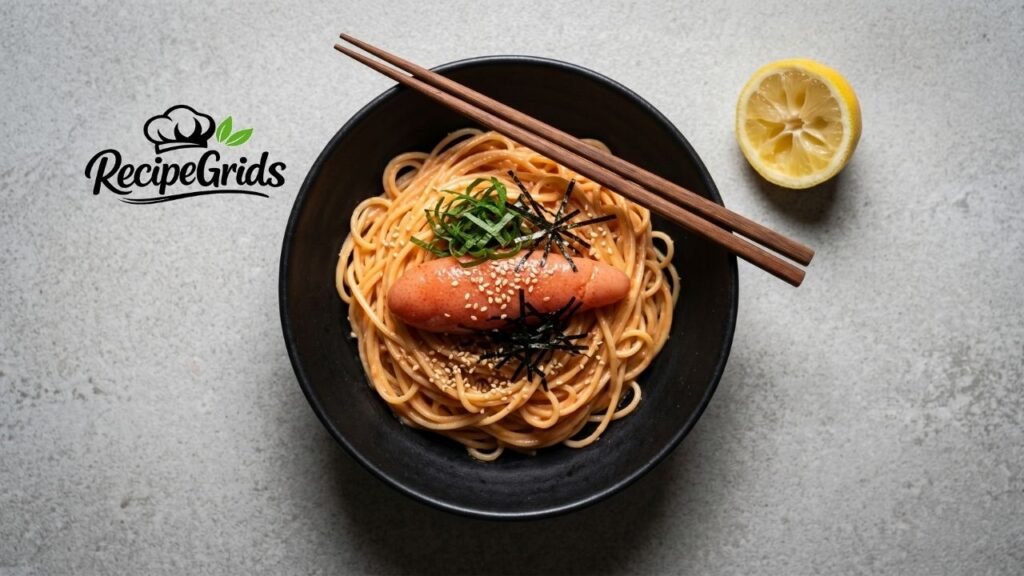
Plate and Garnish Divide between two bowls. Top with nori strips, fresh shiso chiffonade, and sesame seeds. If desired, reserve a small piece of Mentaiko sac to place whole on top of each bowl — it’s visually stunning and allows each diner to break it open themselves.
Section 07
5 Unique Ways to Use Mentaiko Beyond Pasta
Mentaiko is one of those rare ingredients that improves almost everything it touches. Here are five uses that will change how you think about it as a kitchen staple:
Mentaiko Butter
Blend scraped Mentaiko roe into softened unsalted butter (2:1 ratio butter to roe), with a squeeze of lemon. Roll in cling film and freeze. Slice a medallion onto grilled steak, seared scallops, or hot toast. It melts into the most complex compound butter imaginable.
Onigiri Stuffing
The classic convenience store combination. A whole Mentaiko sac is placed at the center of a triangular rice ball, wrapped in crisp nori. The contrast of warm, sticky rice with cool, briny, spicy roe is one of Japan’s great textural experiences.
Mentaiko Pizza
A Tokyo invention that has become a Japanese pizza standard. Spread Mentaiko mixed with mayonnaise on pizza dough as the “sauce.” Top with mozzarella and thin slices of squid or corn. Post-bake, add fresh nori strips and a drizzle of sesame oil. The heat of the oven caramelizes the outer roe while the interior stays luscious.
Dashimaki Tamago Filling
The rolled Japanese omelette (dashimaki tamago) becomes extraordinary when a thick line of Mentaiko is rolled inside the egg layers. The gentle egg and the assertive roe create a balance that is deeply satisfying. Slice into rounds and serve as a bento centerpiece.
Mentaiko Cream Sauce for Scallops
Reduce heavy cream with a splash of sake and a piece of konbu. Off heat, stir in scraped Mentaiko, fresh lemon juice, and a knob of butter. Do not reboil. Spoon over pan-seared scallops. The brininess amplifies the natural sweetness of the scallop with extraordinary elegance — this is fine-dining territory in under 15 minutes.
Section 08
How to Buy and Store Mentaiko: Expert Tips to Avoid Spoilage
Where to Buy in Japan (and Internationally)
In Japan, the finest Mentaiko comes from specialty producers in Fukuoka’s Hakata district. Brands to seek: Fukuya, Yamaya, Kawataro, Ikumi Mori, and Chidori. Premium department stores (depachika basement floors) across Japan carry rotating selections from regional producers.
Internationally, Mitsuwa, H-Mart, Nijiya Market, and specialty Japanese grocery stores across North America, Australia, and Europe stock Mentaiko — typically frozen. Online, several Japanese importers offer overnight delivery in sealed cold packaging. When buying online internationally, always verify the cold-chain guarantee before purchasing.
Section 09
Health Benefits & Nutrition: What You’re Really Eating
Mentaiko is not merely a flavor delivery system. Per 100g serving, it is one of the most nutritionally dense seafood ingredients available — a genuine functional food that happens to taste extraordinary.
* Per 100g serving. Daily Values based on a 2,000 calorie diet. Note: sodium content is significant (≈1,800mg/100g) — consume in moderation.
Key Health Benefits
- Exceptional Omega-3 Fatty Acids: Mentaiko provides EPA (eicosapentaenoic acid) and DHA (docosahexaenoic acid) — the two forms of omega-3 that research consistently associates with cardiovascular health, cognitive function, and reduction of systemic inflammation. A typical serving (30–40g) covers roughly 60–80% of the recommended daily Omega-3 intake.
- Extraordinary Vitamin B12 Concentration: Fish roe is one of nature’s highest natural sources of B12, essential for nerve function, red blood cell formation, and DNA synthesis. A small 30g serving of Mentaiko delivers many times the adult daily requirement — making it particularly valuable for those at risk of B12 deficiency.
- Complete, High-Quality Protein: With a 21g protein content per 100g and an excellent amino acid profile (including all nine essential amino acids), Mentaiko rivals chicken breast gram-for-gram as a complete protein source, with significantly more micronutrient density.
- Selenium and Antioxidants: Pollock roe is a meaningful source of selenium, a trace mineral that functions as a cofactor for glutathione peroxidase — one of the body’s primary antioxidant enzymes. Selenium also supports thyroid function and immune response.
- Capsaicin Benefits: The chili component of Mentaiko provides capsaicin, which research has linked to metabolic rate support, appetite regulation, and anti-inflammatory effects at regular dietary consumption levels.
- Important Caveat — Sodium: The curing process significantly concentrates sodium. Individuals monitoring blood pressure or on sodium-restricted diets should consume Mentaiko in moderation (30–40g servings rather than larger portions) and account for it in daily sodium budgets.
Final Word
Mentaiko — A Small Thing That Contains Multitudes
I have eaten Mentaiko hundreds of times since that first evening with Tanaka-san in Fukuoka. On toast at 7am in Tokyo. Mixed into ramen broth at midnight. Spread on crackers at 35,000 feet over the Pacific. Each time, I find something new in it — a different level of heat, a more prominent sweetness, a particular textural quality that I hadn’t noticed before.
That is the mark of a truly great ingredient: it rewards attention. Mentaiko is not background. It does not hide. But it rewards those who take the time to understand what they’re eating — the cold northern seas, the careful hands of a Hakata artisan, the days of slow transformation in a spiced brine, the science of capsaicin and glutamate working in concert.
Whether you’re tasting it for the first time on a simple plate of pasta or exploring the furthest reaches of what it can do in a fine-dining context, Mentaiko offers one of the most concentrated experiences of Japanese culinary philosophy: simplicity on the surface, extraordinary complexity within.
“In Japanese cooking, the finest ingredients need no embellishment — they need only to be understood. Mentaiko is that kind of ingredient.”
— AB Rehman