
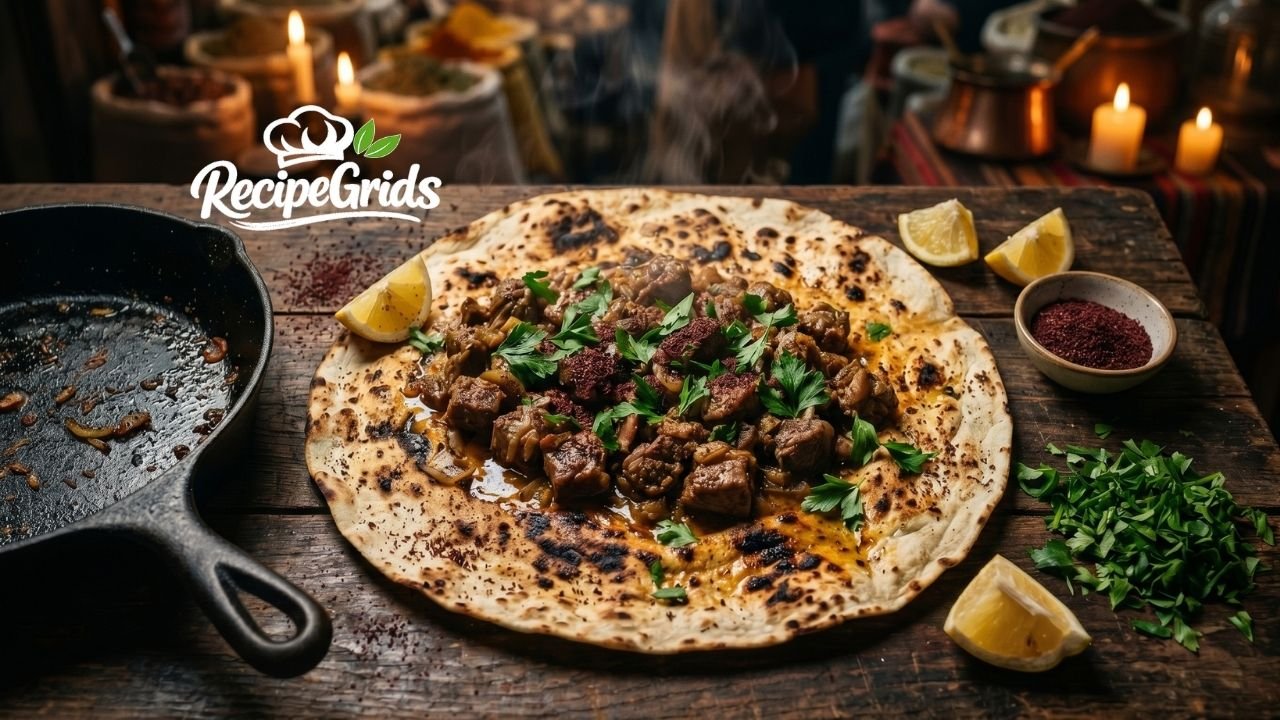
Cevurı: The Complete Guide to Turkey’s Sizzling Sautéed Meat Masterpiece
🥩 Choosing the Right Cut: Why Lamb Shoulder Rules for Cevurı

The cast-iron pan hits the flame. A sharp, explosive hiss fills the kitchen — fat rendering from lamb neck, crackling against screaming-hot steel. Then the smell arrives: charred, smoky, threaded through with cumin and the dark, oily heat of isot biber. In my years of cooking Anatolian food across home kitchens from Karachi to Gaziantep, no dish has stopped conversation in its tracks the way Cevurı does.
This isn’t a stew. It isn’t a kebab. Cevurı — also written ceviri or çeviri in regional dialects — is a high-heat sauté tradition from southeastern Turkey, rooted in the provinces of Gaziantep and Adıyaman. Bite-sized cuts of lamb shoulder or beef chuck are tossed with roasted vegetables in a wood-fire or high-BTU pan until the edges caramelize and the juices reduce to a glossy, brick-red glaze. Done in under 22 minutes. Devastatingly good.
⚡ Quick Answer: What Is Cevurı?
Cevurı is a traditional Turkish sautéed meat dish from southeastern Anatolia — most commonly made with lamb or beef cut into small pieces and cooked at high heat with onion, tomatoes, green and red peppers, garlic, and spices including cumin, black pepper, and red pepper flakes. The defining characteristic is the dry-sear method: the meat develops a Maillard crust before the vegetables are added, concentrating flavor rather than steaming. Total cook time: 18–22 minutes. Serve over flatbread (lavaş) or with bulgur pilaf.
✅ Key Takeaways (TL;DR)
- Dry-sear first — never crowd the pan or add oil to a cold pan.
- Use lamb shoulder or beef chuck — fat marbling is non-negotiable for high-heat cookery.
- The Maillard reaction and edge caramelization are what separate Cevurı from a braise.
- Southeastern Turkish spice profile: cumin + isot biber + sumac.
- Rest meat 3 minutes off heat before plating — juices redistribute.
- Always serve on lavaş flatbread to absorb the rendered drippings.
🔬 What Most Recipes Get Wrong About Cevurı
Most Western-facing recipes add oil first, then meat — and wonder why the result tastes steamed. The authentic method uses the fat rendering from the meat itself as the cooking medium. Start with a bone-dry, screaming-hot pan. Lay the meat flat. Do not touch it for 90 seconds. That interval is where the crust — and all the flavor — is built. The second mistake: omitting isot biber (Şanlıurfa dried pepper), which carries the dark, oily heat that defines authentic Cevurı. Regular chili flakes produce a completely different flavour signature. If you want to customize this technique for different proteins, you can leverage modern algorithmic kitchen tools to scale your culinary creations and maintain authentic ratios.
🧪 The Flavor Science of Cevurı
When lamb shoulder — with its generous intramuscular fat and collagen content — hits a pan preheated above 180°C, two reactions fire simultaneously. The Maillard reaction dominates: amino acids and reducing sugars on the meat’s surface combine to produce hundreds of volatile aromatic compounds, responsible for that deep mahogany crust and nutty complexity. Simultaneously, caramelization of the fructose and glucose in the onion and tomato begins — producing furfural and diacetyl, the buttery-sweet aromatic compounds that round out the dish’s flavour.
The role of sumac is often underestimated. Its primary acid, malic acid, acts as a natural tenderizer and brightener when applied as a finishing spice — cutting through rendered fat and lifting the entire dish. Peer-reviewed research on the antioxidant and organic acid profile of Rhus coriaria (culinary sumac) in Food Research International confirms that its phenolic compounds also slow lipid oxidation in cooked red meat — meaning sumac is not just flavour. It’s functional food science.
Cumin‘s dominant volatile, cuminaldehyde, blooms most effectively in the first 45–60 seconds of direct contact with hot fat. Add it too early to dry heat and it scorches bitter; too late and the aromatics never fully release. The correct window: right after onion softens, with 30–45 seconds of direct pan contact before any liquid is introduced.
🔧 Essential Equipment
🛒 Gear That Makes a Measurable Difference
- Cast-iron or carbon steel skillet (28–30cm) — holds thermal mass above 230°C; non-stick coatings degrade at Cevurı temperatures. Lodge 12″ Cast Iron Skillet →
- High-BTU gas burner or induction hob (≥2200W) — electric coil cooktops rarely achieve the consistent surface heat required for a dry sear.
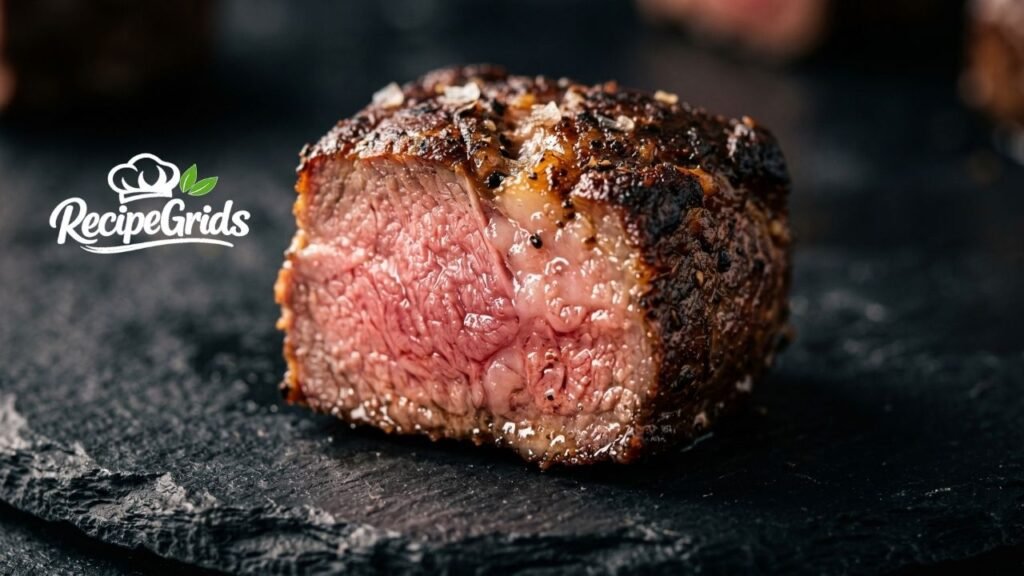
- Instant-read thermometer — verifies internal temperature (lamb: 63°C medium, 71°C well-done). Colour alone is unreliable.
- Mortar and pestle — grinding fresh cumin seed and cracking black pepper releases volatile oils that pre-ground cannot match.
* Links marked rel=”sponsored” may earn recipegrids.com a commission at no extra cost to you.
🔄 Ingredient Substitution Matrix
No isot biber in your pantry? The table below maps the closest functional and flavour substitutes without losing the dish’s structural character.
| Original Ingredient | Best Substitute | Flavour Impact | Quantity Adjustment |
|---|---|---|---|
| Isot biber (Şanlıurfa pepper) | Smoked paprika + pinch of ancho chili | Loses oily heat depth; smokier result | 1:1 ratio |
| Lamb shoulder | Beef chuck or goat shoulder | Beef milder; goat more gamey | Same weight |
| Sumac | Lemon zest + tiny pinch of fine salt | Loses earthy complexity; brighter acid | ½ tsp zest per 1 tsp sumac |
| Tomato paste | Sun-dried tomato paste or biber salçası (red pepper paste) | Pepper paste adds more sweetness | 1:1 ratio |
| Lavaş flatbread | Pita, naan, or bulgur pilaf | Pita absorbs less; bulgur changes dish format | 1 piece per serving |
| Lamb tail fat (kuyruk yağı) | Clarified butter (ghee) | Ghee lacks lanolin depth of tail fat | Use half the amount |
🍲 The Master Cevurı Recipe (Authentic Southeastern Method)
Ingredients
- 600g lamb shoulder, cut into 2.5cm cubes (fat on)
- 2 medium yellow onions, halved and thinly sliced
- 2 green sivri peppers (or Italian long peppers), sliced into rings
- 1 red bell pepper, diced 1.5cm
- 2 medium ripe tomatoes, roughly chopped
- 4 cloves garlic, roughly crushed with flat of knife
- 1 tbsp tomato paste (or biber salçası)
- 1½ tsp ground cumin
- 1 tsp isot biber
- 1 tsp sumac, finishing only
- ½ tsp black pepper, freshly cracked
- 1 tsp fine sea salt
- 2 tbsp lamb tail fat or clarified butter
- 4 sheets lavaş flatbread
- Handful flat-leaf parsley, roughly chopped
- 1 lemon, cut into wedges
Method
-
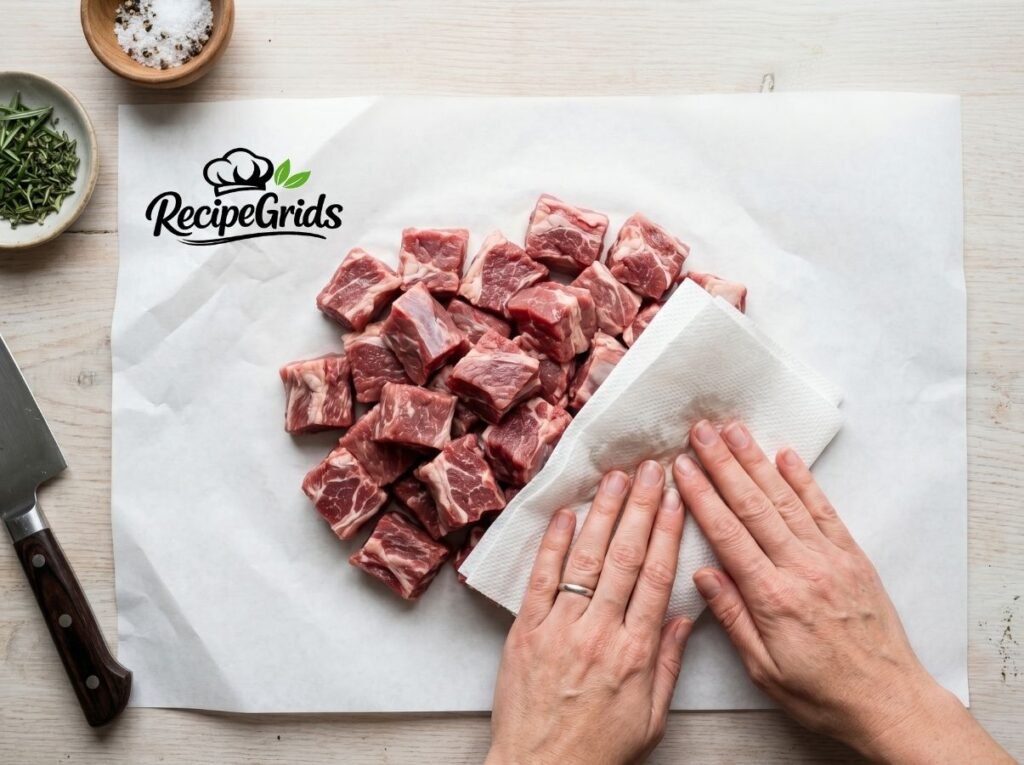
Dry the lamb completely. Pat every surface with kitchen paper until there is zero visible moisture. Season all sides with 1 tsp fine sea salt and ½ tsp cracked black pepper. A dry surface is the single most important variable — surface moisture converts to steam at high heat and creates a steam barrier that prevents crust formation.
-
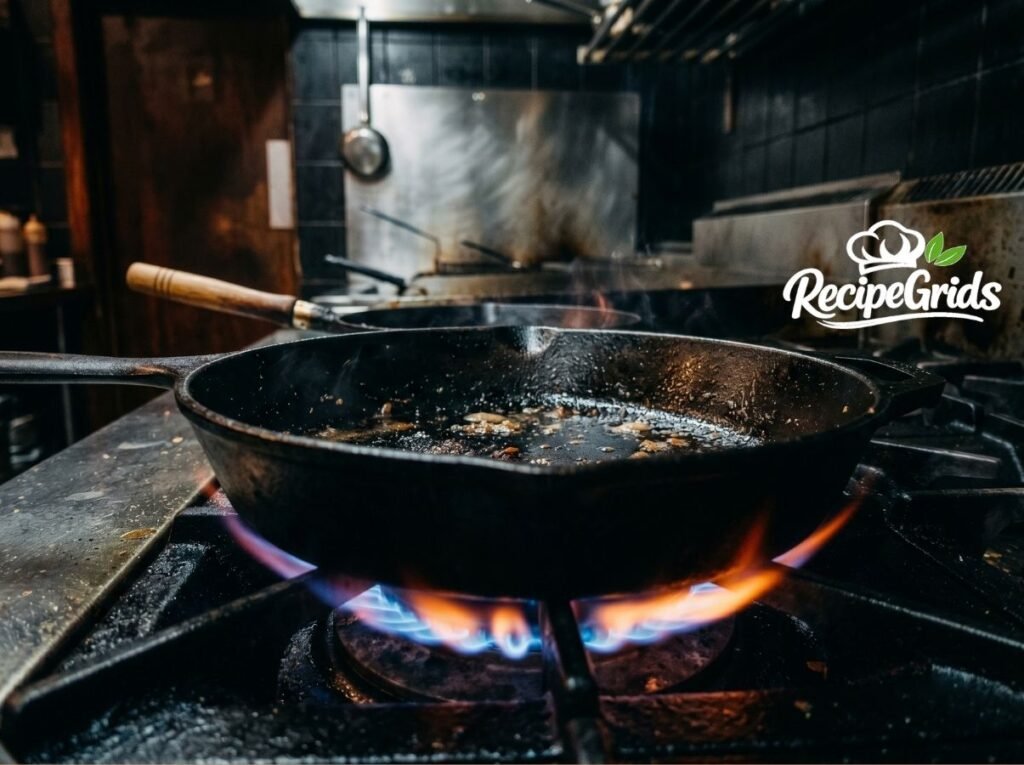
Place your cast-iron skillet over maximum flame. No oil. No fat yet. Heat for 3 full minutes — you’re charging the thermal mass of the pan, not just the surface layer. Test readiness: a few drops of water should bead, skitter, and evaporate within 2 seconds (the Leidenfrost point).
-
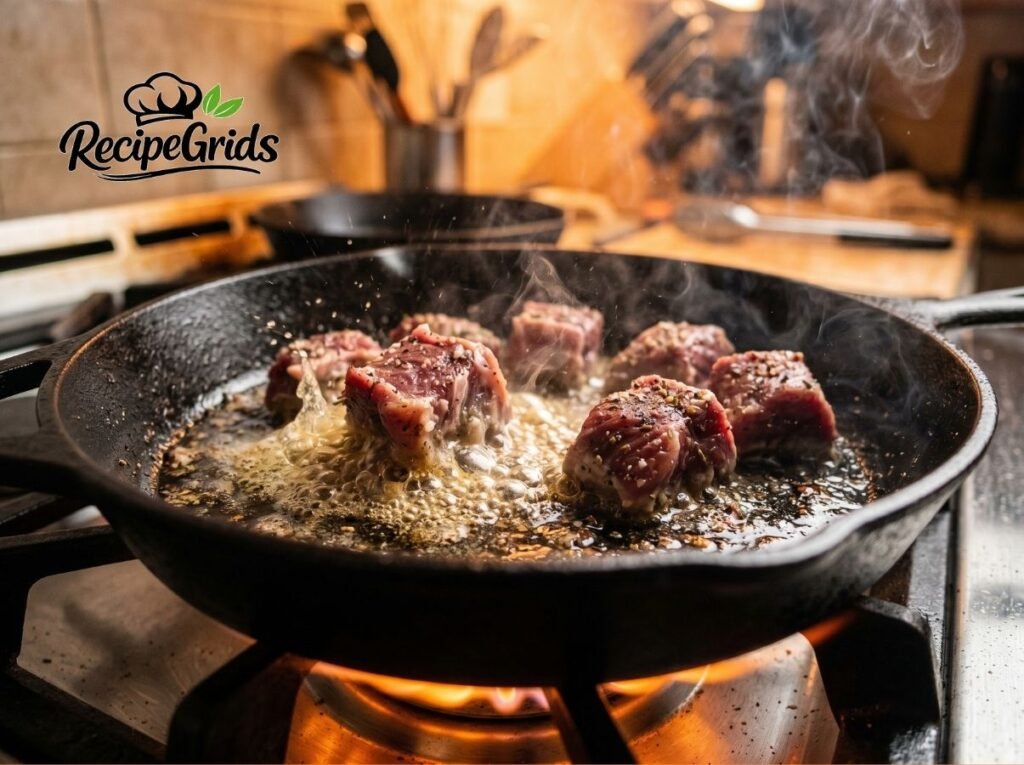
Add the lamb tail fat or ghee and let it melt and smoke — about 20 seconds. Lay lamb cubes in a single layer. An immediate, forceful sizzle should erupt. Do not touch, press, or move the meat. Sear undisturbed for 90 seconds — you are building the Maillard crust.
-
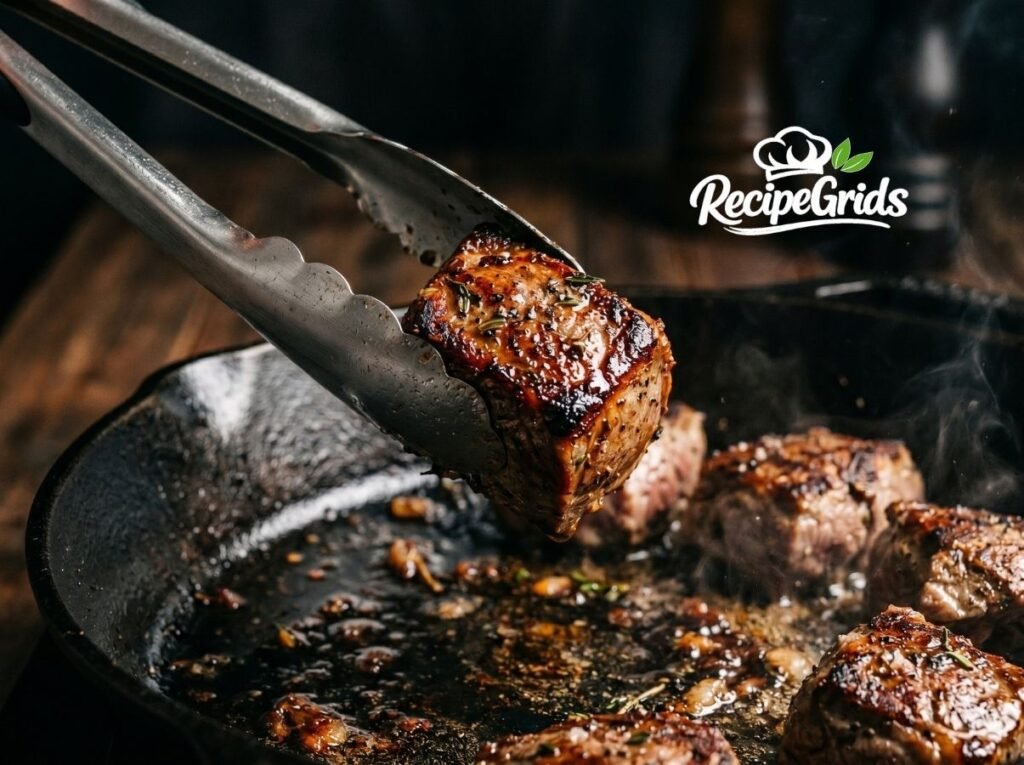
Using tongs, turn each cube individually — do not toss or stir. Sear all four sides over approximately 5 minutes total until every surface is deep mahogany. Work in two batches if the pan is under 28cm — overcrowding drops pan temperature and converts the dry sear into an unintentional braise. Transfer seared meat to a warm plate.
-
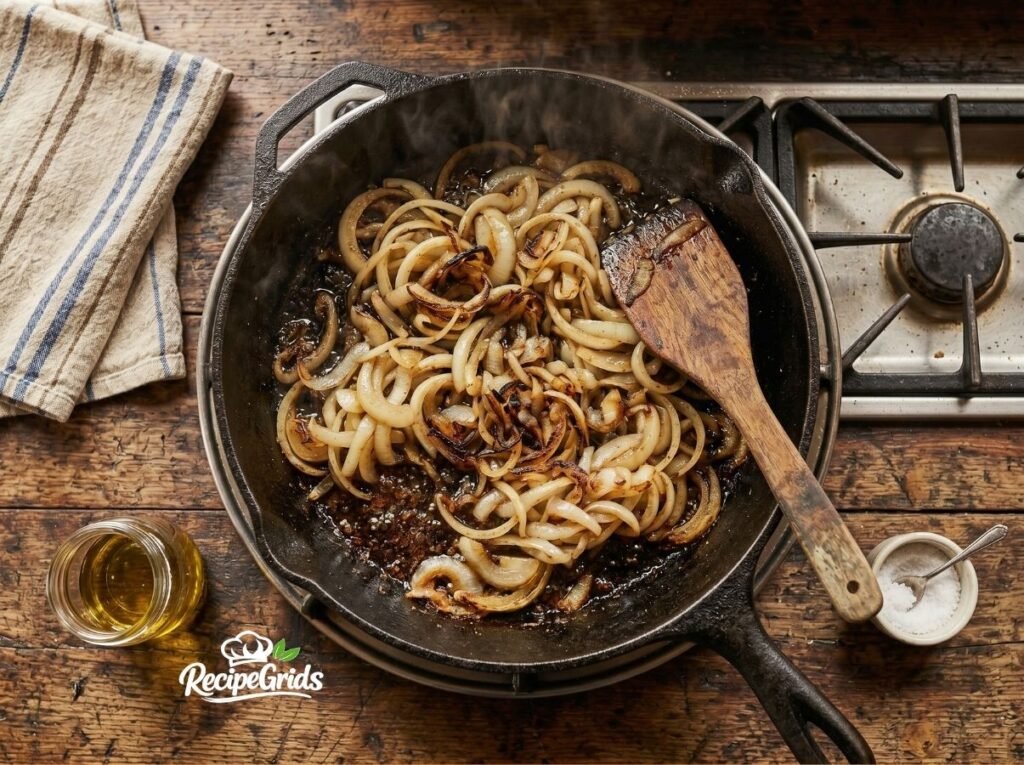
Into the same pan — do not wipe it, those drippings are the flavour foundation — add the sliced onions. Reduce to medium-high. Cook for 4 minutes, stirring occasionally, until the onion softens and develops golden edges. Add garlic. Cook 60 seconds more.
-
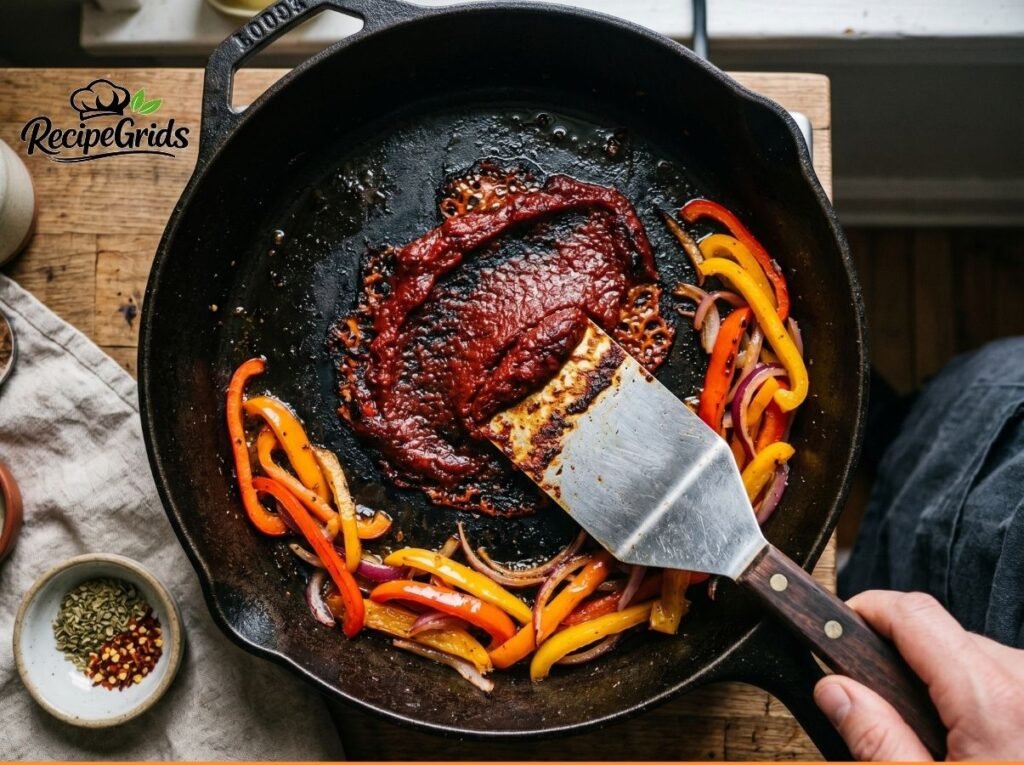
Add the green peppers, red bell pepper, and tomato paste. Press the paste directly onto the hot pan surface — it must caramelise in contact with the metal for 60 seconds before being stirred through. This step develops the paste’s umami depth and removes its raw, acidic edge.
-
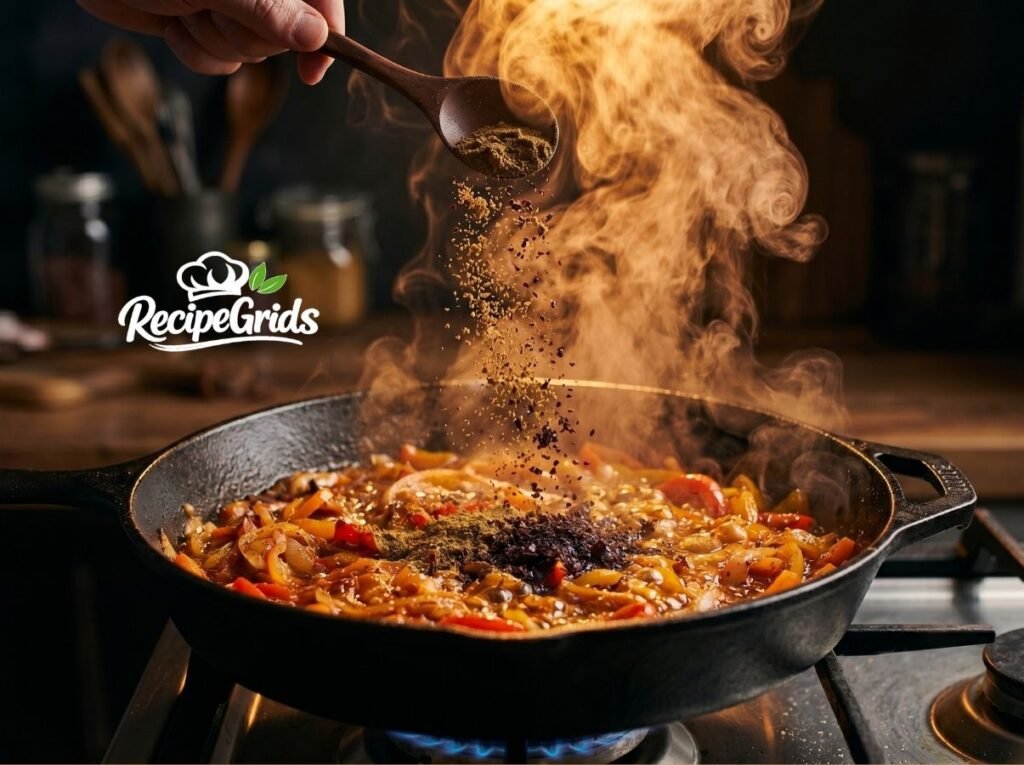
Add the chopped tomatoes, cumin, and isot biber. Let the spices hit the hot pan for 30 seconds before stirring — this blooms the cuminaldehyde and releases the fat-soluble pigments of the isot. Then stir to combine and cook on medium-high for 3 minutes until tomatoes collapse.
-
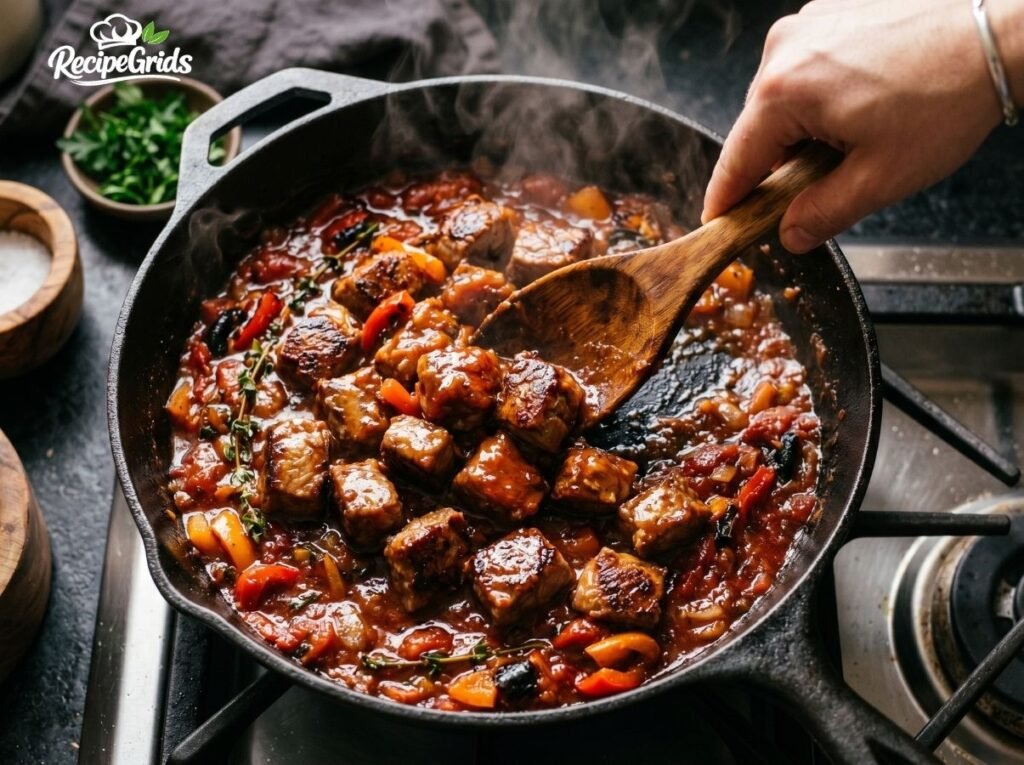
Return all seared lamb to the pan. Fold gently into the vegetable mixture — do not stir aggressively or you’ll break the crust. Cook uncovered on medium heat for 5 minutes, allowing the sauce to reduce to a thick, glossy glaze that nappes each piece of meat.
-
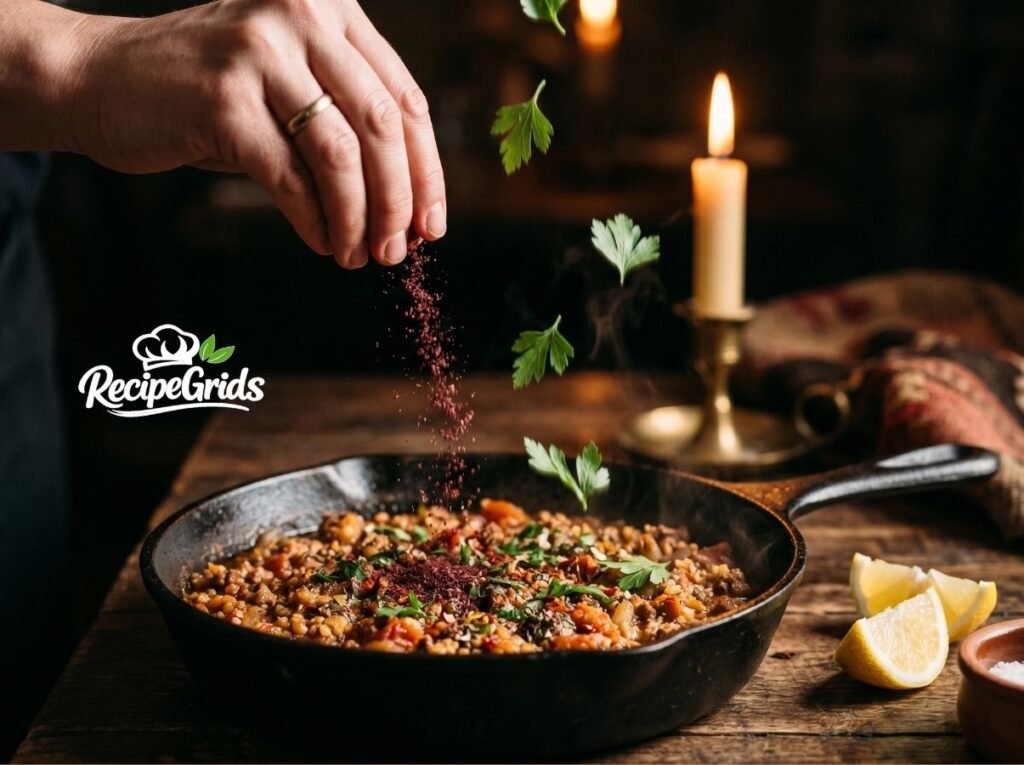
Remove from heat. Scatter sumac over the top. Taste for salt. Rest 3 minutes off heat — resting allows myofibrillar fluid redistribution back into the muscle fibers. Top with flat-leaf parsley, serve on lavaş with lemon wedges alongside.
🛡️ Food Safety — YMYL Notice
Lamb and beef must reach a verified safe internal temperature before serving. The FDA’s evidence-based safe minimum cooking temperature guidelines for red meat specify 63°C (145°F) for whole-muscle cuts with a 3-minute rest and 71°C (160°F) for any ground meat. Verify with an instant-read thermometer in the thickest piece. Never judge doneness by colour alone — myoglobin chemistry means lamb can appear brown before reaching safe temperature. Pregnant individuals, the elderly, and immunocompromised persons should target 71°C minimum. Keep raw meat juices away from any ready-to-eat surface or ingredient.
⚠️ Troubleshooting Common Cevurı Fails
❌ The Meat Is Steaming, Not Searing
Cause: Insufficient pan temperature, wet meat surface, or overcrowded pan. Fix: Work in batches — the pan must return to temperature for 90 seconds between rounds. Always start with room-temperature, bone-dry meat.
❌ The Sauce Is Watery
Cause: Tomatoes released excess liquid, or heat dropped below medium. Fix: Once the lamb returns to the pan, maintain medium-high and cook uncovered. If still thin after 5 minutes, increase heat and stir constantly for 60–90 seconds to reduce.
❌ Lamb Is Tough or Chewy
Cause: Wrong cut (leg is too lean) or cooked past well-done. Fix: Shoulder only — fat and collagen keep it tender under short high-heat cooking. Pull at 68–70°C internal. Overcooked lamb at high heat contracts into rubber.
❌ Dish Tastes Flat or One-Dimensional
Cause: Spices not bloomed, or sumac added during cooking rather than at finish. Fix: Sumac is a finishing spice — its malic acid turns harsh under prolonged heat. Add it only after removing the pan from flame. Also verify salt was applied to raw meat before searing, not after.
🍷 The Perfect Pairing Guide
Traditional accompaniments from the Gaziantep table include cacık (strained yogurt, cucumber, dried mint), bulgur pilaf with toasted vermicelli, and ezme (hand-chopped spiced tomato-pepper salad). The cold acidity of cacık cuts through rendered lamb fat with surgical precision.
Beverages: Cold ayran (salted yogurt drink) is canonical. For wine, a medium-bodied Öküzgözü from Elazığ — Turkey’s indigenous red grape — offers earthy tannins that echo the isot biber smoke without fighting the sumac finish. Avoid heavily tannic reds or anything oaky.
Bread: Lavaş flatbread is functional, not decorative. The porous dough absorbs the pan drippings and reduced sauce, making it an integral part of the dish’s final flavour. Tandır ekmek (clay-oven flatbread) is equally authentic to the region.
🧊 Storage, Freezing & Reheating
Refrigerator: Cool fully, then store in an airtight container for up to 3 days. The flavour deepens overnight as spices continue meld into the meat — Cevurı is frequently better on day two.
Freezer: Portion into zip-lock bags, lay flat to freeze, and store for up to 3 months. Do not freeze with lavaş bread attached — it turns gummy on thawing. Freeze only the meat and vegetable mixture.
Reheating: The only correct method is a hot pan with 1 tbsp of water, covered with a lid, on medium heat for 4 minutes. Microwave reheating causes uneven superheating — outer fibers overcook before the centre warms. Finish with a fresh pinch of sumac to restore the dish’s brightness.
📚 Academic Citations & References
- Gülçin, İ. et al. (2019). “Antioxidant activity of sumac (Rhus coriaria L.) — organic acid and phenolic compound profile.” Food Research International, vol. 128. ScienceDirect →
- Mottram, D.S. (1998). “Flavour formation in meat and meat products: a review.” Food Chemistry, 62(4), 415–424. Foundational reference for Maillard pathway analysis in red meat cookery.
- U.S. Food & Drug Administration. (2024). “Safe Food Handling: What You Need to Know.” FDA.gov →
- Gaziantep Chamber of Commerce & Cuisine Cultural Heritage Documentation. Regional culinary tradition records: kebap ve kavurma preparation methods in southeastern Anatolian cuisine.
❓ Frequently Asked Questions
What does “Cevurı” mean in Turkish?
Can I make Cevurı with chicken?
Is Cevurı the same as kavurma?
What cut of lamb is best for Cevurı?
Can I make Cevurı ahead for a dinner party?
🎯 Test Your Cevurı Knowledge
Which province is most historically associated with Cevurı?
Cevurı: Turkey’s Sizzling Sautéed Lamb
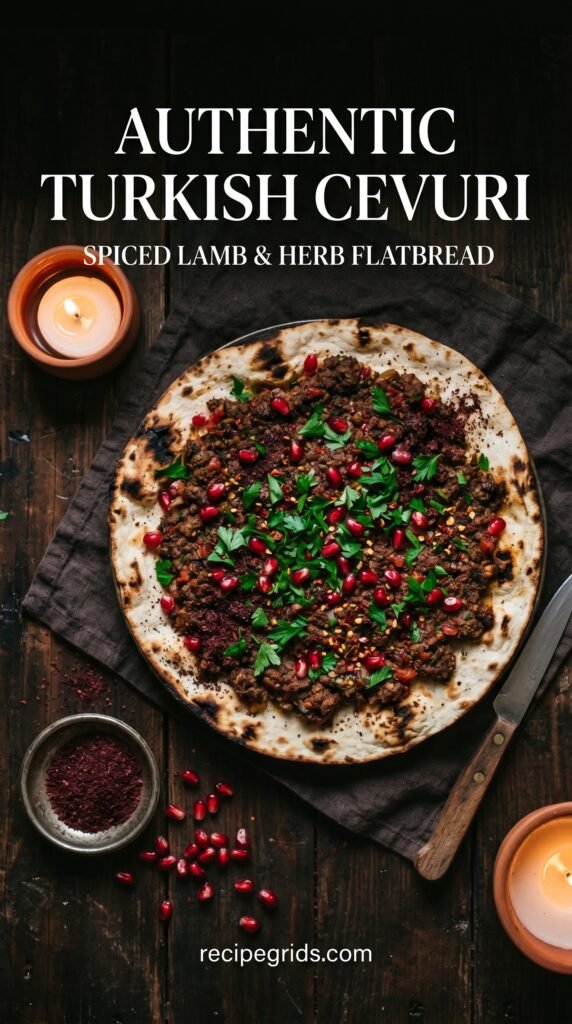
Click above to save this recipe to your favorite board!