The Ultimate Guide to Alaskan Seiti: Nutrition, Benefits & The Perfect Pan-Seared Recipe

By AB Rehman · RecipeGrids · Updated April 2026 · ☕ 11 min read
I still remember the first time I cooked Alaskan Seiti. It was a Tuesday evening — the kind where your fridge offers only mild promises — and a small, vacuum-sealed fillet sat quietly on the shelf. I’d picked it up almost as an afterthought at a wholesale market in Karachi, intrigued by the label that read “Alaskan Pollock — Wild Caught.” I had no grand plans. I had garlic, a lemon, and a cast-iron pan that had seen better days.
What happened next changed the way I look at weeknight fish forever. The fillet hit the hot pan and within seconds the kitchen filled with this clean, oceanic perfume — nothing overpowering, nothing “fishy” in the dreaded sense. The flesh turned from translucent to pearl white, the edges crisped into a golden lacework, and when I pressed a fork through the center it flaked — not crumbled, not fell apart, but flaked in thick, satisfying ribbons. I ate it standing at the counter, lemon juice dripping down my wrist, and immediately started planning how to bring it to RecipeGrids.
This post is everything I’ve learned since that Tuesday: what Alaskan Seiti actually is, why nutritionists and sustainable seafood advocates love it, and my signature pan-seared recipe that delivers a restaurant-worthy crust in under 15 minutes. Whether you are a seasoned home cook or someone who’s nervous about cooking fish, this guide is written for you.
What Exactly Is Alaskan Seiti?
Alaskan Seiti is the local and import-market name widely used in Pakistan and parts of South Asia for Alaskan Pollock (Gadus chalcogrammus), a wild-caught whitefish native to the cold, mineral-rich waters of the North Pacific Ocean — primarily the Bering Sea and Gulf of Alaska. It belongs to the cod family (Gadidae) and is a close cousin to Atlantic cod, haddock, and hake, sharing that same mild, clean flavour profile that makes white fish recipes so universally loved.
If you’ve ever enjoyed a fish fillet burger, a crispy fish taco, or a plate of fish and chips at a restaurant, there’s a strong chance you’ve already tasted Alaskan Seiti — it is the world’s most harvested fish species by volume, forming the backbone of the global seafood industry including imitation crab (surimi), fish sticks, and countless QSR (quick-service restaurant) menus worldwide.
🤔 Did You Know? Alaskan Pollock accounts for approximately 3 million metric tons of global fish harvest annually — more than any other single species — yet it remains one of the most underrated fish in home kitchens. In Pakistani markets it is imported frozen and sold under the name Seiti or Saiti, making it one of the most affordable high-protein seafood options available.
In terms of culinary character, Alaskan Seiti sits beautifully in that sweet spot for beginner and expert cooks alike. It has a mild, slightly sweet taste with virtually no “fishy” smell when fresh — a common barrier that keeps people away from cooking fish at home. The flesh is naturally lean, flaky, and moist, with large, defined flakes that hold together well under heat. It’s a perfect cod alternative in any recipe, absorbs marinades and spices brilliantly, and is forgiving on the pan — meaning it doesn’t dry out as quickly as salmon or tuna if you slightly overshoot your cooking time.
From a sustainability standpoint, wild-caught Alaskan Pollock is certified by the Marine Stewardship Council (MSC) and is consistently listed as a “Best Choice” by the Monterey Bay Aquarium’s Seafood Watch program. Choosing Alaskan Seiti is choosing sustainable seafood — a fish stock managed with rigorous scientific oversight to ensure it thrives for generations.
Why Alaskan Seiti Is a Nutritional Powerhouse
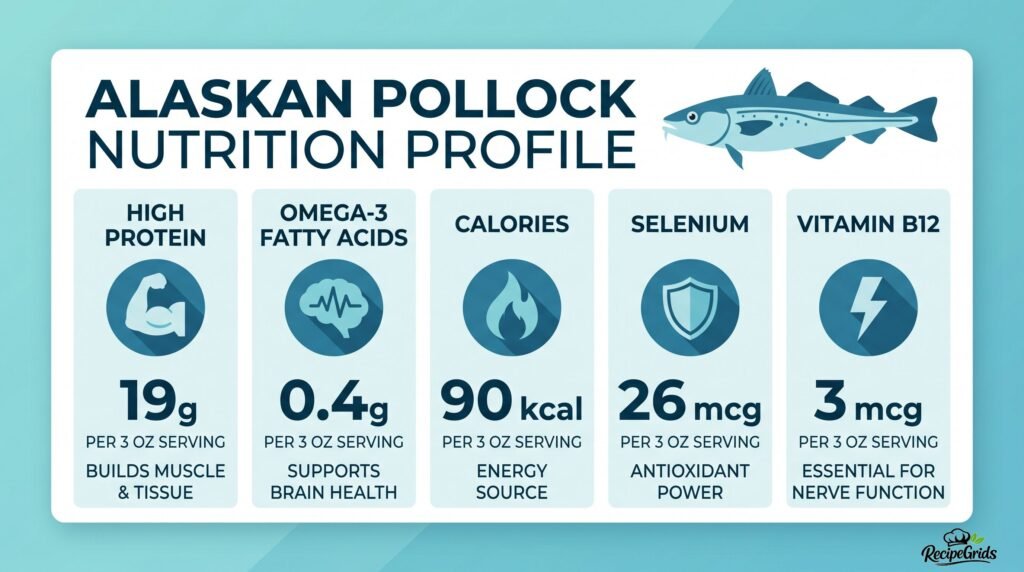
Beyond the flavour and the sustainability story, what genuinely excites me as a chef and food blogger is the nutritional density of this fish. When I started tracking my own macros a few years ago, Alaskan Seiti quickly became a weekly staple — high protein, low fat, affordable, and remarkably versatile. Here’s a full breakdown of what a standard 100g serving of cooked Alaskan Seiti delivers:
📊 Nutritional Profile — Per 100g Serving (Cooked)
- 🔥 Calories: ~92 kcal (exceptionally low — ideal for weight management)
- 💪 Protein: ~19g (complete protein with all essential amino acids)
- 🧈 Total Fat: ~1g (ultra-lean, less than chicken breast)
- 🐟 Omega-3 Fatty Acids (DHA + EPA): ~400–500mg (supports brain, heart & joint health)
- 🦴 Phosphorus: ~240mg (essential for bone and kidney health)
- ⚡ Selenium: ~36mcg (~65% of daily RDI — powerful antioxidant)
- 🩸 Vitamin B12: ~3.2mcg (~133% of daily RDI — vital for nerve function)
- 💧 Sodium: ~86mg (naturally low — heart-friendly)
- 🌾 Carbohydrates: 0g (naturally zero carb — keto and diabetic friendly)
- 🧪 Cholesterol: ~71mg (moderate — consumed as part of a balanced diet)
What makes this macro profile remarkable is the protein-to-calorie ratio. Very few protein sources — animal or plant — deliver 19 grams of complete protein for under 100 calories. This is why Alaskan Seiti has become quietly popular in fitness communities, among bariatric patients post-surgery, and with anyone following a high-protein, low-calorie eating pattern. If you want to seamlessly incorporate such lean proteins into your daily meals, you can use our AI recipe generator to instantly create customized, macro-friendly dishes.
The Omega-3 content, while not as dramatic as salmon, is still clinically meaningful — particularly the DHA (docosahexaenoic acid) that supports cognitive function and reduces systemic inflammation. And the Selenium and Vitamin B12 numbers are genuinely impressive; two nutrients that are commonly deficient in South Asian diets and critically important for thyroid regulation, DNA synthesis, and energy metabolism.
“Alaskan Pollock is one of the most nutritionally efficient proteins available to the modern consumer — high quality, low cost, and ecologically responsible. It deserves a far more prominent place on the family dinner table.” — AB Rehman, RecipeGrids
My Signature Pan-Seared Alaskan Seiti Recipe
After testing this recipe across seven different iterations — adjusting the flour ratio, the fat blend, the resting time, the heat level — I landed on a method that consistently delivers a crispy, golden crust with a succulent, moist centre every single time. This is the pan-seared Alaskan Seiti I make for guests when I want them to re-think everything they thought they knew about “boring white fish.”
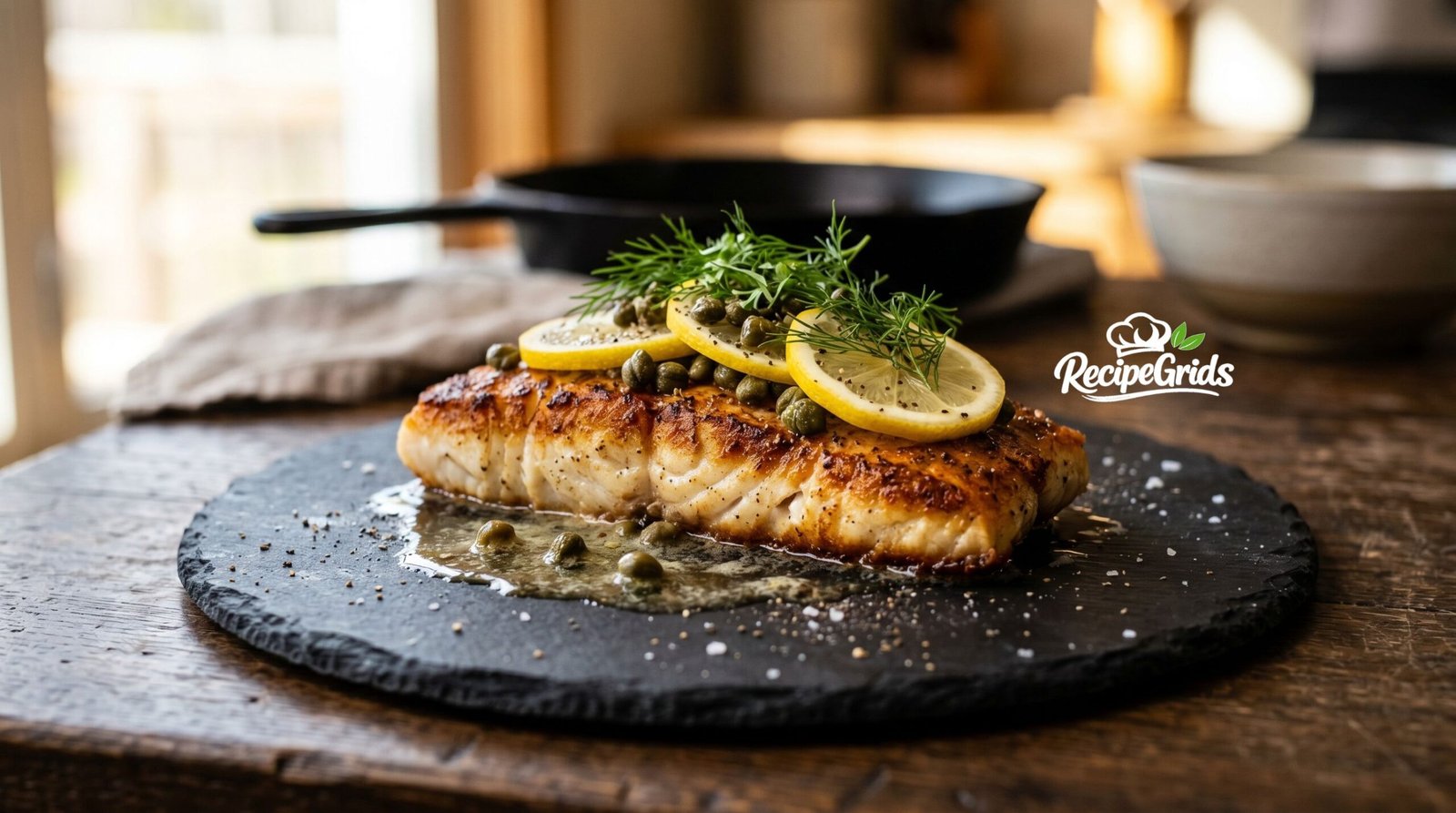
🍳 Pan-Seared Alaskan Seiti with Lemon-Caper Brown Butter
🛒 Ingredients
- 2 Alaskan Seiti (Pollock) fillets — 150–180g each, thawed if frozen, patted completely dry
- 3 tbsp all-purpose flour (for dredging — creates the crust foundation)
- 1 tsp smoked paprika
- ½ tsp garlic powder
- ½ tsp onion powder
- ¼ tsp cayenne pepper (optional — for a gentle kick)
- 1 tsp sea salt (divided)
- ½ tsp freshly cracked black pepper
- 2 tbsp neutral oil (avocado or sunflower — high smoke point essential)
- 2 tbsp unsalted butter
- 2 tbsp capers, roughly chopped
- 1 large lemon — half for juice, half sliced thin for garnish
- 2 tbsp fresh flat-leaf parsley, finely chopped
- 2 cloves garlic, thinly sliced
📋 Step-by-Step Instructions
- Dry your fish obsessively. Lay the thawed Alaskan Seiti fillets on a clean kitchen towel or layers of paper towel and press firmly on both sides. Moisture is the enemy of the crust. Let them sit uncovered for 5 minutes at room temperature — this also takes the fridge-cold edge off and ensures even cooking.
- Build the seasoned dredge. In a shallow plate, combine the flour, smoked paprika, garlic powder, onion powder, cayenne, ½ tsp salt, and black pepper. Whisk these together. This spiced flour is your insurance policy — it creates a thin, flavoured shell that crisps in the fat and seals in the natural juices of the fillet.
- Dredge with intent. Press each fillet firmly into the flour mixture on both sides and the thin edge strips. Shake off any excess aggressively — a thick flour coat turns gummy. You want a light, even veil of flour, no more.
- Heat your pan until it shimmers. Place a wide, heavy-bottomed skillet (cast iron or stainless steel — not non-stick) over medium-high heat. Add the oil. Wait 60–90 seconds. When you hold your hand 6 inches above the pan and feel serious heat radiating, or a flick of water droplet dances and evaporates in under a second, you’re ready. Do not rush this step. A pan that isn’t hot enough means the fish steams rather than sears.
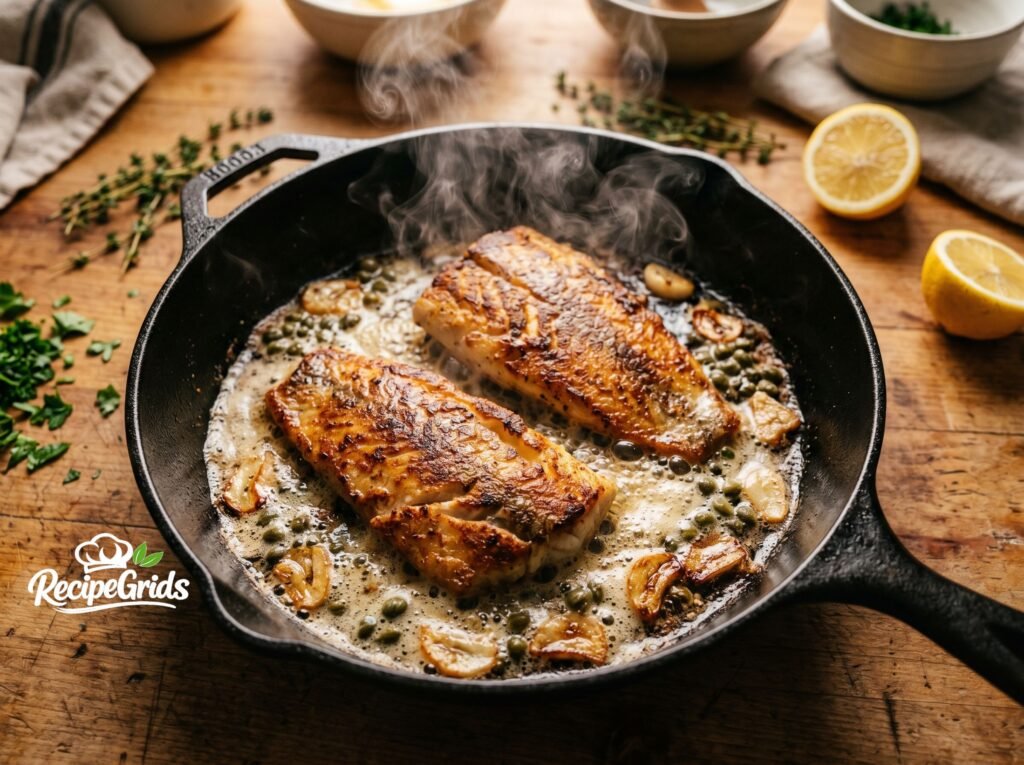
- The first sear — do not touch it. Lay the fillets in gently, presentation side down (the more attractive, thicker side). You should hear an immediate, aggressive sizzle — almost violent. Resist every urge to move, press, or peek underneath for exactly 4 minutes. The crust needs uninterrupted contact with heat to form. After 4 minutes, the edges will have turned opaque white halfway up the fillet — your signal to flip.
- Flip once, and only once. Using a thin spatula, slide it fully under the fillet and flip in a confident, swift motion. The crust should be a deep golden-amber. If it’s pale, wait another 30 seconds and try again — it will release cleanly when it’s ready. Cook the second side for 3 minutes.
- Make the lemon-caper brown butter. Push the fillets gently to one side of the pan (or remove them briefly to a plate). Add butter and sliced garlic to the empty space. Watch the butter foam — first white, then golden, then it will smell like hazelnuts. At that point (about 90 seconds), add the capers and squeeze in the lemon juice. It will spit and sizzle dramatically. Stir quickly and spoon this fragrant, nutty sauce directly over the fish for 30 seconds. Remove from heat.
- Rest and garnish. Let the fillets rest on the plate for 2 minutes. Finish with remaining ½ tsp salt, fresh parsley, and a thin lemon slice laid across the top. Serve immediately.
Chef AB Rehman’s Pro Tips for the Perfect Crust
👨🍳 Chef’s Insider Notes
- The Pan Matters Enormously. Non-stick pans trap steam and produce soft, pale crusts. Use cast iron or stainless steel and accept the minor cleanup inconvenience — the crust payoff is worth it every time.
- Frozen Alaskan Seiti is often better than “fresh.” Most fillets in Pakistani markets are flash-frozen at sea within hours of catch — this locks in quality. “Fresh” fish at a counter may have been sitting for days. Trust the frozen fillet. Just thaw it overnight in the fridge, never at room temperature.
- Fat blend is the secret weapon. Using oil alone gives crust but no flavour. Butter alone burns. The combination of a high-smoke-point oil first, then butter added at the end, gives you both structural crust AND the nutty, rich flavour finish. Never compromise on this.
- Don’t overcrowd the pan. Two fillets maximum in a 12-inch skillet. Overcrowding drops the pan temperature and you get steamed, grey, sad fish instead of the sear you’re working towards.
- Season after, not only before. A final pinch of flaky sea salt after plating wakes up the entire flavour profile. Don’t skip the finish-salt step — it’s what separates restaurant-level fish from home cooking.
- The fish tells you when to flip. If it resists the spatula, it’s not ready. A properly seared piece of Alaskan Seiti will release from the pan of its own accord when the crust has properly formed. Trust the process; don’t force it.
Best Side Dishes to Serve with Alaskan Seiti
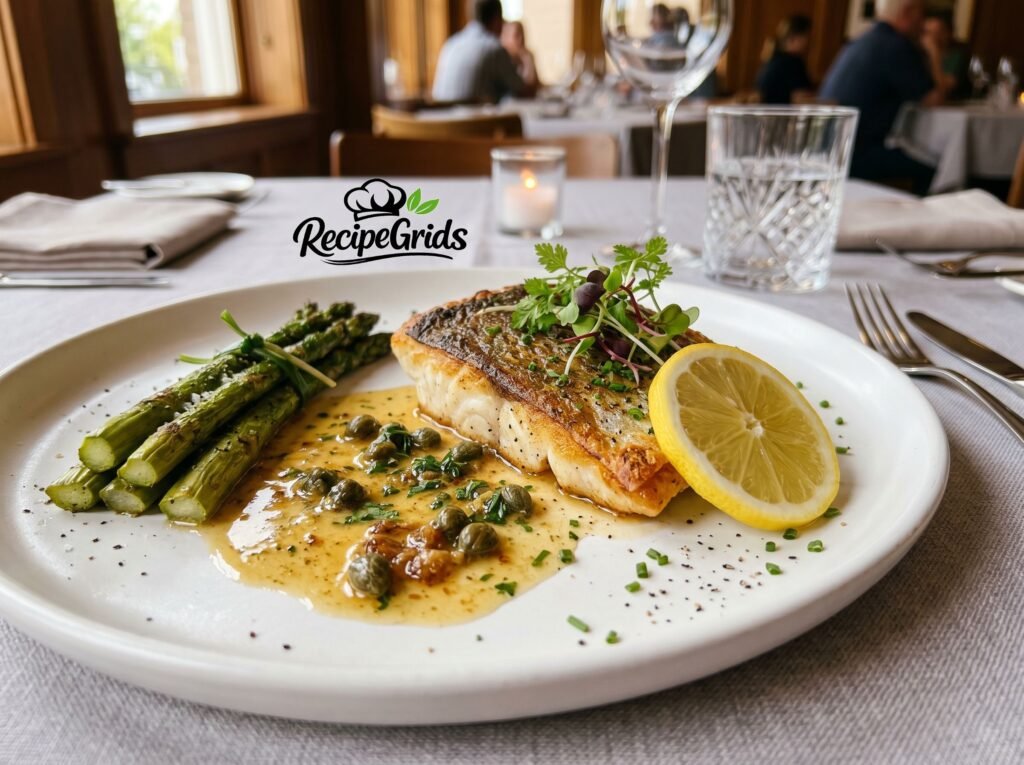
Because Alaskan Seiti is so mild and delicately flavoured, it is one of those rare proteins that pairs magnificently with almost anything — from the humble to the luxurious. Here are my tested, go-to pairings that create a complete, balanced meal and complement the lemon-caper profile of this dish:
🌿 Roasted Asparagus with Parmesan
The slight bitterness and vegetal snap of roasted asparagus is a textbook counterpoint to the richness of brown butter. Toss spears with olive oil, salt, pepper, and a grating of Parmesan, then roast at 220°C for 10–12 minutes until the tips are just charred. The visual contrast of green against the golden fish is also stunning on the plate.
🍋 Garlic Lemon Butter Quinoa
For a high-protein, gluten-free grain pairing, fluffy quinoa cooked in vegetable broth and finished with garlic butter and lemon zest is remarkable. The nuttiness of quinoa mirrors the brown butter sauce without competing, and it soaks up every drop of that caper pan sauce.
🥔 Crispy Smashed Baby Potatoes
Boil baby potatoes until just tender, smash them flat, drizzle with olive oil and fresh thyme, and roast at 220°C for 20 minutes until the skins shatter into crispy, golden-brown shards. This textural element — crunchy potatoes against flaky fish — makes the meal feel indulgent without being heavy.
🥗 Cucumber-Dill Yoghurt Slaw
For a lighter, summery approach: thinly sliced cucumber, shredded white cabbage, fresh dill, and a Greek yoghurt-lemon dressing. Cool, creamy, and acidic — the perfect palate cleanser between bites of rich pan-seared fish. This is my favourite pairing for an easy weeknight dinner that feels like it took much longer than it did.
🧄 Simple Garlic Sautéed Spinach
Two minutes of spinach wilted in olive oil with thinly sliced garlic and a pinch of chili flakes. Effortless, nutritious, and the iron-rich greens pair beautifully with the Omega-3-rich fish from a nutritional harmony standpoint. This is the weeknight dinner option that gets dinner on the table in under 25 minutes total.
Frequently Asked Questions About Alaskan Seiti
Optimized for Google Featured Snippets and Answer Engine Optimization (AEO)
❓ What is Alaskan Seiti and is it the same as Alaskan Pollock?
Yes — Alaskan Seiti is the common South Asian/Pakistani market name for Alaskan Pollock (Gadus chalcogrammus), a wild-caught whitefish from the North Pacific Ocean. It is a member of the cod family, known for its mild flavour, white flaky flesh, and exceptional nutritional density. The two names refer to exactly the same fish; “Seiti” or “Saiti” is simply the regional trade name used in import markets across Pakistan and South Asia.
❓ Is Alaskan Seiti healthy to eat regularly?
Alaskan Seiti is one of the healthiest fish you can eat on a regular basis. Per 100g serving it provides approximately 19g of complete protein for only ~92 calories, making it ideal for weight management, muscle building, and high-protein diets. It is rich in Omega-3 fatty acids, Selenium (65% RDI), and Vitamin B12 (133% RDI). It is also low in mercury compared to larger predatory fish like tuna or swordfish, making it safe for pregnant women and children to consume multiple times per week according to FDA dietary guidelines.
❓ How do I know when Alaskan Seiti is fully cooked?
Alaskan Seiti is fully cooked when it reaches an internal temperature of 63°C (145°F) and the flesh transitions from translucent to completely opaque white throughout. Visually, the fish will flake easily when pressed with a fork — the flakes should separate cleanly along natural muscle lines without resistance. Overcooked Seiti will appear dry, chalky, and begin to fall apart rather than flake. In a pan over medium-high heat, 4 minutes per side on a 2–2.5cm thick fillet is generally sufficient.
❓ Can I cook frozen Alaskan Seiti directly without thawing?
You can cook frozen Alaskan Seiti without thawing, but for pan-searing I strongly recommend thawing first for best results. Cooking directly from frozen releases a large amount of moisture that prevents the crust from forming and leads to steamed rather than seared fish. For thawing: place the vacuum-sealed fillet in a bowl of cold water for 15–20 minutes, or overnight in the refrigerator. Pat completely dry before dredging. For baking or poaching, cooking from frozen is perfectly acceptable — simply add 5–7 additional minutes to the cooking time.
❓ Is Alaskan Seiti a sustainable seafood choice?
Yes — wild-caught Alaskan Pollock (Seiti) is among the most sustainable seafood choices in the world. The fishery is certified by the Marine Stewardship Council (MSC) and consistently rated “Best Choice” on the Monterey Bay Aquarium Seafood Watch. It is managed under strict Annual Catch Limits (ACLs) set by NOAA Fisheries with continuous scientific assessment to prevent overfishing. The Bering Sea Pollock fishery is often cited as the gold standard for large-scale sustainable commercial fishing globally.