

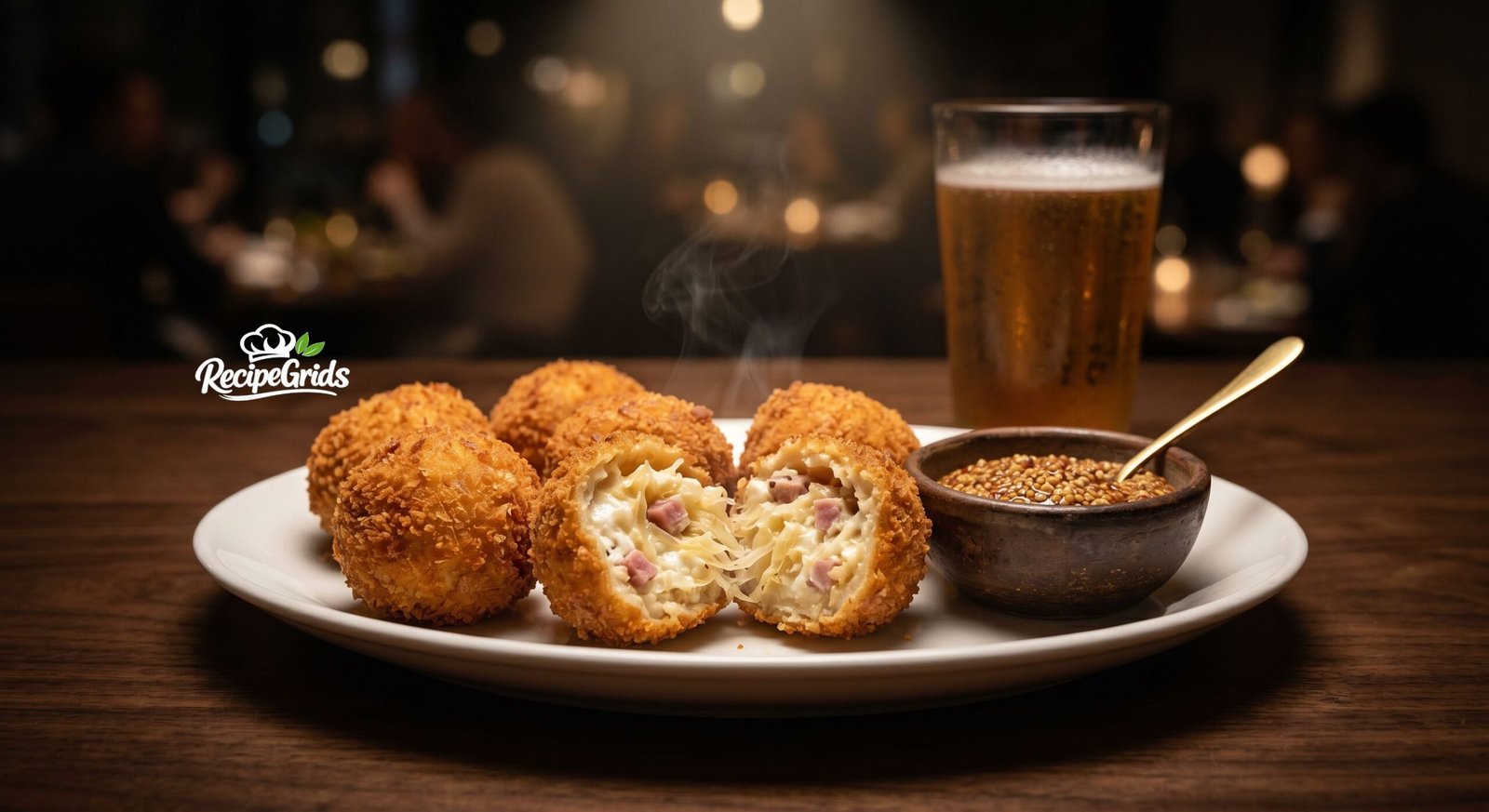
Let me take you back to the first time I brought these to a party. I walked in with a platter, set it on the table, and by the time I had hung up my coat — they were gone. A man grabbed me by the arm and asked, “What on earth were those?” That man was my friend’s father-in-law, a retired Ohio steelworker who had grown up eating authentic German sauerkraut balls every Christmas at his Oma’s kitchen. If I got his stamp of approval, I knew I had something real.
But I’ll be honest with you — my very first batch was an absolute disaster. The balls were greasy and falling apart in the oil. The filling was watery and bland. I had skipped the most critical step: properly draining and squeezing the sauerkraut. That moisture was destroying everything. Over the course of six more test batches (my family was very patient — or perhaps very well-fed), I cracked the code. The result is this recipe: perfectly crispy on the outside, savory, tangy, and rich on the inside, with a coating that stays shatteringly crunchy all the way from kitchen to platter.
Whether you are hunting for creative appetizer ideas, a make-ahead Super Bowl snack, or a unique addition to your holiday spread, these German-inspired sauerkraut balls check every box. I’ll walk you through the science, the technique, the fried and baked variations, and every pro tip I’ve accumulated from testing these dozens of times. Let’s get into it.
Why You’ll Love This Recipe
- 🥳Crowd-Pleaser Guaranteed — Nobody can eat just one. Make double the batch, always.
- ⏰Perfect Make-Ahead Appetizer — Roll them up 24 hours ahead, refrigerate, and fry right before serving.
- ❄️Freezer-Friendly — Uncooked balls freeze beautifully for up to 3 months. Party-ready anytime.
- 🍖Flexible Protein — Works with corned beef, bratwurst, kielbasa, or even a vegetarian mushroom swap.
- 🥗Incredibly Flavorful Filling — Tangy sauerkraut + savory sausage + rich cream cheese = an unforgettable bite.
- 🍳Fry or Bake — Full instructions for both methods so you can choose your adventure.
Ingredients Deep Dive
Great food starts with understanding why each ingredient is in the recipe. Here is a breakdown of every component and the role it plays in making these sauerkraut balls truly exceptional.
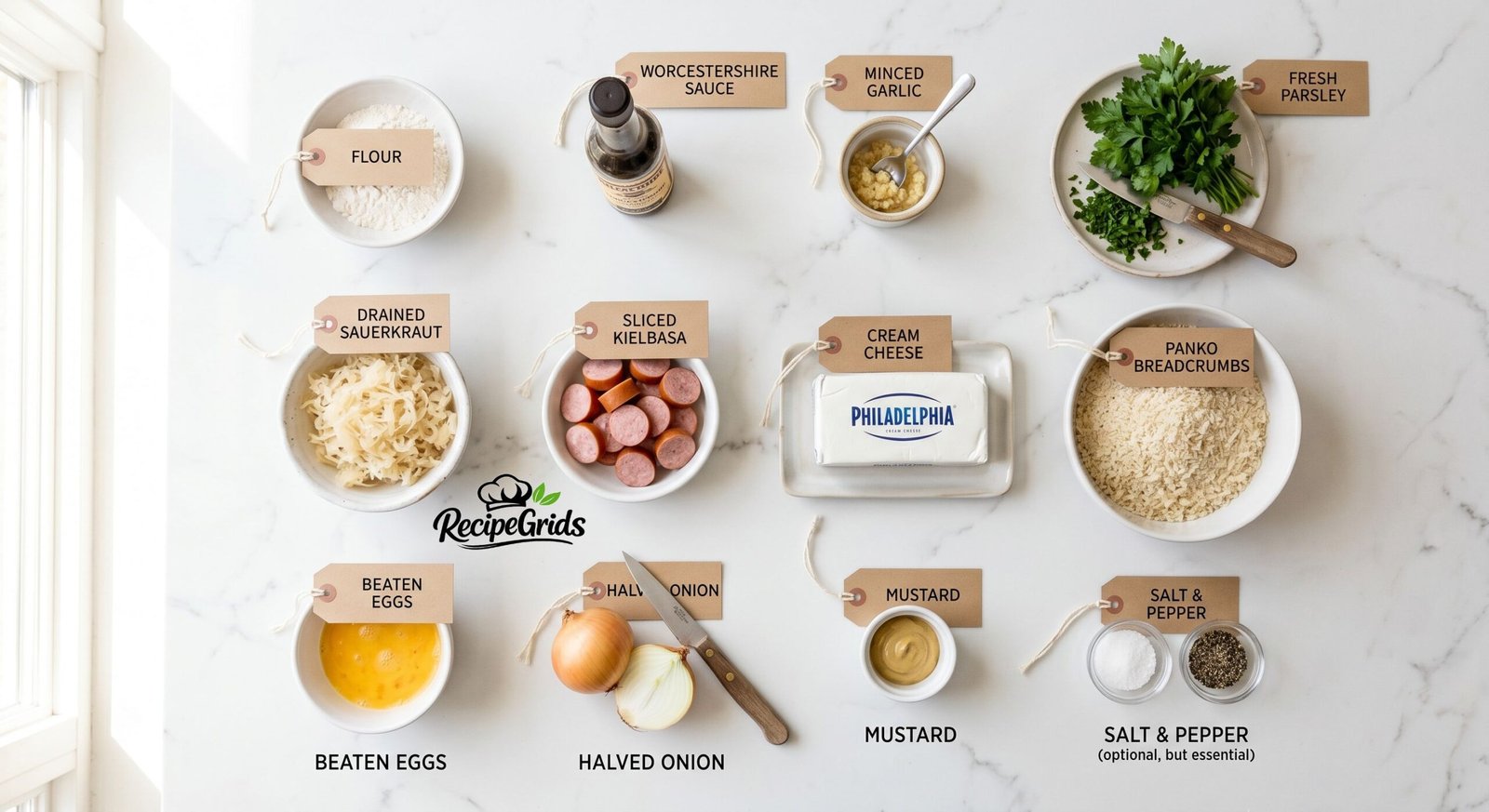
🥣 For the Filling
-
2 cups
Sauerkraut, drained and very firmly squeezed dry This is the star. More below on why moisture control is everything.
-
8 oz
Kielbasa or corned beef, finely minced Kielbasa gives a smoky flavor; corned beef is the classic Cleveland-style choice. Both are equally delicious.
-
8 oz
Full-fat cream cheese, softened to room temperature The binding hero. More on this below.
-
½ cup
Yellow onion, very finely minced Finely minced — not diced. You want it to melt into the filling, not create chunks.
-
2 cloves
Garlic, minced
-
1 tsp
Worcestershire sauce A small amount adds enormous umami depth.
-
1 tsp
Dijon mustard
-
½ tsp
Black pepper, fresh cracked
-
¼ tsp
Smoked paprika
-
2 tbsp
Fresh flat-leaf parsley, finely chopped
🍞 For the Breading Station
- ½ cupAll-purpose flour
- 2Large eggs, beaten with 2 tbsp water
- 1½ cupsPanko breadcrumbs Panko is essential. Its jagged, airy structure creates superior crunch compared to standard breadcrumbs. Do not substitute.
- ½ tspGarlic powder (mixed into panko)
- ½ tspSalt (mixed into panko)
🫙 For Frying
- ~3 cupsNeutral oil (vegetable, canola, or peanut) You need a 3-inch depth in your pot for proper submersion frying.
The Science: Why Cream Cheese Instead of Shredded Cheese?
Many older recipes call for shredded cheddar as a binder. While cheddar brings flavor, it does a poor job binding the filling because it melts and separates when heated, causing your balls to crack open in the fryer. Cream cheese, on the other hand, is a protein-and-fat emulsion that stays cohesive under heat. It binds like culinary glue, keeps the filling moist without making it wet, and adds a subtle tang that complements the sauerkraut beautifully. Use full-fat — reduced-fat versions have higher water content and will work against you.
🧑🍳 Chef Tip — The Sauerkraut Squeeze Test
Place your drained sauerkraut in a clean kitchen towel or several layers of cheesecloth and squeeze it over the sink with both hands as hard as you physically can. You should extract a significant amount of liquid — sometimes nearly ¼ cup. Repeat twice. If you skip or rush this step, the excess moisture will steam from inside the ball during frying, creating internal pressure that causes cracking, greasiness, and soggy coating. Moisture is the enemy. Eliminate it completely.
Step-by-Step Instructions
Follow these steps closely and you will have perfect sauerkraut balls every single time. The key phases are: building the filling, chilling it until firm, breading properly, and frying to golden perfection.
-
1
Prepare & Sauté the Filling Base
In a medium skillet over medium heat, sauté the finely minced onion in a small drizzle of oil for 5–6 minutes until soft and translucent but not browned. Add the minced garlic and cook for 1 more minute. Remove from heat and let cool completely — adding hot ingredients to cream cheese will cause it to melt unevenly and create a loose, unusable filling. While the onion cools, finely mince your kielbasa or corned beef until the pieces are almost paste-like. Set aside.
-
2
Drain and Squeeze the Sauerkraut
Transfer your sauerkraut to a fine mesh strainer and press firmly with the back of a spoon. Then transfer to a clean kitchen towel and wring it with both hands — squeeze as hard as possible, repeating two to three times. Your finished sauerkraut should be almost dry to the touch. Roughly chop if the strands are long, aiming for pieces no longer than ½ inch. This ensures even distribution in the filling and eliminates any unexpected long stringy bites.
-
3
Mix the Filling Until Cohesive
In a large mixing bowl, combine the softened cream cheese, cooled sautéed onion and garlic, minced meat, squeezed sauerkraut, Worcestershire sauce, Dijon mustard, black pepper, smoked paprika, and parsley. Mix firmly with a rubber spatula — or even your clean hands — until the mixture forms a uniform, cohesive dough that pulls away cleanly from the sides of the bowl and holds its shape when pressed. If the mixture feels even slightly loose, add one or two tablespoons of all-purpose flour directly into the filling to tighten it.
-
4
Portion and Roll — Then Chill (Non-Negotiable)
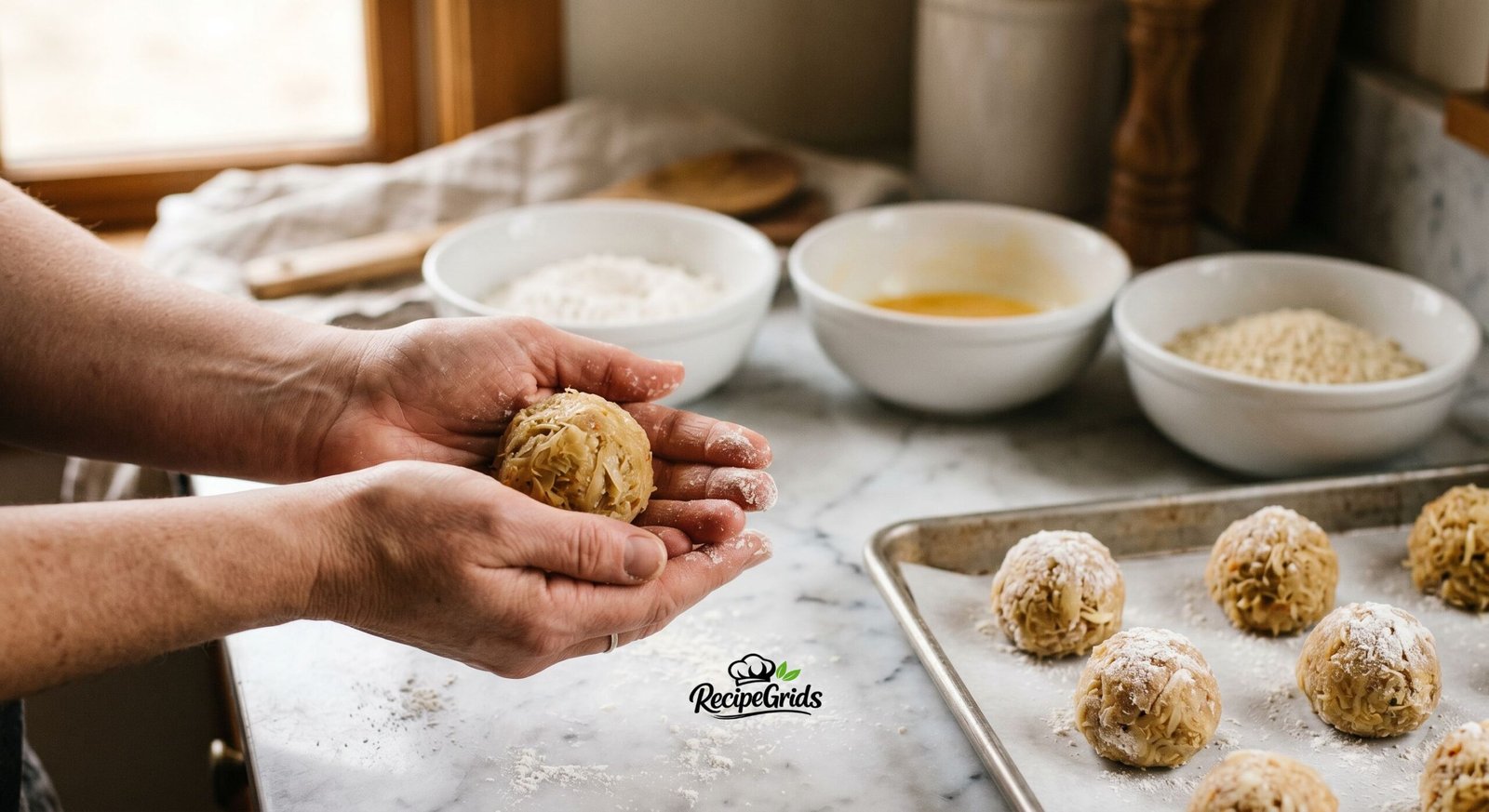
Line a baking sheet with parchment paper. Using a tablespoon measure or a #40 cookie scoop, portion the filling into equal mounds of about 1 to 1¼ inches in diameter. Roll each between your palms into a smooth, tight ball. Place on the lined sheet, cover loosely with plastic wrap, and refrigerate for a minimum of 1 hour, preferably 2–4 hours. This chilling phase is non-negotiable — it firms the cream cheese and allows the filling to become solid enough to hold its shape during the entire breading and frying process. Warm filling will deform and crack. Do not skip this.
-
5
Set Up Your Breading Station
Arrange three shallow bowls in a line: Bowl 1 — plain all-purpose flour. Bowl 2 — two eggs beaten with 2 tablespoons of water (your egg wash). Bowl 3 — panko breadcrumbs mixed with garlic powder and salt. Work in an assembly line. Working with cold balls directly from the fridge, roll each one in flour first, shaking off any excess. Dip into the egg wash, letting any drips fall off. Finally, roll in the seasoned panko, pressing gently on all sides to ensure a full, even coating. The double coating (flour → egg → panko) creates a barrier layer that keeps the interior sealed and the crumb firmly attached during frying.
-
6
Fry to Golden Perfection
Pour 3 inches of neutral oil into a heavy-bottomed pot or Dutch oven. Heat over medium-high to exactly 350°F (175°C) — use a deep-fry thermometer. Do not guess. At 325°F or lower, the balls absorb oil and become greasy before the exterior crisps. At 375°F or higher, the coating darkens too fast while the interior stays cold. Working in batches of no more than 5–6 balls, lower them carefully into the oil using a spider strainer or slotted spoon. Fry for 2.5 to 3 minutes, turning once at the halfway point, until deeply golden brown on all sides. Remove and drain on a wire rack set over a baking sheet — never on paper towels, which trap steam and soften the crust. Allow oil to return to 350°F between batches.
Fried vs. Baked Sauerkraut Balls: Full Instructions for Both
Whether you are deep-frying for maximum crunch or baking for a lighter version, here is exactly how to execute each method.
Classic Deep-Fried Method
- Oil temperature: 350°F (175°C)
- Cook time: 2.5–3 minutes per batch
- Texture: Shatteringly crisp, professional pub-style
- Batch size: Max 5–6 balls to avoid oil temperature drop
- Drain on a wire rack, never paper towels
- Best served immediately within 10 minutes of frying
Baked Sauerkraut Balls Method
- Preheat oven to 400°F (205°C)
- Spray breaded balls generously with cooking oil spray on all sides
- Bake on a wire rack set over a sheet pan: 18–22 minutes
- Flip halfway through at the 9-minute mark
- Finish under broiler for 2 min for extra color, watching closely
- Texture: Crispy but slightly less shatteringly crunchy than fried
| Factor | 🔥 Deep Fried | 🌬️ Baked |
|---|---|---|
| Crunch Level | ⭐⭐⭐⭐⭐ Maximum | ⭐⭐⭐⭐ Very good |
| Total Active Time | ~15 minutes | ~22 minutes |
| Cleanup | More involved (oil management) | Simple — just a baking sheet |
| Best For | Parties, serving immediately | Weeknight, health-conscious guests |
| Calorie Profile | Higher (oil absorption) | Notably lighter |
🧑🍳 Air Fryer Variation
These work brilliantly in an air fryer. Preheat to 375°F, spray the basket and balls generously with cooking spray, and air fry for 10–12 minutes, shaking the basket once at the halfway point. The result sits right between baked and deep-fried — excellent crunch with minimal oil. Cook in a single layer only.
Pro Chef Tips for the Perfect Crunch
💡 Tip 1 — Always Bread Cold Balls
The single biggest amateur mistake is breading room-temperature filling. Cold filling is firm; it holds its shape in your hands, creates a tight seal with the flour coating, and stays intact in the hot oil. Warm filling is soft; it squishes as you handle it, the breading cracks, and filling escapes into the oil. Bread them straight from the fridge and return them to the fridge if they sit for more than 15 minutes before frying.
💡 Tip 2 — Season Your Panko
Plain breadcrumbs produce a bland, cardboard exterior. Season your panko aggressively — salt, garlic powder, smoked paprika, even a pinch of cayenne. The coating should be delicious on its own before it ever touches the filling. I sometimes add a tablespoon of grated Parmesan into the panko mix for an extra savory, cheesy crust.
💡 Tip 3 — The Thermometer is Non-Negotiable
A $10 clip-on deep fry thermometer is the most valuable investment for this recipe. Maintain your oil between 345°F–355°F throughout. When oil is too cool, sauerkraut balls absorb fat rather than repelling it. When too hot, the outside burns before the cream cheese interior heats through. Steady temperature = perfect balls every single time.
💡 Tip 4 — Wire Rack Draining
Drain on a wire rack, not paper towels. Paper towels create a microclimate of trapped steam that immediately softens the crispy coating you just worked so hard to create. A wire rack allows 360° airflow, keeping the crust shatteringly crispy for significantly longer. This small detail makes a remarkable difference, especially if you are serving a crowd and can’t plate instantly.
Storage & Freezing Guide
One of the greatest features of sauerkraut balls is how beautifully they lend themselves to advance preparation. Here is everything you need to know about storing, freezing, and reheating them.
Uncooked (Refrigerator)
Up to 24 hrsRoll and bread the balls, then place on a parchment-lined sheet. Cover and refrigerate up to 24 hours before frying. This is the optimal make-ahead window for parties.
Uncooked (Freezer)
Up to 3 monthsFreeze rolled (un-breaded) balls on a baking sheet until solid. Transfer to a freezer bag. Bread them straight from frozen — add 1 extra minute of fry time. Do not thaw before breading.
Cooked Leftovers
3–4 daysStore cooked balls in an airtight container in the fridge. Reheat in a 375°F oven or air fryer for 8–10 minutes to restore crunch. Microwave reheating makes them soft and rubbery — avoid it.
Frequently Asked Questions
📋 Printable Recipe Card
Classic Sauerkraut Balls
Crispy, golden-fried German-style appetizer balls with a savory sauerkraut, cream cheese, and kielbasa filling. The ultimate crowd-pleasing party snack.
Ingredients
- 2 cups sauerkraut, drained & squeezed bone-dry
- 8 oz kielbasa or corned beef, finely minced
- 8 oz cream cheese, softened
- ½ cup yellow onion, finely minced
- 2 cloves garlic, minced
- 1 tsp Worcestershire sauce
- 1 tsp Dijon mustard
- ½ tsp black pepper
- ¼ tsp smoked paprika
- 2 tbsp fresh parsley, chopped
- ½ cup all-purpose flour
- 2 eggs + 2 tbsp water (egg wash)
- 1½ cups panko breadcrumbs
- ½ tsp garlic powder (in panko)
- Neutral oil for deep frying
Instructions
- Sauté onion & garlic until soft. Cool completely.
- Squeeze sauerkraut in a towel until completely dry. Chop finely.
- Mix cream cheese, meat, sauerkraut, onion mixture, and all seasonings into a firm, cohesive dough.
- Roll into 1-inch balls. Refrigerate on a lined sheet for 1–2 hours minimum.
- Set up breading station: flour → egg wash → seasoned panko.
- Bread each cold ball: flour, egg, panko. Press firmly to coat.
- Heat oil to 350°F. Fry in batches of 5–6 for 2.5–3 minutes until deeply golden.
- Drain on a wire rack. Serve immediately with spicy mustard.