
Are Rice Krispies Gluten Free? The Ultimate Guide for Celiac Patients and Healthy Eaters

When we think of classic childhood breakfasts or easy-to-make sweet snacks, the iconic “Snap, Crackle, and Pop” of Rice Krispies immediately comes to mind. For generations, this popular cereal has been a staple in pantries across the globe. However, as awareness of dietary restrictions, celiac disease, and gluten sensitivities continues to rise, many consumers are taking a much closer look at the nutritional labels of their favorite foods.
If you or a loved one has recently been diagnosed with a gluten intolerance, you are likely auditing your entire kitchen. Because the primary ingredient in this cereal is rice—a naturally gluten-free grain—you might assume that it is perfectly safe to consume. But is that really the case? The most pressing question on your mind is likely: are rice krispies gluten free?
In this comprehensive, high-authority guide, we are going to dive deep into the truth behind this popular cereal. We will explore the exact ingredient list, understand why certain flavoring agents pose a massive risk to those with celiac disease, discuss the history of Kellogg’s gluten-free product lines, and provide you with the best safe alternatives and recipes available on the market today.
The Quick Answer: Are Rice Krispies Gluten Free?
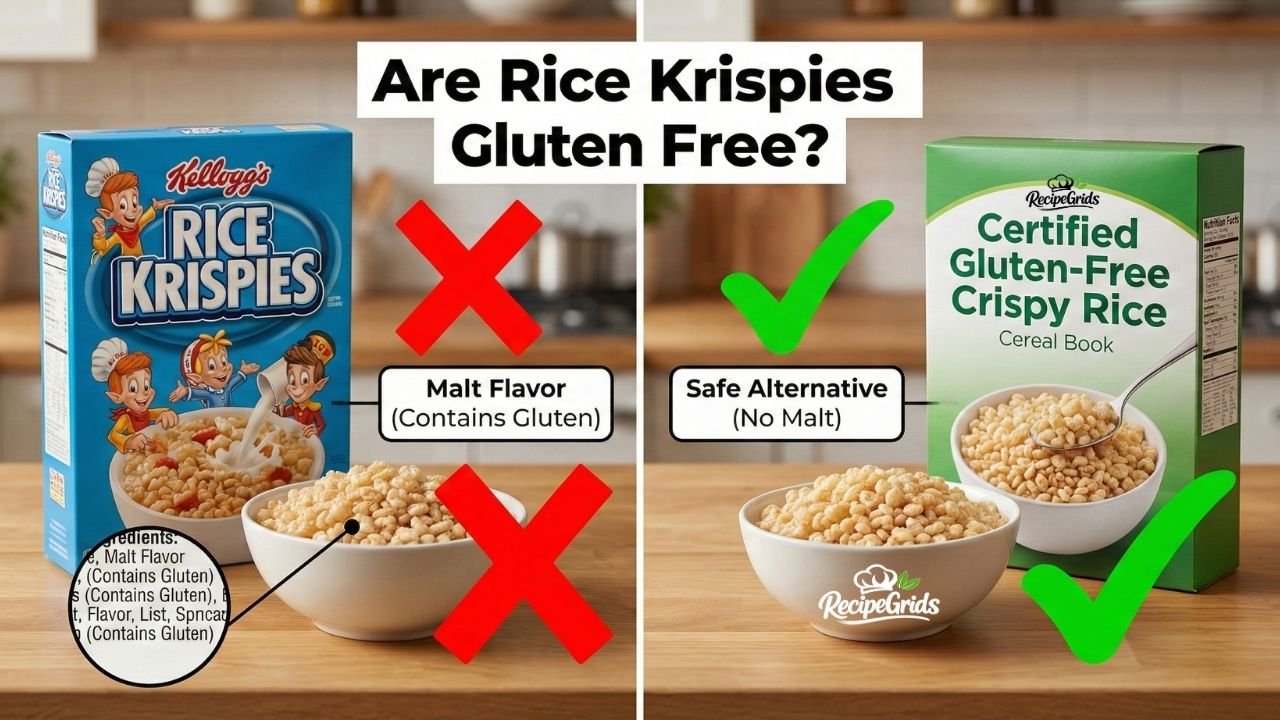
Let us get straight to the point to save you time before we dive into the complex details: No, standard original Kellogg’s Rice Krispies are NOT gluten-free.
It is a very common and completely understandable misconception. Rice, in its natural state, is 100% gluten-free. It does not contain the gluten proteins found in wheat, barley, or rye. Because the cereal is primarily made of puffed rice, many people mistakenly believe it is safe for a gluten-free diet.
However, the hidden danger does not lie in the rice itself, but rather in the flavoring agents that the manufacturer adds during the production process to give the cereal its distinct, beloved taste.
Understanding the Ingredients: Why Aren’t They Safe?
To truly understand why this classic cereal fails the gluten-free test, we need to take a microscopic look at the ingredient list printed on the side of the iconic blue box. The ingredients in original Kellogg’s Rice Krispies are:
- Rice
- Sugar
- Salt
- Malt Flavor
The first three ingredients are perfectly safe. The problem lies entirely in the fourth ingredient: Malt Flavor (often referred to as malt extract or malt flavoring).
Malt flavoring is almost always derived from barley. Barley is one of the top three gluten-containing grains (alongside wheat and rye). The process of creating malt involves sprouting the barley grains, drying them, and extracting the flavorful syrup. Even though it is used in relatively small amounts to provide that slightly sweet, roasted flavor profile, it introduces authentic gluten proteins directly into the cereal.
The Core Question: Are Rice Krispies Gluten Free in Any Capacity?
Some individuals with very mild gluten sensitivities wonder if the small amount of malt flavor is negligible. So, are rice krispies gluten free enough for someone who isn’t strictly celiac?
The answer is still a resounding no. According to the stringent guidelines set forth by the U.S. Food and Drug Administration (FDA) regarding gluten-free labeling, a food product must contain less than 20 parts per million (ppm) of gluten to be legally and safely labeled as “gluten-free.” Because Kellogg’s intentionally adds barley malt directly into the recipe, it is not considered safe and will not pass this regulatory threshold.
For individuals with celiac disease, consuming even microscopic trace amounts of gluten can trigger an autoimmune response that damages the small intestine. You can learn more about how trace amounts of gluten affect the body through the Celiac Disease Foundation. Therefore, no matter how small the amount of malt flavor seems, standard Rice Krispies are strictly off-limits.
Brand Specifics: Are Kellogg’s Rice Krispies Gluten Free?
If you are a long-time shopper, you might be scratching your head thinking, “Wait a minute, I distinctly remember seeing a gluten-free version of Rice Krispies at the grocery store!” You are not experiencing the Mandela Effect; your memory is completely accurate. Logically, people frequently search for the phrase: are kellogg’s rice krispies gluten free?
The Rise and Fall of Gluten-Free Rice Krispies
In 2011, recognizing the massive spike in demand for gluten-free products, Kellogg’s listened to its consumers and launched a special product called “Kellogg’s Gluten-Free Rice Krispies.”
Instead of using standard white rice and barley malt flavor, this special version was made using whole grain brown rice. More importantly, Kellogg’s completely eliminated the barley malt flavoring, opting for a different, gluten-free sweetening process. It was a massive hit among the celiac community, allowing them to finally enjoy crispy treats and cereal again without fear of getting sick.
However, the joy was short-lived. A few years later, Kellogg’s quietly discontinued the gluten-free brown rice version. According to statements released by the company at the time, manufacturing constraints and a lack of overall mainstream consumer demand led to the product being pulled from shelves.
As of right now, in 2026, the standard blue box of Kellogg’s Rice Krispies that you see in supermarkets is the original recipe containing barley malt. Kellogg’s currently does not manufacture a gluten-free version of this cereal.
Snack Time Dilemma: Are Rice Krispie Treats Gluten Free?
Moving past breakfast, we have to talk about the most popular use for this cereal: the marshmallowy, gooey, delicious squares known as Rice Krispie Treats. This brings us to another highly searched question: are rice krispie treats gluten free?
If you are purchasing the pre-packaged, blue-wrapped Kellogg’s Rice Krispies Treats from a convenience store, vending machine, or supermarket aisle, the answer is No, they are not gluten-free. These store-bought treats are manufactured using the exact same standard Kellogg’s Rice Krispies cereal that contains the barley malt flavoring. Therefore, the treats themselves contain gluten and must be avoided by anyone with celiac disease or gluten ataxia.
But don’t despair! Just because the store-bought versions are off-limits doesn’t mean you have to give up this iconic dessert forever. You can easily make them in your own kitchen using safe ingredients.
How to Make Safe, Gluten-Free Crispy Treats at Home
Creating a safe version of this classic dessert is incredibly simple, provided you source the correct ingredients. Here is your ultimate guide to making safe treats:
1. Choose a Certified Gluten-Free Crispy Rice Cereal: You must swap out the Kellogg’s brand for a certified safe alternative. Brands like Nature’s Path Organic Crispy Rice Cereal or Malt-O-Meal Crispy Rice (which uses a different flavoring method) are excellent choices. Always look for the official “Certified Gluten-Free” logo on the box.
2. Select the Right Marshmallows: Fortunately, the vast majority of marshmallows—including popular brands like Kraft Jet-Puffed—are naturally gluten-free. They are typically made from corn syrup, sugar, water, and gelatin. However, always read the back of the packaging to ensure there are no warnings about cross-contamination in the manufacturing facility.
3. Use Uncontaminated Butter: Ensure you are using fresh butter. If you live in a shared household where some family members eat gluten, do not use the communal butter tub. Crumbs from regular wheat toast can easily contaminate the butter, rendering your treats unsafe for a celiac patient.

Pro Hosting Tip: If you are making these gluten-free sweet treats for a party or a family gathering, you’ll want to balance out the dessert table with something savory. While the kids are enjoying the marshmallow squares, adults often crave a tangy, spicy kick. Consider serving these treats alongside a brilliant savory appetizer, like a perfectly balanced pickles and peppers recipe. Combining sweet, gooey marshmallow treats with sharp, savory snacks creates the perfect diverse menu for any event!
The Best Gluten-Free Alternatives to Kellogg’s Rice Krispies
Since the original brand is unsafe, you need reliable alternatives for your breakfast bowl and your baking endeavors. The great news is that the market has adapted, and there are several fantastic options available that perfectly mimic the “snap, crackle, and pop” without the dangerous barley malt.
Here are the top semantically optimized alternatives you should look for:
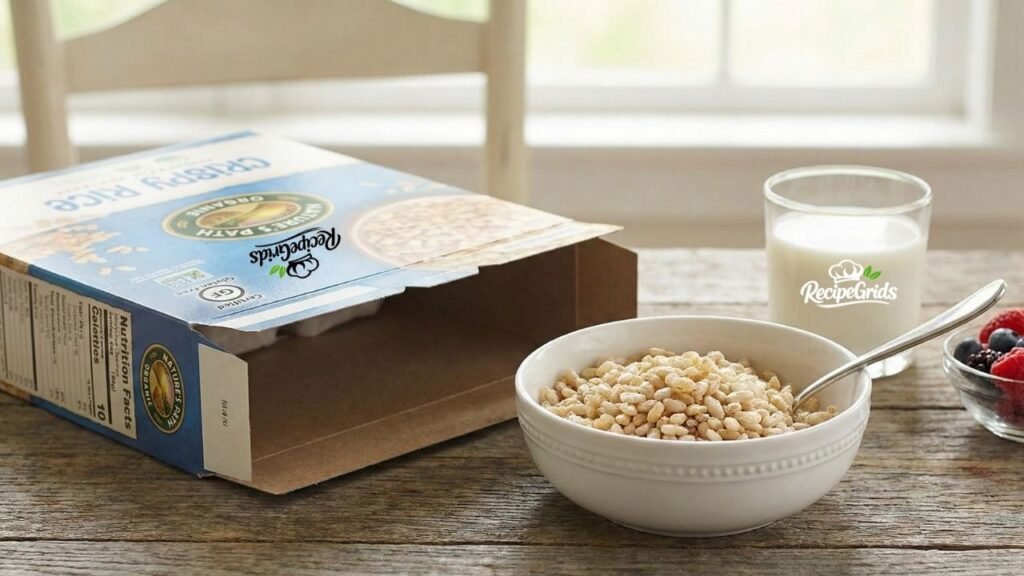
- Nature’s Path Organic Crispy Rice Cereal: This is widely considered the gold standard for gluten-free crispy rice. It is made from organic brown rice flour, organic cane sugar, and sea salt. It has no malt flavor, is strictly certified gluten-free, and stays incredibly crunchy in milk.
- Malt-O-Meal Crispy Rice: Do not let the brand name “Malt-O-Meal” scare you! Despite the company name, their specific Crispy Rice cereal is explicitly labeled as gluten-free. They have altered their recipe to ensure no barley malt is used in this specific product, making it a budget-friendly and safe alternative.
- Barbara’s Bakery Brown Rice Crisps: This alternative offers a slightly earthier, nuttier flavor because it is made purely from whole-grain brown rice. It is sweetened with organic fruit juice rather than refined sugars and contains zero gluten ingredients. It is an incredibly healthy option for celiac patients.
- Wegmans / Aldi Store Brands: If you live near a Wegmans or an Aldi, check their generic store-brand crispy rice cereals. Many of these supermarket chains have proactively removed malt flavoring from their private-label cereals and proudly display a gluten-free certification on the box.
Living Gluten-Free: Tips for Avoiding Hidden Malt and Barley
The revelation that Rice Krispies contain gluten due to malt flavoring is often a rude awakening for newly diagnosed celiac patients. It highlights a much larger issue in the food industry: hidden gluten.
Wheat must legally be declared as an allergen on food labels in many countries, including the United States. However, barley and rye are not always subject to the same strict allergen warning laws. Therefore, “malt” or “malt flavoring” can quietly hide in ingredient lists without a bolded allergen warning at the bottom.
To protect yourself, you must become a diligent label reader. Malt flavoring is not just hiding in puffed rice cereals. You can also find it lurking in:
- Corn flakes and bran flakes cereals.
- Certain types of chocolate candies (like Lindt truffles or Milky Way bars).
- Malt vinegar (frequently used on potato chips or fries).
- Various syrups and glazes.
- Certain brands of soy sauce (though soy sauce traditionally uses wheat, some use barley).
Always stick to the golden rule of a gluten-free diet: If a product does not explicitly state “Gluten-Free” on the packaging, and you see “malt,” “malt extract,” or “barley” in the ingredients, put it back on the shelf.
Final Thoughts
Navigating the grocery store aisles with a gluten intolerance can feel like navigating a minefield, especially when dealing with childhood favorites. We started this deep dive with one simple question: are rice krispies gluten free?
As we have thoroughly explored, the answer is a definitive no due to the presence of barley malt flavoring. Neither the original cereal in the blue box nor the pre-packaged marshmallow treats are safe for those with celiac disease or non-celiac gluten sensitivity.
However, this doesn’t mean you have to abandon your favorite crispy, crackling snacks. By educating yourself on how to read nutritional labels, utilizing certified safe alternatives like Nature’s Path or Malt-O-Meal, and taking the time to make homemade treats, you can continue to enjoy the foods you love without compromising your health.
Disclaimer: This article is strictly for informational and educational purposes. It does not constitute medical advice. Formulations and recipes of packaged foods can change without notice. Always read the ingredient label on the physical product you are purchasing, and consult with a certified gastroenterologist or registered dietitian regarding severe food allergies and celiac disease management.