The Ultimate Cadbury Egg Cookies — Crispy Edges, Gooey Center, Zero Regrets

Every spring, something shifts in my kitchen. The mornings get slightly warmer, I start hoarding pastel-foil bags like a magpie, and my oven doesn’t get a single day off. It’s Cadbury Mini Egg season — and if you know, you know.
The first time I made Cadbury Egg Cookies, I was doing what any seasoned baker does when Easter rolls around: improvising. I had half a bag of Cadbury Mini Eggs left from “taste testing” (we’ve all been there), a craving for something warm and gooey, and absolutely no patience for anything complicated. While I often use our custom recipe generator to brainstorm quick ideas with leftover candy, this time I simply folded those crunchy little eggs into a basic chocolate chip cookie dough, pulled them from the oven, and then stood at my kitchen counter eating three in a row before they even had a chance to cool.
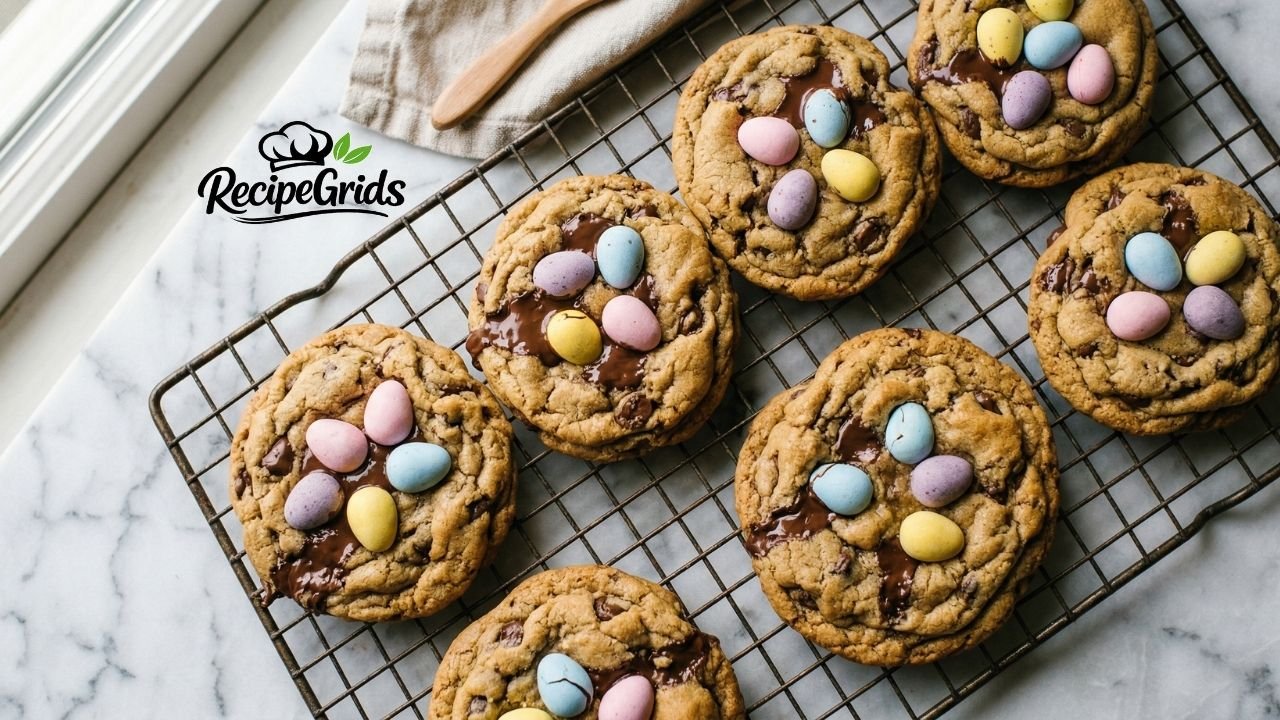
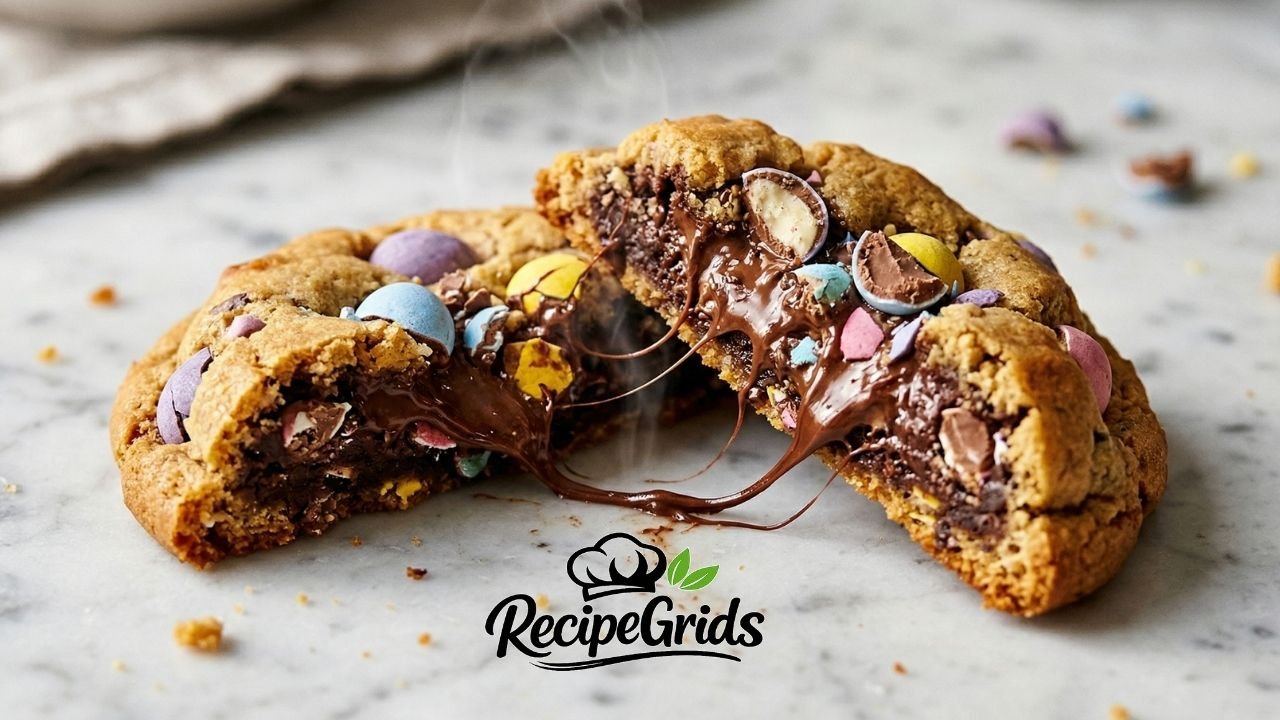
Fast forward through eleven test batches — my family stopped complaining after batch four — and I’ve landed on what I genuinely believe is the best Cadbury Egg Cookie recipe on the internet. Brown butter. A whisper of cornstarch. Cold dough. And enough Mini Cadbury Eggs pressed into the top to make the whole thing look like a pastel dream.
This isn’t a throw-it-together recipe. It’s a thoughtfully built one — and every decision I made, I’m going to explain exactly why. Let’s bake.
Why This Recipe Works — The Science Behind the Perfect Cookie
I don’t believe in “just trust the recipe.” You deserve to understand the why — because when you understand it, you’ll troubleshoot in real time and never bake a bad cookie again.
🔬 The Cookie Science Breakdown
Three things determine a cookie’s texture: fat type, sugar ratio, and flour structure. Get these right, and crispy edges with a gooey center aren’t just possible — they’re guaranteed.
Brown Butter = Depth of Flavor
Regular melted butter makes a flat, one-dimensional cookie. Brown butter — the kind that smells like caramel, hazelnuts, and every good thing in the world — adds a nutty richness that makes the whole cookie taste more intentional. Cooking the butter until those milk solids turn golden also removes excess water content, which reduces unwanted spread.
More Brown Sugar Than White
Brown sugar contains molasses, which is hygroscopic — it pulls moisture from the air and keeps cookies chewy for days. A higher ratio of brown to white sugar gives you that soft, fudgy center even 24 hours after baking. The white sugar still caramelizes around the edges to create that golden, slightly crispy border.
Cornstarch: The Secret Weapon
Just one teaspoon of cornstarch shortens the gluten strands in the flour, resulting in a more tender, melt-in-your-mouth crumb. It also helps the cookie hold its shape — no pancake-flat disasters.
Cold Dough, Tall Cookies
When cold dough hits a hot oven, it takes longer to spread — the cookie builds up and sets before it can flatten out. The result? Thick, bakery-style cookies every single time.
Ingredients — Everything You Need & Why
These are the exact ingredients I use, with substitution notes included. Honestly? Stick to the original on your first bake. Trust the process.
Cadbury Egg Cookies
Brown butter, cornstarch, and the crunch of pastel Mini Eggs. Makes 22–24 thick, bakery-style cookies.
Ingredient Substitutions
- Butter: Salted butter works — just omit the added salt. Vegan butter is fine but won’t brown the same way.
- Cadbury Mini Eggs: These are the star and have no true substitute. The candy shell crunch is what makes this recipe iconic.
- Cornstarch: Arrowroot powder works as a 1:1 sub. You can omit it, but cookies will spread slightly more.
- Flour: For gluten-free, use a 1:1 GF baking flour (Bob’s Red Mill works well).
- Egg + Yolk: The extra yolk adds richness and chew. If needed, use 2 whole eggs for a slightly cakier result.

Step-by-Step Instructions
Read through all steps once before starting. It takes two minutes and makes the whole process smoother — baker’s promise.
-
1
Brown the Butter
In a light-colored saucepan, melt butter over medium heat, stirring constantly. It’ll foam, settle, then foam again. That second foam is your signal. The moment it smells like buttered popcorn meeting a caramel latte and turns deep amber with golden-brown specks at the bottom — pull it off the heat immediately. Pour into a large mixing bowl and cool for 15 minutes.
💡 Don’t walk away during this step. Brown butter can go from perfect to burnt in under 30 seconds. -
2
Mix Sugars into Brown Butter
Add both sugars to the cooled brown butter and whisk vigorously for 1 full minute. The mixture should look like wet, dark sand and smell unbelievably good. This step begins dissolving sugar crystals for a smoother dough.
-
3
Add Eggs & Vanilla
Add 1 whole egg, 1 egg yolk, and vanilla extract. Whisk for another 45 seconds until the mixture lightens slightly and becomes glossy — it should look like a smooth, shiny caramel sauce. This aeration adds lift to the final cookie.
-
4
Add Dry Ingredients
In a separate bowl, whisk together flour, cornstarch, baking soda, and salt. Fold into wet ingredients with a rubber spatula until just combined — stop when you no longer see dry flour streaks. Overmixing leads to tough cookies. The dough will look thick and slightly sticky. Good.
-
5
Fold in Mini Cadbury Eggs & Chocolate Chips
Roughly chop about 1 cup of Cadbury Mini Eggs (a few whacks in a zip-lock bag with a rolling pin), keeping the rest whole. Fold chopped eggs and all the chocolate chips into the dough. Reserve ½ cup of whole Mini Eggs for pressing on top after baking. The dough should be studded with color — pink, blue, yellow — like confetti.
💡 Don’t crush the Mini Eggs too finely. Big chunks give you a full crunch in every bite. -
6
Chill the Dough — This Step Is Mandatory
Cover tightly with plastic wrap and refrigerate for at least 1 hour, up to 72 hours. The longer the chill, the more developed the flavor. I almost always do an overnight chill. When ready to bake, the dough should feel firm but still scoopable — like cold playdough.
-
7
Bake to Golden Perfection
Preheat oven to 375°F (190°C). Line baking sheets with parchment paper. Scoop dough into 2-tablespoon balls, place 2 inches apart. Bake for 11–13 minutes — edges set and golden, centers still slightly underdone. They firm up as they cool. When in doubt, underbake by a minute.
💡 Bake one test cookie first. Every oven is different, and one cookie will tell you exactly what your oven needs. -
8
Press Extra Eggs on Top — Don’t Skip This
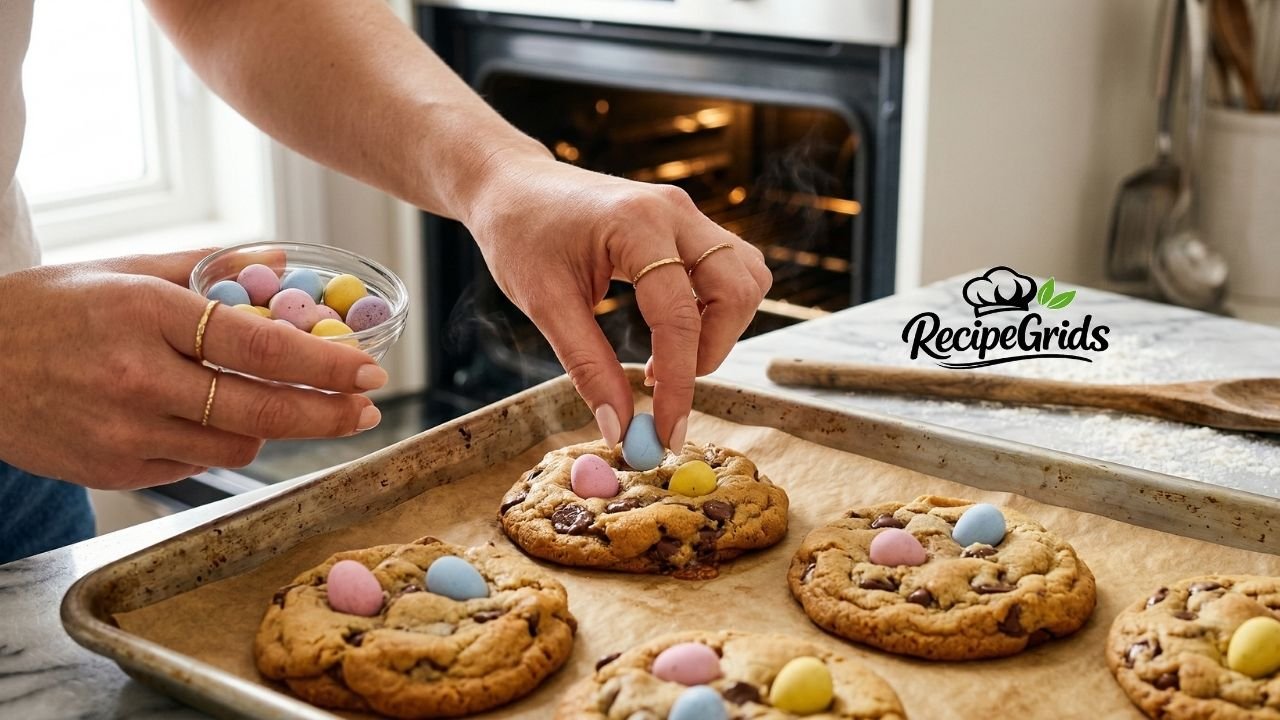
Within 60 seconds of coming out of the oven, press 3–5 whole Cadbury Mini Eggs gently into the top of each cookie. The warmth melts the shell slightly onto the surface, making them look like they came straight from a high-end bakery. Finish with a pinch of flaky sea salt. Cool on the pan for 5 minutes before transferring to a wire rack.
Pro Baker Tips for Absolute Cookie Perfection
These are the things I learned the hard way, across eleven batches. Saving you the trouble.
Always Chill the Dough
Minimum 1 hour, ideally overnight. Cold dough spreads slowly, giving you that tall, thick profile. Skipping this is the #1 reason for flat cookies.
Measure Flour by Weight
Too much flour = cakey, dry cookies. Use a scale: 280g for this recipe. If using cups, spoon flour in and level off — never scoop directly from the bag.
Use an Oven Thermometer
Most home ovens run 25°F off. An oven thermometer costs $8 and will improve every single thing you bake. Non-negotiable in my kitchen.
Underbake Slightly
Pull cookies when the centers still look glossy and underdone. They continue cooking on the hot pan for 3–5 minutes. This is the secret to a gooey center that stays gooey the next day.
Reserve Eggs for Topping
Always set aside ½ cup of whole Mini Cadbury Eggs before mixing. Pressing them on right after baking makes these look irresistible — in photos and in person.
Rotate Your Pans
At the 7-minute mark, rotate the baking sheet 180 degrees. This accounts for hot spots and ensures even browning front to back.
Troubleshooting Common Cookie Fails
I’ve made every one of these mistakes myself. Here’s how to diagnose and fix them.
Storage & Make-Ahead Instructions
Good news: this dough is incredibly make-ahead friendly, and the cookies actually taste better on day two.
Room Temperature
Airtight container. Add a slice of bread to keep them soft — it really works.
Frozen Baked
Freeze in a single layer, then bag. Thaw at room temp or warm in a 300°F oven for 5 min.
Chilled Dough
Dough balls in the fridge, covered. Flavor improves over 48–72 hours as dough ferments slightly.
Freezing Cookie Dough Balls
This is my absolute favorite make-ahead hack. Scoop chilled dough into balls, freeze on a baking sheet until solid (about 2 hours), then transfer to a freezer bag. Keeps up to 3 months. Bake directly from frozen at 375°F for 14–16 minutes — no thawing required. Fresh Cadbury Egg Cookies in 15 minutes, on demand, all spring long.

Frequently Asked Questions
The Last Thing I’ll Say (Before You Go Preheat Your Oven)
Eleven batches. Dozens of taste testers — my family, my neighbours, two postal workers who arrived at very fortunate times. And this is the version I keep coming back to — the one I’ll be making every spring, without fail, for the rest of my life.
These Cadbury Egg Cookies are more than just an Easter treat. They’re a whole sensory experience: the nutty smell of browning butter filling your kitchen, the pastel colors of the Mini Eggs dotting the dough like little jewels, the dramatic crackle of the top when you break one open. They’re the kind of cookie that makes people stop mid-conversation to say “wait — where did you get these?”
Now you can tell them you made them.

Did You Make These Cadbury Egg Cookies?
I genuinely want to hear how they turned out! Leave a ⭐⭐⭐⭐⭐ rating and tell me in the comments — did you do the overnight chill? Did you add espresso powder? Did you eat three straight off the pan?
Leave a Rating & Comment on RecipeGrids.com →