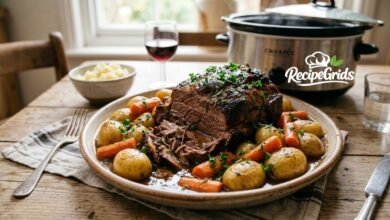

Every St. Patrick’s Day, the same scene plays out in my kitchen — a haze of fragrant steam drifting from a bubbling pot, the rich, briny scent of slowly simmering corned beef mingling with the sweet earthiness of cabbage. My grandmother used to say you couldn’t rush this dish. “Let it talk to you,” she’d insist, meaning: listen for the low, steady simmer, smell when the vegetables are ready, and trust the process. She was right, of course. She always was. While I often explore custom recipe ideas for my daily weeknight dinners, this specific classic feast still demands her old-school patience.
Whether you’re searching for how to make corned beef and cabbage for the very first time or you’ve been cooking it for years but want to nail it once and for all, you’ve landed in the right place. This recipe has been tested, tweaked, and served to hundreds of hungry guests at my table. It’s the version I’m proudest of, and today I’m sharing every detail — including the tips the other sites leave out.
Let’s cook.
Why This Recipe Works
Corned beef is a heavily brined, tough cut of beef — typically the brisket. The secret to making it tender, juicy, and deeply flavourful lies in low, slow cooking in liquid. Here’s what makes this recipe stand out:
- We use the stovetop braising method, which gives you maximum control over temperature and produces a more tender result than oven-only approaches.
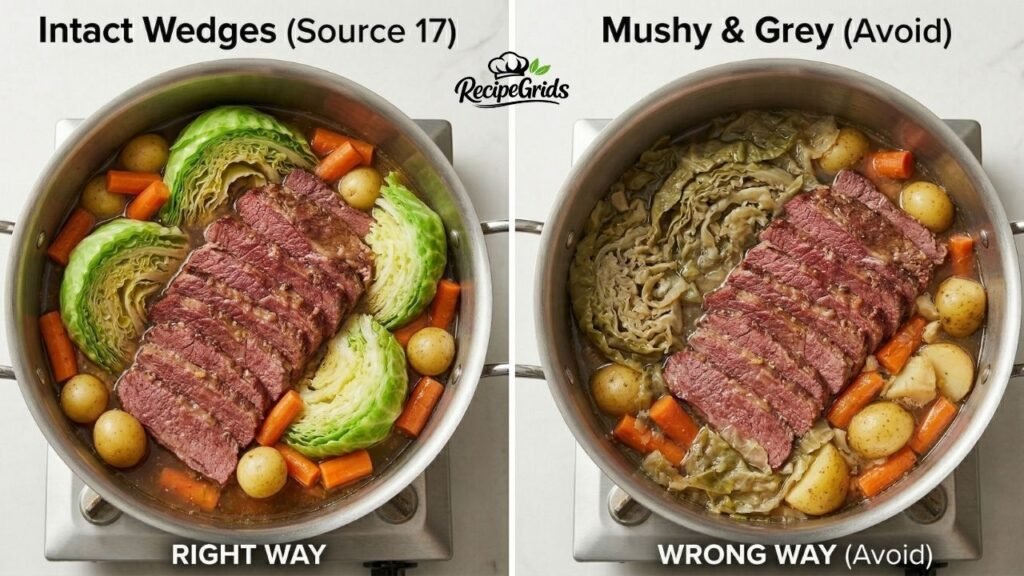
- Adding the cabbage in the last 20–30 minutes prevents it from turning mushy and grey — a common mistake that ruins the texture.
- We include a bay leaf, whole peppercorns, and a splash of apple cider vinegar in the braising liquid to amplify the depth of flavour.
- Potatoes and carrots go in at the right time — not too early, not too late — so they’re perfectly cooked, not falling apart.
Ingredients You’ll Need
This serves 6 generously. Scale up or down as needed.
The Essentials
- 3–4 lb flat-cut corned beef brisket (with spice packet)
- 1 medium green cabbage, cut into 6–8 wedges
- 1.5 lbs baby Yukon Gold potatoes (or quartered russets)
- 4 large carrots, peeled and cut into 2-inch chunks
- 1 large yellow onion, quartered
- 4 garlic cloves, smashed
- 3 bay leaves
- 1 tsp whole black peppercorns
- 2 tbsp apple cider vinegar
- Water or low-sodium beef broth, enough to cover the brisket
- Salt and freshly ground black pepper, to taste
Variations & Substitutions
- Crock Pot / Slow Cooker: This recipe adapts beautifully to the slow cooker. Add all ingredients (except cabbage) and cook on LOW for 8–10 hours or HIGH for 4–5 hours. Add cabbage in the last hour.
- Oven Method: Place everything in a large Dutch oven, cover tightly with foil, and bake at 325°F (160°C) for 3–3.5 hours.
- Potatoes: Yukon Golds hold their shape best. Red bliss potatoes are also an excellent choice. Avoid starchy russets if you want them to stay intact.
- Broth vs. Water: Using beef broth instead of water adds another layer of richness. Either works, but broth elevates the final dish.
- Spice Packet: Most packaged corned beef comes with a spice packet. Use it — it’s specifically blended for this dish. If yours didn’t include one, add: 1 tsp mustard seeds, ½ tsp coriander seeds, ½ tsp dill seeds, and ½ tsp red pepper flakes.
Step-by-Step Instructions: How to Cook Corned Beef and Cabbage
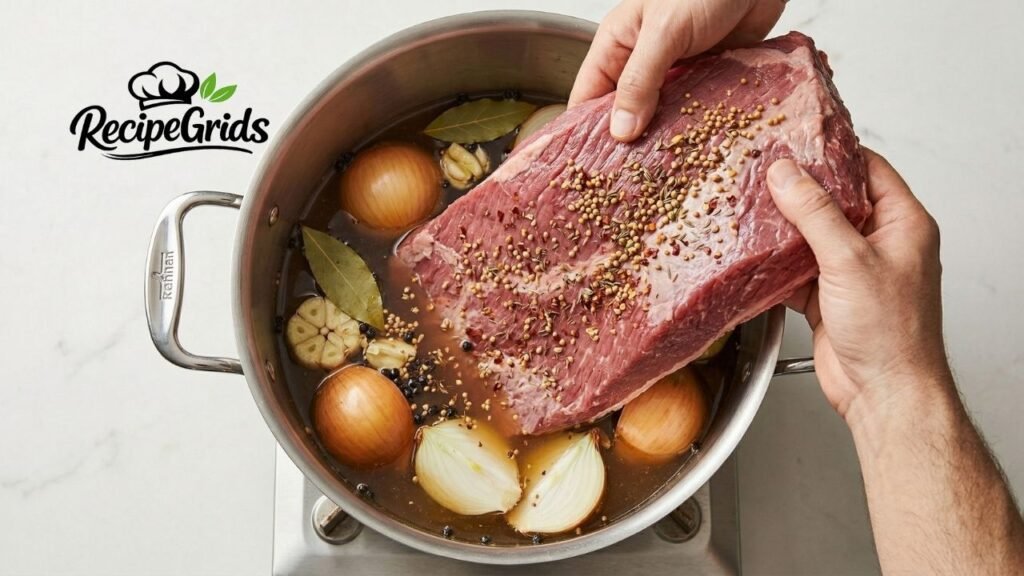
- Rinse the brisket. Remove the corned beef from its packaging and rinse under cold water. This removes excess brine from the surface, which can make the finished dish overly salty. Pat it dry.
- Add to the pot. Place the brisket fat-side up in a large, heavy-bottomed pot or Dutch oven. Add the quartered onion, smashed garlic, bay leaves, peppercorns, the spice packet, and the apple cider vinegar.
- Cover with liquid. Pour in enough water or beef broth to cover the brisket by at least 1 inch. Bring to a boil over high heat.
- Simmer low and slow. Once boiling, reduce heat to a gentle, low simmer. Cover the pot and cook for 2.5 to 3 hours, or until the beef is fork-tender. The kitchen will smell incredible — fragrant and deeply savory. Check occasionally and add water if the level drops.
- Add potatoes and carrots. About 30 minutes before the beef is done, add the potatoes and carrots directly to the braising liquid. Cover and continue simmering.
- Cut the cabbage correctly. How you cut cabbage for corned beef and cabbage matters. Cut it into 6–8 thick wedges, keeping the core intact. This holds the wedges together as they cook. Add them to the pot in the last 20 minutes.
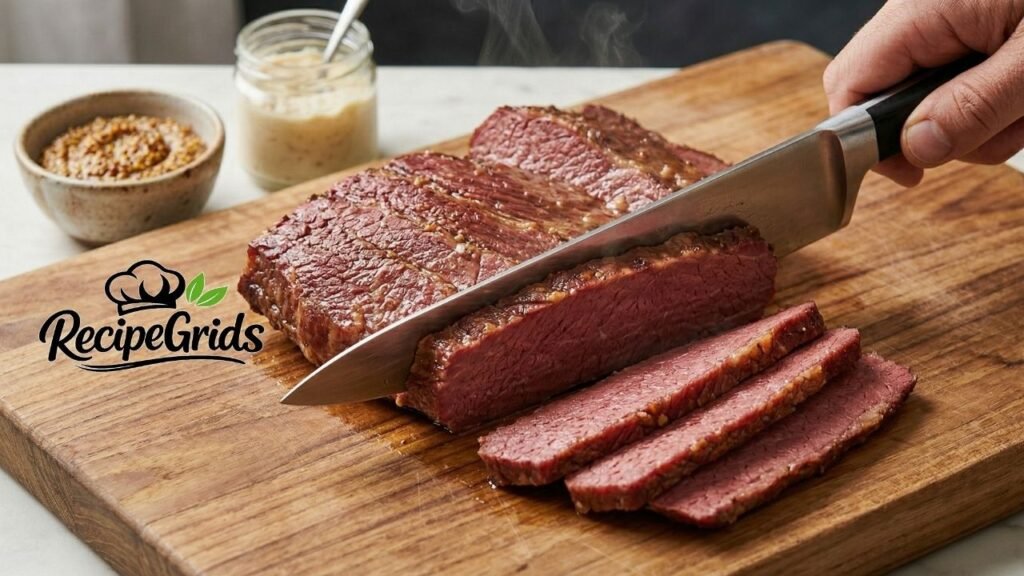
- Rest and slice. Remove the corned beef and let it rest for 10 minutes on a cutting board. Always slice against the grain for the most tender result. You’ll see the muscle fibers running in one direction — cut perpendicular to them.
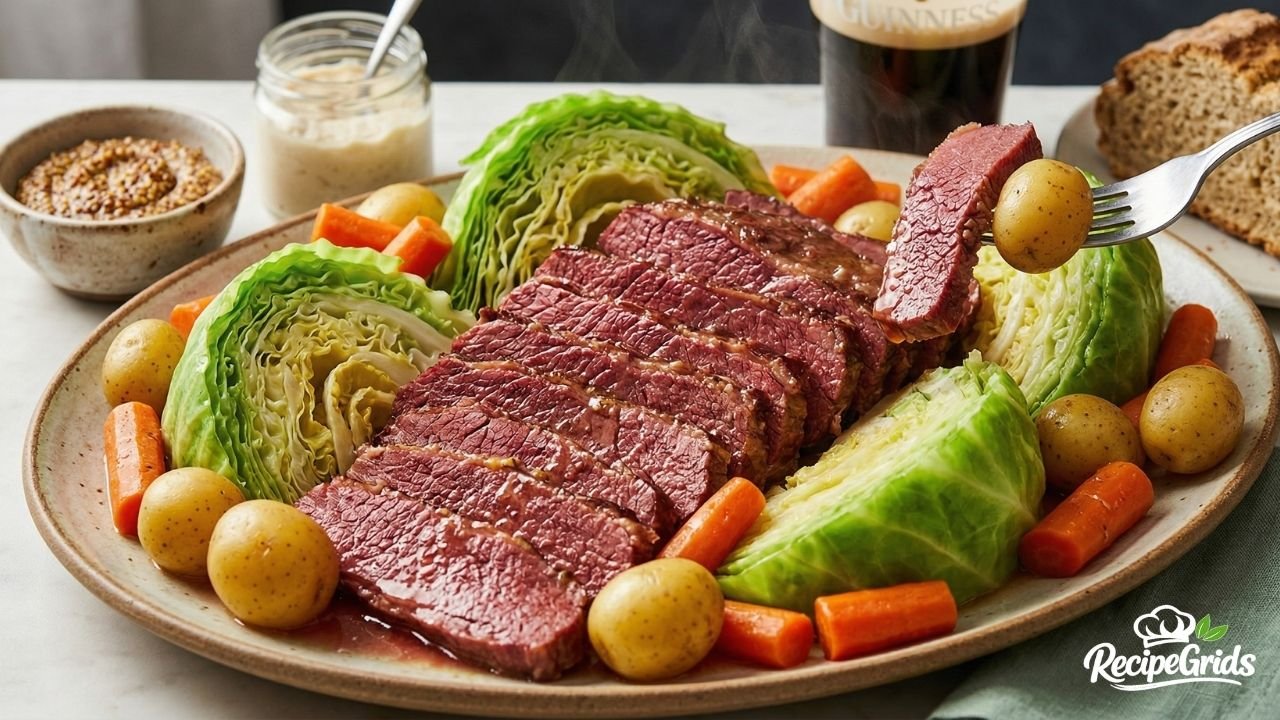
- Serve. Arrange sliced beef on a large platter surrounded by cabbage wedges, potatoes, and carrots. Ladle some braising liquid over everything for moisture and flavour. Serve with whole-grain mustard or horseradish on the side.
Pro Tips for Success
- Don’t skip the rinse. Rinsing the brisket is non-negotiable. Skipping it leads to an overly salty dish that no amount of water will fix.
- Flat-cut vs. Point-cut. For this recipe, I always recommend the flat-cut brisket. It’s leaner, slices more cleanly, and cooks more evenly. The point-cut is fattier and better suited to smoking.
- Boiling kills texture. A hard boil makes the beef tough and the vegetables disintegrate. You want a gentle, lazy simmer — just a few bubbles breaking the surface. This is the single most important thing you can do.
- Taste the braising liquid. Before adding vegetables, taste the liquid. It should be pleasantly seasoned. If it’s too salty, add more plain water. This liquid is what flavours everything.
What to Serve With Corned Beef and Cabbage
This dish is hearty on its own, but a few well-chosen sides make it a proper feast. Here’s what goes well with corned beef and cabbage:
- Soda bread or Irish brown bread — ideal for soaking up that flavourful braising broth.
- Whole-grain mustard or creamy horseradish — the classic condiment pairing.
- Pickled beets or cucumber salad — the acidity cuts through the richness of the beef beautifully.
- A cold pint of Guinness — if you’re celebrating St. Patrick’s Day properly.
How to Store & Reheat Corned Beef and Cabbage
Refrigerating Leftovers
Store the beef and vegetables in an airtight container with some braising liquid. They’ll keep well in the refrigerator for up to 4 days. The liquid is key — it keeps the beef moist and prevents it from drying out.
Can You Freeze Corned Beef and Cabbage?
Yes! The beef freezes beautifully for up to 3 months. However, cabbage can turn watery and soft after freezing, so I recommend freezing only the beef and potatoes and making fresh cabbage when you reheat.
How to Reheat Corned Beef and Cabbage
- Stovetop (best): Place beef slices in a skillet with a few tablespoons of braising liquid over medium-low heat. Cover and warm for 5–7 minutes. This preserves moisture perfectly.
- Microwave (quick): Place in a microwave-safe dish with a splash of broth or water. Cover with a damp paper towel and heat in 60-second intervals.
- Oven (for a crowd): Place sliced beef and vegetables in a baking dish, add ½ cup of liquid, cover tightly with foil, and reheat at 325°F (160°C) for 20–25 minutes.
Frequently Asked Questions
Is corned beef and cabbage actually Irish?
This is one of the most fascinating food history questions! While it’s celebrated as an Irish dish, corned beef and cabbage is really an Irish-American creation. In Ireland, pork and bacon were the traditional meats — beef was expensive and rarely consumed. When Irish immigrants arrived in America in the 19th century, they discovered affordable corned beef from their Jewish neighbours and adapted it to recreate a familiar meal. So where did corned beef and cabbage originate? In the melting pot of New York’s Lower East Side.
Is corned beef and cabbage healthy?
It’s a balanced, nutrient-rich meal. The beef provides plenty of protein and iron. Cabbage is low in calories and rich in vitamin C and fibre. The main consideration is sodium — corned beef is cured in salt brine, so it’s naturally high in sodium. Rinsing the brisket before cooking helps reduce this significantly. If you’re watching your sodium intake, look for low-sodium corned beef at your butcher.
What kind of potatoes for corned beef and cabbage?
Yukon Gold and Red Bliss potatoes are the best choices. They have a waxy texture that holds together beautifully during the long braise. Avoid starchy Russet potatoes — they tend to fall apart and turn the braising liquid cloudy.
How long do you cook corned beef and cabbage?
On the stovetop, plan for 2.5 to 3 hours of simmering for the beef, then add vegetables in the final 30 minutes. In the slow cooker (crock pot), cook on LOW for 8–10 hours or HIGH for 4–5 hours. In the oven, 3 to 3.5 hours at 325°F covered. The beef is done when a fork slides in and out with zero resistance.
How do I reheat corned beef and cabbage without drying it out?
Always reheat with some liquid. Whether you use the stovetop, oven, or microwave, a splash of the original braising broth (or plain beef broth) goes a long way. Keep the heat low and cover the dish to trap steam.
Can you make canned corned beef and cabbage?
Absolutely — canned corned beef is a great shortcut. Since canned corned beef is already cooked, you simply need to cook the vegetables in broth, then slice or crumble the canned beef into the pot and heat through for about 10 minutes. The result is quicker and more casual, but still delicious.
A Final Word from AB Rehman
There’s something quietly magical about a dish this simple producing flavours this deep. Every time I make corned beef and cabbage, I think of my grandmother hovering over that pot, steam curling around her face, completely at peace. Good food does that — it carries memory in every bite.
If you make this recipe, I’d genuinely love to hear how it turned out. Drop a comment below — tell me if you did it on the stovetop, in the crock pot, or in the oven. Share your substitutions and your variations. This community is what makes RecipeGrids.com the place it is.
Happy cooking, and — if you’re celebrating — Happy St. Patrick’s Day.